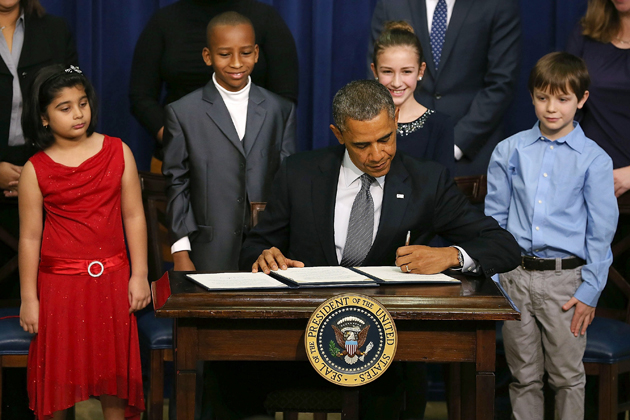
Today, at his press conference in Stockholm, President Obama raised many a hackle by saying,
“First of all, I didn’t set a red line,” Barack Obama said today at a press conference in Stockholm. “The world set a red line. The world set a red line when governments representing 98% of the world’s population said the use of chemical weapons are [sic] abhorrent and passed a treaty forbidding their use, even when countries are engaged in war.”
The President’s critics take this as yet another of his habitual accountability dodges, even though, for once, he didn’t blame George W. Bush. I will give the President the benefit of the doubt here, as he was speaking extemporaneously and is infamously imprecise when he is not delivering a prepared speech. He is saying that the bright line prohibition on chemical and germ warfare was not devised by him, that it is a matter of international law of long-standing, and that his red-line statement only re-affirmed the United States’ pre-existing obligation, in his view, to take action when such a line is crossed. I have no problem with that; the problem is, as this episode has shown, that President Obama did not and does not mean what he said, and the consequences he has devised for the crossing of that red line by the Assad government manage to be weak, insignificant, inadequate, cynical, cruel, dangerous, misdirected, ill-timed and illegal (under international law) all at the same time. That’s quite an accomplishment, but not one I’d want my mother to hand on the fridge.
The Wall Street Journal’s James Taranto, who, at his best, delivers a clarity of ethical analysis and a precision of language that are unsurpassed in U.S. punditry, moved on from mocking the latest red line clarification to an excellent discussion of why the credibility of the American President, and leaders generally, is so important. Credibility is the practical result of integrity: that is the ethical virtue President Obama’s handling of this matter betrayed.
You should read his whole commentary here. This is the key passage: Continue reading



 Ethics Alarms