Confirmation Bias And A Societal “Big Lie,” Brought To You By Harvard And The New Yorker

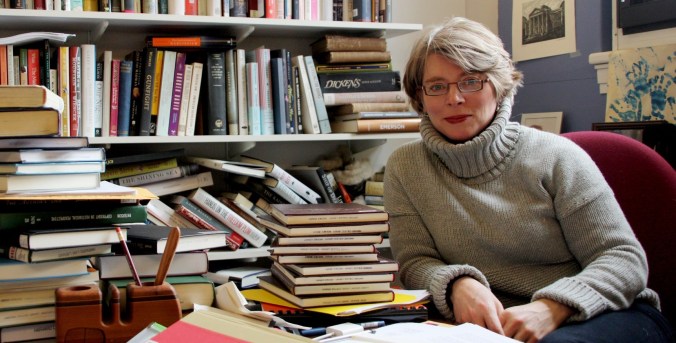
She looks so smart and sure of herself! Surely we can trust what SHE writes…

The anti-police propaganda spreading the lie that most police are racist and brutal and therefore a greater threat to society than a benefit has become like the nine-headed Hydra of Greek mythology: nearly impossible to kill. Prime among the villains in this development are the news media, which has enthusiastically spread misinformation while refusing to do its job of clarifying facts rather than distorting them, and researchers and academics, who have become so cowed by the abusive hyper-ideological environment in which they work that they won’t even stand behind their own studies. As discussed here, after a peer-reviewed study showing  that the race of the officer or the civilian could not predict  fatal police shootings was used by defenders of police and critics of Black Lives Matte, the researchers were pressured into retracting their paper because it was being, they said, misused.

I know I’m sounding uncharacteristically frustrated this weekend, but I really don’t know how society fights deliberate disinformation in support of a destructive narrative when both the journalism sector and the academic establishment are in on the fix.

Here is a representative example from The New Yorker. The current edition includes a 5,000 word essay by Jill Lepore, who should be trustworthy: she is  a professor of American history at Harvard as well as frequent writer at The New Yorker and for other presumably legitimate publications.  Her topic is the history of policing in the United States, linking the early role of police in suppressing slave rebellions to police killings of blacks today. At one point she writes,

One study suggests that two-thirds of Americans between the ages of fifteen and thirty-four who were treated in emergency rooms suffered from injuries inflicted by police and security guards, about as many people as the number of pedestrians injured by motor vehicles.

Wait…what? Continue reading
Of Fareed Zakaria, Scraping, Plagiarism and Hypocrisy

Is it “Oops!”, “Damn!” or “Better luck next time”?

I once had a dear friend in the DC theater community who committed an industry taboo when he mounted a play before, rather than after, obtaining the performing rights. His company was in the red, and his intent was to get some advance sales to pay the licensing fees that he otherwise couldn’t afford. It was a desperate, foolish scheme and an unethical one, as he readily admitted, and my friend paid dearly for it, as he was fired as the head of the theater company he had founded, and rendered a pariah in the community. What always infuriated him, however, was the instant condemnation and pious pronouncements he received from his peers in the theater world. “I know for a fact that everyone of them either would have done the same thing or had done the same thing, or worse, to keep their theaters running,” he told me.  “I was wrong and I know I was wrong, but for them to act as if I am some kind of a monster when I know they are really thinking, ‘Yikes! I better be more careful, that could have been me!’ is driving me crazy.”

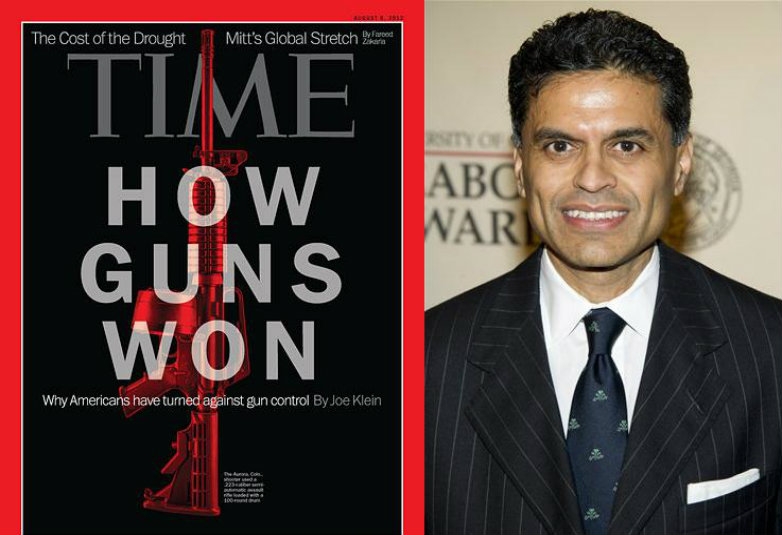
I wonder if disgraced CNN host and Time writer Fareed Zakaria is thinking the same thing as his colleagues in the news media and assorted web commentators are describing him as a plagiarist and an untrustworthy fraud in the wake of his suspension for lifting a paragraph from another writer’s work  and putting it in his own Time essay without attribution. After the parallel passages were flagged on the conservative website Newsbusters (you didn’t think he would have been outed by a liberal site, did you—or that Newsbusters would have been looking for plagiarism from a rightward  journalist?) both Time and CNN suspended Zakaria indefinitely.

This was the appropriate response. Zakaria is an opinion journalist, or a pundit: the idea that he is surreptitiously cribbing from others undermines his credibility substantially and perhaps fatally. That is not an entirely fair description of what Zakaria did, however.  What he engaged in was “scraping,”  the web-age technique where an author cuts and pastes a passage or more from another work and uses it as the foundation for a portion of a supposedly original article. When the passage in question is substantive, contains the ideas and conclusions of the author  whose work is being scraped, or is the product of another writer’s research, that is indeed plagiarism. When the passage being scraped is something the borrowing author could have written himself, however, it is more accurately described as lazy. It is still wrong, but it does not necessarily rise to the level of intellectual theft that can reasonably justify calling the author untrustworthy. Continue reading