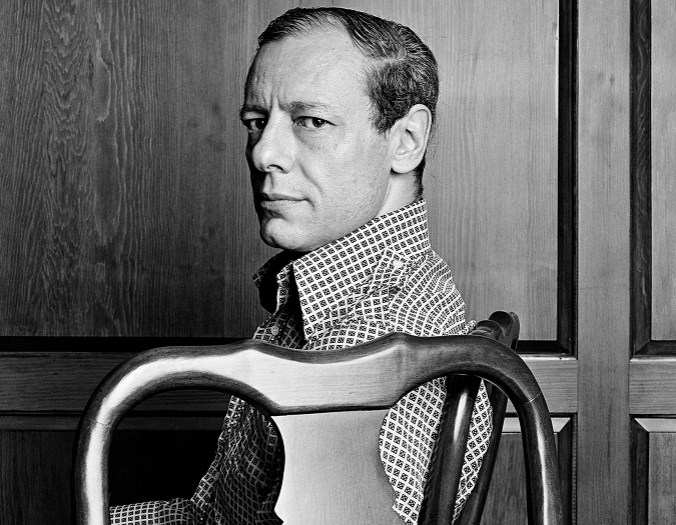
John Simon, who died three days ago at the age of 94, was known as a merciless, even cruel cultural critic. From the Times obituary:
John Simon [was]one of the nation’s most erudite, vitriolic and vilified culture critics, who illuminated and savaged a remarkable range of plays, films, literature and art works and their creators for more than a half-century…In an era of vast cultural changes, Mr. Simon marshaled wide learning, insights and acid wit for largely negative reviews and essays that appeared in New York magazine for nearly 37 years…In a style that danced with literary allusions and arch rhetoric…he produced thousands of critiques and a dozen books…While English was not his native language, he also wrote incisive essays on American usage, notably in the 1980 book “Paradigms Lost: Reflections on Literacy and Its Decline.”
I met him exactly once (and we later had an online exchange), but in that single encounter he said something that meant a great deal to me, and that I will never forget.
As a drama critic, Simon made Frank Rich seem like an old softy. I don’t care for his kind of critiques, applying rarefied personal standards so divorced from the average audience member that they give no guidance at all. Simon was fun to read if you had no stake in the play or movie he was trashing, but those who worked full-time in show business generally hated him, and it is no wonder. In one compilation of his reviews, “Reverse Angle: A Decade of American Films” (1982), he was positive about just 15 of the 245 films he discussed. William F. Buckley .quipped that Simon “reviewed movies in the same sense that pigeons review statues.”
He was accused of being racist, misogynist, homophobic or grossly insensitive, denied being any of those things, and argued that no person or group was above criticism, especially those who, in his view, lacked talent and covered themselves in mantles of race, ethnicity, gender or sexual identity and used them to claim preferential treatment in the marketplaces of culture. But some of his quotes resonate with me:
- “I do not like uniforms. I do not like people who are a professional this, that or the other. Professional writers, actors and singers are O.K., but I don’t like professional Jews, professional homosexuals, professional blacks, professional feminists, professional patriots. I don’t like people abdicating their identity to become part of some group, and then becoming obsessed with this and making capital of it.”
- “My greatest obligation is to what, correctly or incorrectly, I perceive as the truth. Kästner says, in essence, ‘All right, the world is full of idiots and they’re in control of everything. You fool, stay alive and annoy them!’ And that, in a sense, is my function in life, and my consolation. If I can’t convince these imbeciles of anything, I can at least annoy them, and I think I do a reasonably good job of that.”
In 1998, my now retired professional theater company, The American Century Theater, was in the midst of its 1998 production of “Lady in the Dark,” the 1940 experimental musical by Moss Hart, Ira Gershwin and Kurt Weill. At that time, it was the first full run of the show since the original had closed on Broadway. Our star, Maureen Kerrigan, informed me that her old room mate was married to the terrifying John Simon, and that both had traveled from New York to see her in the next day’s Sunday matinee performance. Simon was infamously disdainful of musicals, and once described a guaranteed Broadway hit as “A loud, vulgar musical about Jewish Negroes.”
This was not happy news. We had already gotten our usual pan from the Post, which had no interest in our mission of producing American stage works at least 25 years old that had fallen out of the professional theater repertoire. Now we were going to be eviscerated by John Simon. He was used to watching all-Actors Equity productions in 2000 seat theaters, with multi-million dollar budgets. Our show had what I considered to be an excellent cast, but only Maureen was Equity. We did have a brilliant director—me. Somehow I doubted Mr. Simon would appreciate our talents.
After all, it was a production of a lavish show with a huge cast in a small black box theater seating 130 at best, with a full orchestra crammed behind scenery, on a budget about 1% of what the opus would take to do justice to now. I was expecting to be humiliated.
Simon watched the performance with a critic’s poker face, and afterwards, never inquiring about his verdict, I volunteered to drive him and his wife to the airport. They both sat in stony silence for most of the trip, and then Simon suddenly said, “I’m very glad I saw your production.”
“Why is that?” I asked. He said, “I saw the Encores production, the concert version, several years ago, and I found it incomprehensible. I wrote in my review then that “Lady in the Dark” shouldn’t be revived. Now that I’ve see the whole thing, I realize I was wrong: it deserves to be revived and get a full production. Thank-you.”
Well, that was the whole reason we started TACT: to give audiences a chance to see American shows that weren’t being produced, and to demonstrate why they shouldn’t be forgotten. Coming from maybe the toughest, most demanding critic who ever lived, Simon’s statement was high praise. And, of course, I knew he wasn’t just saying it to be nice, because he didn’t care about being nice.
I will always be grateful to John Simon for making me feel like the theater and the dedicated “Lady in the Dark” cast and production staff accomplished something important, when he, unlike so many in the theater, didn’t hand out praise indiscriminately.
Addendum: This is as good as anywhere to finally confess that having my young, struggling theater company take on one of the most famously difficult and complex musicals of all time was reckless and irresponsible. We were always dangerously short of money, and were committed to keeping tickets under 20 dollars. Our typical show to that point had cost 10-15 thousand dollars, and some of those lost money. “Lady in the Dark” ended up costing over $50, 000, easily the most expensive in the company’s 20 year history. Had the production flopped, it would have been the end of the experiment, and nobody knew whether anyone would want to see a nearly four-hour, three-act 60-year-old musical about a troubled professional woman undergoing psychoanalysis.
Fortunately, people did. The show played to over 100% capacity, and nearly broke even. “Lady in the Dark” did wonderful things for the company, attracting subscribers, donations, and respect. But it was pure moral luck.

 Ethics Alarms