Ethics Dunces In Arms: Gloria Steinem And The New York Times Demonstrate How “The Star Syndrome” Works

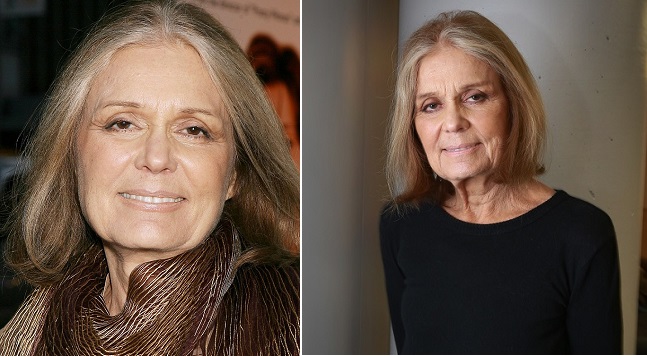
Gloria 2017 (right), with her ghostwriter, Gloria 2007 ( left)

Last week, Gloria Steinem authored an op-ed in The New York Times headlined, “Women Have Chick-Flicks. What About Men?”.

It was standard issue male-bashing; biased and badly researched junk, but more interestingly, at least half of it was ten years old, substantially lifted from a piece Steinem wrote for the Women’s Media Center website in 2007. This kind of lazy self-plagiarism is a major ethical breach that respectable publications do not suffer gladly, at least when the miscreant isn’t a feminist icon that their editors worship, or at least feel has earned immunity from those annoying ethical principles lesser mortals have to deal with.

As an aside, it really is a silly op-ed, not worthy of publication the first time, much less plagiarizing now. Some excerpts:

I was on a flight from New York to Seattle when a long delay on the tarmac prompted the airline to offer us a free movie. As the flight attendant read the choices aloud, a young man across the aisle said, “I don’t watch chick flicks!” I knew what he meant, and so did the woman sitting next to me. A “chick flick” is one that has more dialogue than car chases, more relationships than special effects, and whose suspense comes more from how people live than from how they get killed.

Translation: “Men are morons, women are sophisticates.” No generalizations or stereotypes there…

Think about it: If “Anna Karenina” had been by Leah Tolstoy, or “The Scarlet Letter” by Nancy Hawthorne or “A Doll’s House” by Henrietta Ibsen — if “The Invisible Man” had been “The Invisible Woman” — would they have been hailed as classics? Suppose Shakespeare had really been the Dark Lady who some people still think he/she was. I bet most of her plays and all of her sonnets would have been dismissed as ye olde Elizabethan chick lit and buried until they were resurrected by stubborn feminist scholars of today.

Two words: Prove it. Since  very few  great female authors were writing similarly brilliant literature in those periods, Steinem’s bet is rigged. Where are those buried woman-authored masterpieces that stand up as the equals of “King Lear” and  “War and Peace”? I’ll make another bet: I bet if those works had been written by women, we’d know it, and they would be just as admired and immortal as the works authored by men. Has Gloria heard of Wuthering Heights? Jane Eyre? Frankenstein? Pride and Prejudice? Has she heard of Jane Austen?

But I digress.

The original article published referred to that airplane flight as taken by Steinem  “recently.” That word was taken out after Gloria’s cheat was discovered, and this “Editor’s Note” was added: Continue reading

Jonah Lehrer Shows Us A Level One Apology: Remorse, Regret, Contrition. Sincerity? Who Knows…

The-Remorse-Of-OrestesWhen we last looked in on writer Jonah Lehrer last summer, he had detonated his career and credibility with a series of incidents of serious professional misconduct that led to his ignominious firing from The New Yorker, where he once was regarded as a rising star. First he was caught plagiarizing himself, recycling a previously published work as an original  essay for the magazine. That led to an investigation showing that this was not the first time he had taken such an unethical short-cut. Finally, it was discovered that he had fabricated Bob Dylan quotes in his best-selling book about, ironically enough, creativity. When confronted about this, Lehrer lied. Soon he was out of a job and condemned to the limbo reserved for writers who deceive their readers: Jason Blair, Stephen Glass, James Frey, Janet Cooke, and others. It is not a pleasant or profitable place to be.

Lehrer was recently invited to speak to a gathering at the Knight Foundation, and chose the forum to deliver an apology for his conduct. It would be difficult, I think, to deliver a better one. On the Ethics Alarms Apology Scale, the most ethical apology, at the top of the scale, is this one:

1. An apology motivated by the realization that one’s past conduct was unjust, unfair, and wrong, constituting an unequivocal admission of wrongdoing as well as regret, remorse and contrition, as part of a sincere effort to make amends and seek forgiveness.

That is exactly what Lehrer delivered to the Knight Foundation, and through his blog, the rest of us. He said…

“..I am the author of a book on creativity that contained several fabricated Bob Dylan quotes. I committed plagiarism on my blog, taking, without credit or citation, an entire paragraph from the blog of Christian Jarrett. I also plagiarized from myself. I lied to a journalist named Michael Moynihan to cover up the Dylan fabrications.

“My mistakes have caused deep pain to those I care about. I am constantly remembering all those people I’ve hurt and let down – friends, family, colleagues. My wife, my parents, my editors. I think about all the readers I’ve disappointed, people who paid good money for my book and now don’t want it on their shelves.I have broken their trust. For that, I am profoundly sorry. It is my hope that, someday, my transgressions might be forgiven.

“I could stop here. But I am convinced that unless I talk openly about what I’ve learned so far – unless I hold myself accountable in public – then the lessons will not last. I will lose the only consolation of my failure, which is the promise that I will not fail like this again. That I might, one day, find a way to fail better.

“The lessons have arrived in phases. The first phase involved a literal reconstruction of my mistakes. I wanted to have an accounting, in my head, of how I fabricated those Dylan quotes. I wanted to understand the mechanics of every lapse, to relive all those errors that led to my disgrace. I wanted to understand so that I could explain it to people, so that I could explain it in a talk like this. So that I could say that I found the broken part and that part has a name. My arrogance. My desire for attention. My willingness to take shortcuts, provided I don’t think anyone else will notice. My carelessness, matched with an ability to excuse my carelessness away. My tendency to believe my own excuses.

“But then, once I came up with this list of flaws, and once I began to understand how these flaws led to each of my mistakes, I realized that all of my explanations changed nothing. They cannot undo what I’ve done, not even a little. A confession is not a solution. It does not restore trust. Not the trust of others and not the trust of myself. What’s more, I came to see that my explanations were distracting me from the more important reality I need to deal with.

“Because my flaws – these flaws that led to my failure – they are a basic part of me. They are as fundamental to my self as those other parts I’m not ashamed of. This is the phase that comes next, the phase I’m in now. It is the slow realization that all the apologies and regrets are just the beginning. That my harshest words will not fix me, that I cannot quickly become the person I need to be. It is finally understanding how hard it is to change.

“Character, Joan Didion wrote, is the willingness to accept responsibility for one’s own life. For too long, I did not accept responsibility. And by not accepting responsibility – by pretending that all of my errors were accidents, that my carelessness was not a choice – I kept myself from getting better. I postponed the reckoning that was needed.

“There is no secret to good decision-making. There is only the obvious truth: We either confront our mistakes and gain a little wisdom, or we don’t and remain a fool.”

You can read the whole speech here. Continue reading

Signature Significance, Jonah Lehrer, and That Sinking Feeling

Yes, uh, a little TOO MUCH creativity there, Jonah…

At the New Yorker, star writer Jonah Lehrer has resigned after it was shown that he fabricated quotes from Bob Dylan for his well-reviewed book “Imagine: How Creativity Works.”

This was the final shoe dropping that began with one untied shoelace, the discovery in June that Lehrer had plagiarized from himself, lifting a section of a piece published earlier in one publication to include in a piece written for The New Yorker. This is a minor ethical incursion—-Lehrer had represented the second essay as original, so using prior published material was dishonest even if he was the author—but it launched his employers on a mission of scrutiny, investigating to see if the one transgression was part of a trend.

When it comes to professional ethics, you see, it often is. The principle of signature significance holds that in some pursuits just one episode can be enough to make certain conclusions. A writer of true integrity never borrows from his own published work without flagging the fact. Doing so even once indicates shaky integrity, and a willingness to cut corners. It may well indicate a proclivity to cheat in more egregious ways. Continue reading