As I wrote last year about this time, the baseball play-offs make us unethical. Managers make decisions that either work or back-fire, and feed the toxic human tendency toward consequentialism thusly: when they work, the decisions werecorrect; when they don’t, the manager was an idiot, and the choicee were obviously wrong. As with judging the ethics of an act, what happens after a baseball decision is made is irrelevant to whether it was a good decision when it was made. This is almost impossible to keep firmly in mind. Our logic rebels at the idea that an ethical act can have horrendous consequences, or that the right tactical decision can result in defeat. But that’s life, as my father was fond of saying.
Hindsight bias further pushes us to confuse the making of a decision with its consequences. It is, not surprisingly, much easier to make a strong case that a decision was the wrong one after all the results are in. This, of course, is unfair to the decision-maker, who didn’t have the data the critics do when he or she acted. On the other hand, sometimes the reason the decision was the wrong one is that it was wrong, and the fact that the results were bad just support that verdict.
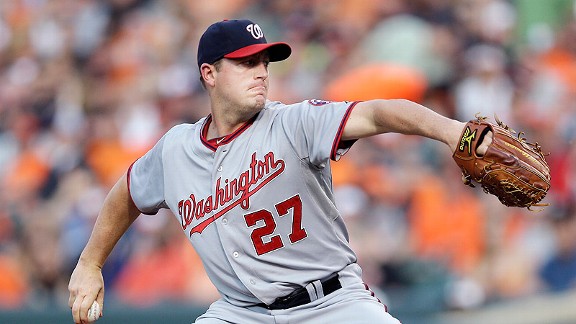
This morning, indeed since last night, Washington D.C. baseball fans and sportswriters have been wrestling this conundrum. The Washington Nationals, widely believed to be the strongest National League team in the post season, and quite possibly the favorites to win the World Series, find themselves down 0-2 in the best of five National League Division Series after a grueling, 18 inning loss to the San Francisco Giants, who didn’t even win their own division. The way the game went into extra innings will be debated for months if the Nats fail to rally and win the series. Nats starting pitcher Justin Zimmermann, who had pitched a no-hitter in his last outing, had been almost as good this time, pitching his team within one out of a 1-0 win that would have evened the series. He had dominated Giants hitters in every way, and had not shown any signs of weakening or, as they say in the game, “losing his stuff.” In the old days, that is, as recently as 20 years ago, a pitcher on a run like this would finish the game unless he had a stroke on the mound. Now, MLB managers are trained to be ready to go to their ninth inning specialist, the so-called closer, at any hint of trouble or even without it, and they almost always do.
As a reflex action, it makes no sense a lot of the time, other than “everybody does it.” A pitcher whom you know is pitching well is a known quantity, while a pitcher newly arrived to the game, whatever his skills, is not. If the choice is between a starter who is not just doing OK but rather mowing down batters like Samson jaw-boning the Philistines, and bringing in a new arm, logic would dictate that the latter is the greater risk.
Nats manager Matt Williams acknowledged that Zimmerman was “in the zone” by not lifting him to begin the ninth, and was rewarded with two quick outs. When he walked his first batter of the game, however, on his magic 100th pitch (they count pitches now, and 100 is the number at which pitchers supposedly turn into pumpkins), and Williams lifted him, calling on closer Drew Storen. Continue reading
 Ethics Alarms