Yikes! An Entire State Supreme Court Flips Out And Attacks The U.S. Supreme Court! (Yes, That Is Unethical)

Several Ethics Alarms reader alerted me to this gobsmacking story, further evidence that the political left in this country is in the process of suffering a nervous breakdown. I am still not certain I am glad they did.

The court alluded to in the title is the Hawaii Supreme Court. That state needs to be given a bit of leeway for its excesses and delusions: Hawaii, even after more than half a century as our 50th state, is still a very different culture from the other 49. That’s part of its charm when you visit there, but it also has allowed a problematic mindset to linger. Hawaiians just don’t think the usual rules should apply to them, even in relation to the Constitution. Two years ago, in State v. Wilson, the Hawaii Supreme Court wrote that “[t]he spirit of Aloha clashes with a federally-mandated lifestyle that lets citizens walk around with deadly weapons,” and that Hawaii would read the Second Amendment “differently than the current United States Supreme Court.”

Oh. Except that a state can’t do that.

More recently, the same justice who wrote that defiant legal nonsense authored a full-on attack on the U.S. Supreme Court, tacked onto a rather mundane case about prosecutorial misconduct. I will re-publish the whole amazing section below, but KABOOM! It is head-exploding. The diatribe, because that’s what it is, covers voting rights, campaign finance, abortion, religious liberty, the Second Amendment, the major questions doctrine, Chevron deference, the spending power, the removal power, and birthright citizenship, while accusing the Roberts Court of being racist.

Such tangential rhetoric is known as dicta, parts of a legal opinion that carry no substantive legal weight at all since it is pure opinion without definitive case authority. Even dicta, however, is subject to certain professional and ethical constraints. The Hawaiian Supreme Court rantis a bright line breach of several tenets in state’s Code of Judicial Conduct.

Canon I states, “A JUDGE SHALL UPHOLD AND PROMOTE THE INDEPENDENCE, INTEGRITY, AND IMPARTIALITY OF THE JUDICIARY AND SHALL AVOID IMPROPRIETY AND THE APPEARANCE OF IMPROPRIETY.

Under that banner are three mandates: Rule 1.1. Compliance with the Law, Rule 1.2. Promoting Confidence in the Judiciary, and Rule 1.3. Avoiding Misuse of the Prestige of Judicial Office. A statement that announces that a judge does not feel bound by U.S. Supreme Court decisions violates Rule 1.1. A judge attacking the integrity and motives of the U.S. Supreme Court undermines confidence in the judiciary, as prohibited by Rule 1.2. A judge using the prestige of his office to impugn a higher court is by definition an abuse of office, breaching Rule 1.3.

But wait! There’s more!

Canon 2 states, “A JUDGE SHALL PERFORM THE DUTIES OF JUDICIAL OFFICE
IMPARTIALLY, COMPETENTLY, AND DILIGENTLY.”

The anti-SCOTUS section shows a judge giving priority to his partisan and political beliefs over his duties as a judge, violating Rule 2.1. His unhinged attack on past SCOTUS jurisprudence indicates that he is incapable of “upholding the law,” and that he is also incapable of “impartial” conduct. Moreover, the opinion constitutes a flagrant bias based on political affiliation, breaching Rule 2.3.

The outburst is even worse than the many rules violations suggest. The logic is tortured, the law is bad, and the arguments are hysterical as well as not based in reality; worst of all, the Hawaiian judges appear not to understand how SCOTUS fits into the Constitutional governance formula. The core goal underlying the tantrum is an arrogant belief in judicial activism and judges usurping legislatures, as the Warren court did habitually.

As a final rotten cherry on this putrid sundae of unethical judicial conduct, The National Review noticed that a bot probably wrote the text. Nice. My position is that judges using AI to write their opinions is impeachable conduct, but then so is issuing such an attack on the U.S. Supreme Court.

Here is the section, and I must add, having just read it through again, the naked Trump Derangement and partisan extremism is shocking. This isn’t just unethical. It is judicial insurrection. Luckily, progressives don’t read court opinions…

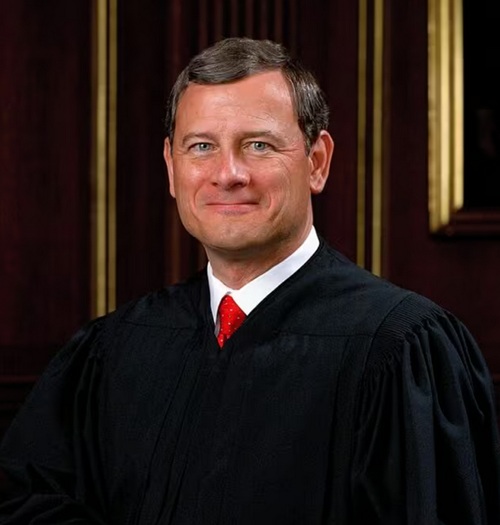
Ethics Dunce, Unethical Judge, and Possible Zombie: Ninth Judicial Circuit Court of Florida Judge Diana Tennis

The zombie speculation is because I’m sure I’ve seen that expression on “The Walking Dead” or “World War Z.”

The Florida Supreme Court wants to fine Ninth Judicial Circuit Court of Florida Judge Diana M. Tennis (she’s in Orlando) after she admitted making more than 900 donations to left-leaning political causes, we learn from Law.com.

The Florida Judicial Qualifications Commission discovered last month that Judge Tennis gave nearly $30,000 in more than 900 separate donations to progressive candidates and those aligned with the Democratic Party.

Florida judicial canons explicitly bar judges from making political contributions:

Canon 7

A Judge or Candidate for Judicial Office Shall Refrain From Inappropriate Political Activity

A judge…shall not:

…make a contribution to a political organization or candidate.

Tennis told the commission that she mistakenly thought that the rule only applied to donations to candidates for state office, not federal ones. That means that she can’t read or understand statutes in plain language. Nothing in that rule above limits the restriction to state political activity. This judge is either dishonest or incompetent. Why would the Florida Supreme Court allow such a hack to continue sitting on the bench at all? She’s partisan, conflicted and untrustworthy.

The more I examine the issue, the more I realize that there are an unacceptable number of incompetent and unethical judges rotting our justice system, indeed an unacceptable percentage of bad judges that I fear equals a critical mass. Tennis is far from the worst, and she has no business judging anything more challenging than the state fair apple pie competition.

Then there is that zombie thing…

Meanwhile, The Left Is Still Concocting Reasons To Discredit The Non-Incompetent SCOTUS Justices…

Stipulated: Clarence Thomas’s extensive conflicts involving his right-wing billionaire pals mandate his resignation or removal. The fact that his wife is a conservative activist does not. No, the flags that Samuel Alito’s wife likes flying over the couple’s domiciles are not a reason for him to recuse himself from anything. Somewhere between these two extremes, but closer to the flags than Thomas’ goody bag, is the new assault on Justice Roberts.

Christopher Armitage, a far Left scholar whose anti-GOP, anti-Trump positions are cloaked in respectability, came up with this one. He describes himself as “independent.” Strangely, his work “has been cited by the Brookings Institution and covered by NPR, PBS, Mother Jones, and The Nation.” Those are all infamous Leftist propaganda organs, with Mother Jones and The Nation on the extreme end of the spectrum.

Now he is getting cheered by those sources for a Medium post that asserts,

Now THAT’S An Unethical Judge!

Amy L. Zanelli, an elected Magisterial District Judge in Lehigh County in Pennsylvania, is in a peck of trouble due to some unjudicial conduct that can only be responded to with “What was she thinking?”

For example, when a court employee tried to whisper to her that she had made an erroneous statement in court about a defendant’s sentence, the judge first ignored the staffer, then when the woman tried to get her attention again, exploded with “I am the judge, and you are just a fucking secretary! I will decide and make the determination about what happens in this courtroom!”

Judge Zanelli has habitually used vulgar rhetoric, apparently being especially fond of the word “cuntrageous.”

Classy! The judge also brought into her office a desk calendar that contained explicit sexual messages”evidently intended to be humorous” in the words of the ethics complaint, such as “Bedroom Plants He’ll Have to Slice Through With a Machete If He Wants That Pussy.” This was displayed in the general work area until Judge Zanelli removed it after complaints from her staff.

But here’s my favorite: Zanelli possessed what she termed a “Book of Grudges” in her office, which had the appearance of an ancient leather-bound tome with papyrus pages. The “Book of Grudges” bore an inscription written by the judge which stated, “Upon this day, we shall begin to record within our Book of Grudges.” Zanelli entered notes in her book, like describing a local attorney as “Just a Dick.” The judge encouraged her staff to make additions to the notes in the “Book of Grudges” about other individuals doing business in Zanelli’s court. They declined, though Zanelli placed the “Book of Grudges” in a general work area accessible to all staff for them to add notations to it to it, if they wished.

Eventually she was persuaded to remove it, but judges are not supposed to advertise their “grudges.” Canon 1, Rule 1.2 of the Code of Judicial Ethics states:

“A magisterial district judge shall act at all times in a manner that promotes public confidence in the independence, integrity, and impartiality of the judiciary, and shall avoid impropriety and the appearance of impropriety.”

    Judge Zanelli also was routinely late for court, skipped work, often choosing not to preside on Fridays. The whole eye-popping complaint is here.

    A question: Has our judiciary always contained so many unethical, corrupt, biased, incompetent and just plain lousy judges, or is it just because of the internet that this is now so obvious?

    Ethics Dunces: At Least Two Dozen Federal Judges Who Don’t Get That “Appearance of Impropriety” Thingy

    I don’t have to exert myself much for this one…

    Paul Caron reveals on his excellent Tax Prof Blog that a new report released today by Fix the Court documents how two dozen federal judges who teach at law schools went ahead and ruled in cases involving their law schools’ parent universities. Conflict? What conflict?

    Multiple circuits (p. 12 in the report) and Judicial Conference policy (p. 11) have held that just because a judge teaches in one part of a university doesn’t mean that he or she will be biased in adjudicating a case in which that university is a party. Funny—most people, including most lawyers, would call this a slam dunk “appearance of impropriety” situation…because it is.

    “This has conflict written all over it,” Fix the Court’s Gabe Roth said. “If you teach at a law school, and especially if the law school is paying you, you shouldn’t be sitting on cases involving the university that the law school is a part of. Even if a judge-adjunct professes, as several have, that the law school at which they teach is but ‘one small and virtually autonomous part’ of the university, a neutral observer who sees ‘OSU Law’ on a judge’s disclosure would be correct in imputing bias any time that judge presides over a case involving Ohio State University.”

    That seems pretty obvious to me, but then I’m just an ethicist and spend way to much time pondering such matters.

    The recent attacks on the U.S. Supreme Court for not having an enforceable code of conduct and ethics neatly distracts from the widespread corruption in the rest of the judiciary, as highlighted by the recent wave of partisan judges working with the Axis of Unethical Conduct to hamstring Trump Administration policies. Judges are more poorly trained in judicial ethics than lawyers are in legal ethics. Elected judges are partisan by design; too many judges are well-past their shelf life, and DEI mania since 2020 has loaded the judiciary with too many robed ones whose primary qualifications for the bench are immutable biological features.

    The judiciary is yet another rotting institution that needs serious reform and fast—as if we didn’t have enough to worry about already.

    Look! The House’s Dumbest Member Filed a Smart Bill On Judicial Ethics!

    Rep. Hank Johnson, the Democratic Congressman who famously expressed the fear that “Guam might tip over” because of all the U.S. military equipment on the island, filed his ‘‘Transparency and Responsibility in Upholding Standards in the Judiciary Act’ (or the ‘‘TRUST Act’’ to its friends). The bill aims to deal with a serious ethics problem in the judiciary, one of many.

    Under the Judicial Conduct & Disability Act, the law that supposedly governs judicial discipline, investigations into misconduct are terminated when a judge retires, resigns, or dies. How convenient! The mere departure of a judge from the bench is enough to halt any inquiry into alleged abuses of their office, misconduct, even crimes. This system shields bad judges from accountability

    With life tenure and unchecked power, judges have lots of opportunity to engage in outrageous behavior, and many do. Berating and demeaning (or sexually harassing) law clerks, forcing them to watch pornography, firing clerks on a whim, and judged concealing serious cognitive decline are among the offenses that have resulted in zero consequences for judges in recent years: all a judge needs to do to keep his or her pension and reputation is to quit. If they are not senile, they can often nab high-paying jobs with law firms.

    Continue reading

    Tales of the King’s Pass

    During the baseball off-season the MLB channel on DirecTV has a lot of dead time to fill between the periodic announcements of trades, free agent signings and post-season awards and honors. Lately it has been re-running an old Bob Castas show called “Studio 42” (that’s Jackie Robinson’s number) where the perpetually boyish-looking baseball commentator, who now really is Old Bob, interviews retired players and managers about significant games and moments in their careers.

    In an episode I happened across this morning after my dog woke me up and then stole the bed as soon as I got out of it, Costas’s guest was the late, great manager Whitey Herzog, like so many successful baseball managers, a mediocre-to-poor player in his Major League career. Whitey told a story that is as good an example of the King’s Pass, #11 on the Rationalization List, as there is.

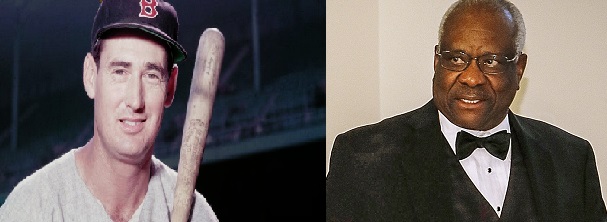
    He said that in one game between the old Washington Senators (the first Senators, the team that moved to Minnesota and became the Twins) and the Red Sox in Boston, Ted Williams had drawn a walk on a 3-2 pitch right down the middle of the plate that the umpire had called a ball. Williams was famous for his plate discipline and above-average eyesight, and umpires frequently let him, opposing players complained, call his own balls and strikes because unpires acknowledged that he was better at it than they were. Herzog came to bat late in the same contest having walked four times and with a chance to set a record by getting five bases-on-balls in a single game. He told Costas that the umpire called him out on strikes on a 3-2 pitch in the dirt.

    “I turned around and said to the ump, ‘You give Williams five strikes and give me only two. It should be the other way around!'”

    This struck me particularly squarely because I had been thinking about the Judicial Conference declining to take any action against Supreme Court Justice Clarence Thomas, who has been the subject of a Senate Judiciary inquiry ever since ProPublica revealed that the Justice had neglected to report around half a million in luxury travel and gifts as legally required by the Ethics in Government Act of 1978.

    Continue reading

    A Federal Judge Gets Benchslapped For An Unethical Times Column

    On May 24, 2024, while Supreme Court Justice Jackson was dreaming of playing “Medea,” The New York Times published an op-ed entitled, “A Federal Judge Wonders: How Could Alito Have Been So Foolish?” by Senior Judge Michael A. Ponsor of the United States District Court for the District of Massachusetts.  Judge Ponsor addressed the flying of an upside-down American flag and the “Appeal to Heaven” flags outside homes owned by Supreme Court Justice Samuel Alito, a controversy covered thoroughly on Ethics Alarms.

    The ethics verdict here was that the controversy was contrived, and that the attack on Alito was politically motivated, biased, and wrong. Judge Ponsor, however, opined that “any judge with reasonable ethical instincts would have” recognized that the flag displays were improper because they could be perceived as “a banner of allegiance on partisan issues that are or could be before the court.”

    Let me inject here, “Sure, by an idiot!” “The appearance of impropriety is a reason-based standard. “Hey, this SCOTUS judge’s wife flew the same flag that began the HBO John Adams series: that must mean that her husband is in the bag for President Trump!” is not a reasonable perception.

    Continue reading

    Ethics Dunces: U.S. Judicial Conference Committee on Financial Disclosure

    Problem: Judges getting adverse public scrutiny for not reporting potential conflicts of interest and avoiding the appearance of impropriety.

    Solution: Lower the standards for conflicts of interest and the appearance of impropriety.

    Problem solved!

    Yecchh.

    Continue reading

    Gee, I Wonder Why the Public Is Losing Trust In The Justice System….

    I am heading to Richmond to do a three hour legal ethics seminar, and in my preparation, I ran across this depressing story. The seminar is called “Legal Ethics Unmasked,” and man oh man, has watching lawyers, prosecutors and judges reveal the creeps beneath been disillusioning.

    The ABA headline was certainly clickbait: “Judge settles suit accusing lawyer of threatening to release her intimate photos in bid to scuttle deposition.”

    Continue reading