“Death By Lightning,” the Defamation of Dead Heroes, and the Betrayal of Julia Sand

I finally watched the critically praised Netflex series “Death By Lightning” last night. Friends, knowing my obsession with Presidential history, had urged me to watch it. I had hesitated because I dreaded exactly what I witnessed last night. The limited series, based on Candice Millard’s best-selling history “Destiny of the Republic,” managed to both make me angry and break my heart.

Putting on my director’s hat and my film critic hat (kind of like Chester A. Arthur in the series wearing three hats on top of another during a drunken spree—one of many made-up scenes that completely misrepresented our 21st President), I’ll grant that the series was entertaining—especially so if one knows nothing about the events it alleges to portray—and well-acted by a strong cast. I also give it credit for portraying relatively accurately one of my favorite moments in U.S. political history. James Garfield, a brilliant but obscure Ohio Representative, was asked to deliver the Presidential nomination speech for fellow Ohioan Senator John Sherman, General Sherman’s brother, at the 1880 GOP National Convention. Garfield’s speech was so passionate, eloquent and inspiring that when he concluded, “therefore, I nominate the next President of the United States…” a couple of delegates shouted out, “Garfield!” before he could get out “John Sherman of Ohio!” Garfield was stunned, and as the convention descended into a deadlock, objected strenuously while over 35 ballots, rogue delegates began consolidating their support behind him until finally, on the 36th ballot, he was nominated against his will.

That does not, however, make up for the series’ worst omission and distortion of history.

I have posted several times here the remarkable, uplifting, ethically-enlightening story of Julia Sand, most recently on this past Presidents Day. She was the crippled spinster who wrote private letters to Vice-President Chester A. Arthur, then hiding in seclusion as President Garfield was being butchered by his doctors after being shot by lunatic Charles Guiteau. Her letters told Arthur that he could not only do the looming job he felt unfit for, but also that he had the inner resources to do it well.

She told the terrified political hack that he could muster the courage and character to do what so many other great figures in history have done when fate thrust them into a position where they were challenged to rise above their previous conduct and priorities. Arthur did in fact meet that challenge when President Garfield died, earning recognition as the “accidental” President who most surpassed public expectations.

I love the story, and I regard Julia Sand as the perfect example of how seemingly powerless, ordinary people can make a difference in our society, government and culture. Maybe she is the best example. Few could be more irrelevant to national affairs in the 1880s than an unmarried, middle-aged woman confined to a wheelchair. Yet Julia Sand probably changed history with her wit, commons sense, writing ability, wisdom and audacity. As an ethicist, I saw the story of Sand and Arthur, which I had never had encountered even in Arthur’s biography, the most important event related in “Destiny of the Republic.”

Yet “Death by Lightning” not only cut Julia out of the story, it gave her words to the dying Garfield and his wife, neither of whom spoke to Chester A. Arthur after Garfield was shot. I can only describe the snub as cruel. Here, at last, was the opportunity to let the public know about the amazing Julia Sand, and instead “Death by Lightning” uses her story to enhance the character of Garfield’s wife, Lucretia.

Lucretia was one of our most literate and influential First Ladies and deserves attention, but not at the cost of erasing Julia Sand.
Oh, You Didn’t Think I Would Forget Presidents Day, Did You? [Embarrassing Gaffe Corrected]

Well, to be truthful, I almost did. The contrived holiday seldom occurs this early. Nevertheless, I’m going to recognize Presidents Day with re-posts of two essays about U.S. Presidents, neither of which were originally written for the holiday.

The first is one of my favorite mysterious tales about any President, in this case George Washington, and the second, from 2015 and re-posted five years ago, is my favorite story about any President ever.

Here they are:

Pssst! Bill Maher! The “Saved By God” Belief Has Inspired Some of Our Greatest Presidents. Shut Up.

Atheists and agnostics in the public sphere don’t have to be obnoxious, but an awful lot of them are. Their explanation for where the universe came from is no more persuasive that that of the faithful (The Big Bang? Come on.) but they just can’t restrain themselves. HBO’s Bill Maher is a prime example: along with mocking committed relationships (he hates the concept of marriage), extolling drugs and debauchery, and generally keeping his Axis of Unethical Conduct membership current, he ridicules Christianity at every opportunity.

The fact is, and it is a fact, that the United States of America had a much healthier and ethical culture before organized religion had discredited itself so thoroughly, driving whole generations away. Moral codes are especially essential for those who don’t have the time or ability to puzzle through ethics, and believing in God is the best catalyst for an ethical society that there is….and it has always been thus.

Heck, just look at what a jerk Maher is. That’s what atheism can do to you. But I digress.

My target here is more narrow. On last week’s “Real Time,” Maher sneered at the belief that God saved Donald Trump from being assassinated as stupid and “dangerous.” “People see signs because they want to see them. It’s why stalkers think Taylor Swift is blinking ‘marry me’ to them in Morse Code,” he explained. “It gets dangerous when the signs make someone think God is on their side,” Maher continued.  “Republican Congressman Mike Collins said after the shooting, ‘God spared Ronald Reagan for a reason. God spared Donald Trump for a reason. God doesn’t miss.’ Really? Tell that to John Lennon, Lincoln, JFK, RFK, and Martin Luther King. Look, the asshole who shot at Trump was cowardly, unpatriotic, selfish, vile, and weak, and he should rot in hell, but thinking that God protects your heroes but not mine? That isn’t cool either.”

How do you know, Bill, that God doesn’t protect your heroes for a very good reason? I can think of several good reasons for that, as well as for squashing you like a bug. Of course the certitude that God is responsible for anything is confirmation bias: my wife, the daughter of a Methodist minister, frequently expressed contempt for the faithful who simultaneously said that “God works in mysterious ways” and “there are no coincidences” while conveniently asserting that they had figured out those mysterious ways. But if Bill knew as much about American history, leadership and the Presidency as he should, he would know that the belief that God has saved them for a reason motivated many of America’s greatest leaders. It could have been dangerous, I suppose, but so far, that belief had been overwhelmingly beneficial to our nation. Perhaps even its salvation.

Leadership requires special character traits, the right formative experiences and a lot of luck. National leadership arises out of an individual’s conviction that they are uniquely qualified to do a better job than anyone else, accompanied by the passion, conviction and charisma necessary to convince others of their abilities. That’s why so many of our Presidents have been narcissists, true, but the anti-American trope that our leaders only seek power, wealth and personal benefits is, based on my lifelong study of history, garbage.

A Presidents Day Encore: “How Julia Sand Saved A President And Changed The Nation”

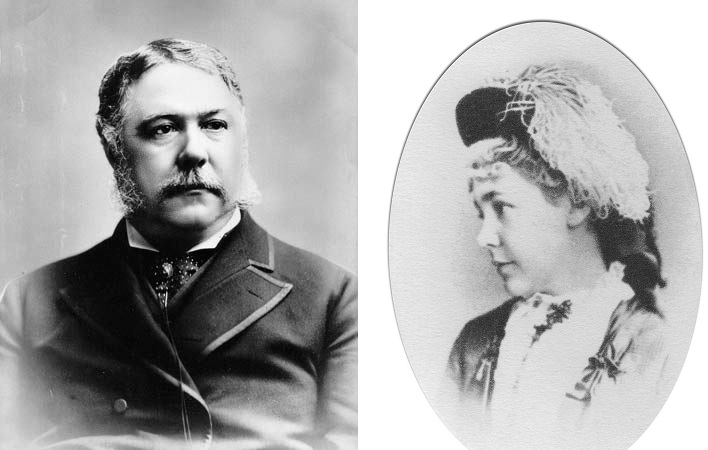
Chester Arthur and Julia

I’m pretty sick of U.S. Presidents and Presidential history at the moment, so for my own state of mind and perhaps yours, I’m re-posting a 2015 article about my favorite story about a President ever. Here it is…

In my overview of the U.S. presidency (the four parts are now combined on a single page under “Rule Book” above), I noted that our 21st President, Chester A. Arthur, was one of my personal favorites and an Ethics Hero. He confounded all predictions and his previous undistinguished background, not to mention a career marked  by political hackery and toadying to corrupt Republican power broker Roscoe Conkling, to rise to the challenge of the office and to effectively fight the corrupt practices that had elevated him to power. Most significantly, he established the Civil Service system, which crippled the spoils and patronage practices that made the Federal government both incompetent and a breeding ground for scandal.

I did not mention, because I did not then know, the unlikely catalyst for his conversion. Recently a good friend, knowing of my interest in Arthur, his tragic predecessor, James Garfield, and presidential assassinations sent me a copy of Destiny of the Republic, the acclaimed history of the Garfield assassination and its aftermath by Candace Millard. It’s a wonderful book, and while I knew much of the history already, I definitely did not know about Julia Sand. Her tale is amazing, and it gives me hope. If you do not know about Julia and Chester, and it is not a well-known episode, you should.

Continue reading

Post-Election Morning Ethics, Early Edition [UPDATED]

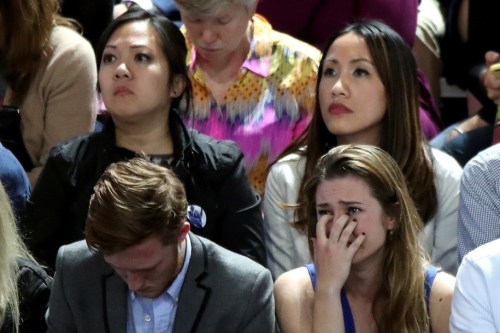
hillary-loses

Initial ethics observations following an amazing night in American history:

1. Give Trump a chance, and take note of those who will not.

He is now in the most difficult job in the nation at the age of 70, with less relevant experience and preparation than any previous occupant of the office. For once, it’s a good thing that he’s an egomaniac and a narcissist, because otherwise he might be perseverating in terror right now. One cannot say that he begins with the most daunting set of problems any POTUS has ever faced, but it’s close. Give him a chance. Nobody becomes President wanting to fail, and not wanting to do a good job for his country and his fellow citizens.  Begin with that, and let’s see what happens.

2. Those who are capable of being fair and objective should salute the shades of Mr. Madison, Mr. Jefferson, Mr. Adams, Mr. Hamilton and their colleagues. The Founders wanted a system that was capable of peaceful political upheaval when the public was dissatisfied and demanded change, and their unique creation was strutting its stuff last night. So much has taken place over the last year—the last eight years, really—that has undermined our democracy that it is refreshing to see its resilience and vitality. As before, I still believe that Trump is a cautionary tale about the danger when people who don’t understand leadership, ethics and government become the majority. On the other hand, it’s their country too, and the “elites” (how I detest that word) forgot that, repeatedly, shamelessly, and in many ways.

Jefferson would have reviled Donald Trump, but he would approve of the uprising.

3. Trump’s victory speech last night was widely reviewed as statesmanlike and gracious, which it was. It was also unusually coherent for him. Still, who can’t give a gracious victory speech? The effusive praise being lavished on this shows how low expectations are.

4. Hillary Clinton’s decision to not to appear in person at her headquarters and concede, also graciously, was a failure of character. On CNN, ex-Trump campaign manager Corey Lewandowski and ex-Obama flack Van Jones got in an argument over this, but for once in his life, Lewandowski  was right. Given the backdrop of Clinton and the media questioning whether Trump would “accept defeat,” the decision by Clinton was just plain wrong: unfair to Trump, unfair to her supporters, hypocritical. Continue reading

The Seventh Annual Ethics Alarms Awards: The Best of Ethics 2015, Part II

DavisHand

The Awards continue (Part I is here)….

Most Important Ethical Act of the Year:

The US Supreme Court’s Decision in  Obergefell v. Hodges in which the Supreme Court considered whether states had to recognize a right to same-sex marriages, and narrowly decided that they must. The prejudice against homosexuality is ancient, deep, and complex, mixed up in confounding ways with morality and religion, and deeply divisive. Nonetheless, I felt that the opinion should have been unanimous; it’s a shame that it was not, but in the end, this will not matter. The result was preordained from the moment gays began coming out of the shadows and asserting their humanity and human rights. Since the Stonewall riot, the nation and the culture has learned a great deal about the number of talented and productive gay men and women in our society and our history, the pain, ostracizing, discrimination and mistreatment they have suffered, and the falseness of the myths and fears that lead to this suffering.  In the end, as Clarence Darrow said about blacks, it is human beings, not law, that will make gays equal. No topic immediately causes such emotional and intense debate, on this blog or in society, as this one, but the Supreme Court’s decision is a major step toward changing the ethical culture, by asserting  that gay men and women have the same rights,  in the eyes of the state, to marry those they love and want to build a life with, and by implication, that the beliefs of any religion regarding them or their marriages cannot eliminate that right.

Outstanding Ethical Leadership

Senator Rand Paul.   I am neither a Rand Paul supporter, nor an admirer, nor a fan.  However, his June filibuster-like Senate speech against National Security Agency counter-terrorism surveillance was a brave, principled,  important act, and a great public service. The point Paul made needs to be made again, and again, and again:  there is no reason to trust the NSA, and no reason to trust the current federal government either. The fact that on security matters we have no real choice is frightening and disheartening, but nevertheless, no American should be comfortable with his or her private communications, activities and other personal matters being tracked by the NSA, which has proven itself incompetent, dishonest, an untrustworthy.


Parent of the Year

Tonya Graham

Toya Graham, the Baltimore mother caught on video as she berated and beat on her son in the street for participating in the Freddie Gray rioting and looting. Continue reading

Why The Sweet Briar College Fight Matters

sweet-briar-collegeEthics Alarms has been besieged by interest in the threatened Sweet Briar College closing, with the recent post on the topic already the third most viewed essay in the history of the blog. I was surprised; I shouldn’t have been. From an ethics and societal perspective, what the controversy stands for is as important as any covered here. It is also central to the nation itself.

When a business fails, the casualties include ambitions, opportunities, dreams, financial resources, community assets, and jobs. That is serious and tragic. Non profit organizations, however, exist to turn ideas into reality, to strengthen them, bolster them, and prove that they deserve to survive and flourish. The death of Sweet Briar will also mean the loss of ambitions, opportunities, dreams, financial resources, community assets, and jobs. Far more important, however, is that it will mean the death of an idea, or at very least the serious wounding of one.

This is why non profit boards should not be, as they so frequently are, merely comfortable curriculum vitae-stuffers  and networking forums for prominent dilettantes. Non profit boards are stewards of ideas, and they must also be willing and able to be warriors in defense of those ideas, if an idea is imperiled. It is not a job for the faint of heart, and the consequences of failure, or, as in the case of Sweet Briar, fearful and premature capitulation, are catastrophic, not just for the organization, institution and its constituents, but the entire U.S. culture.

Sweet Briar exists to nurture a particularly vital idea, the mission of training young womenContinue reading

Ethics Tales: How Julia Sand Saved A President And Changed The Nation

open book on concrete background

In my recent overview of the U.S. presidency (the four parts are now combined on a single page under “Rule Book” above), I noted that our 21st President, Chester A. Arthur, was one of my personal favorites and an Ethics Hero. He confounded all predictions and his previous undistinguished background, not to mention a career marked  by political hackery and toadying to corrupt Republican power broker Roscoe Conkling, to rise to the challenge of the office and to effectively fight the corrupt practices that had elevated him to power. Most significantly, he established the Civil Service system, which crippled the spoils and patronage practices that made the Federal government both incompetent and a breeding ground for scandal.

I did not mention, because I did not then know, the unlikely catalyst for his conversion. Recently a good friend, knowing of my interest in Arthur, his tragic predecessor, James Garfield, and presidential assassinations sent me a copy of Destiny of the Republic, the acclaimed history of the Garfield assassination and its aftermath by Candace Millard. It’s a wonderful book, and while I knew much of the history already, I definitely did not know about Julia Sand. Her tale is amazing, and it gives me hope. If you do not know about Julia and Chester, and it is not a well-known episode, you should.

Allow me to tell it to you?

James Garfield, an Ohio Congressman, had been the dark horse nominee of the Republican Party in 1880, foiling the ambitions of many powerful politicians, the most powerful among them being Sen. Roscoe Conkling of New York. In order to cement New York’s electoral votes, the convention gave the Vice Presidential nomination to Conkling’s lackey, the dignified-looking but otherwise unimpressive Chester A. Arthur, who may have been the least qualified individual ever to run for that office. The highest position he had ever held was Collector of Customs of the Port of New York, which had been handed to him by Conkling, and he was later removed from that post for incompetence and corruption.  He’d never been elected to significant office or been any kind of executive. Arthur’s career before becoming Vice President makes Sarah Palin look like Winston Churchill.

After the election, Arthur got to work being a disloyal Vice-President, acting as Conklin’s agent in the White House. (Arthur, a widower, even lived as a guest in Conkling’s Washington mansion.) He actively undermined Garfield’s efforts at government reform, at one point going so far as signing a petition supporting Conkling when Garfield refused to appoint only Cabinet members with the Conkling stamp of approval. Then,  on July 2, 1881, less than six months after taking office, the impressive Garfield was shot in Washington D.C.’s Union Station by Charles Guiteau, easily the craziest of the various crazies who have taken a shot at our leaders. (He was also the only lawyer in that group.)

Everybody was horrified, initially at the crime, but also at the prospect of Arthur becoming President. Some even suspected him of being complicit in the act; Guiteau didn’t help by writing Arthur a letter prior to his attack telling him what he needed to do as President.  Most, however, were just aghast at the prospect of the brilliant, courageous, skilled and honorable Garfield being replaced by this utter non-entity under Conkling’s thumb.

None were more aghast than Chester A. Arthur. He may have been a hack, but he was no fool, and he knew he wasn’t up to the job. It was reported that when he learned of Garfield’s shooting, Arthur began weeping like a child. During the nearly three months it took the hardy Garfield to die—he was killed by sepsis induced by the unsanitary prodding of his doctors as they searched for Guiteau’s bullet: the wound itself was probably survivable—Arthur descended into panic, shock, and depression.  For nearly two months, he stayed at home with the blinds drawn, fearing his own assassination. So invisible was he that there were  rumors that Arthur had poisoned himself.

Then Arthur received a letter, dated August 27, 1881, from a woman he did not know, Julia Sands. It immediately got his attention, for she addressed him in a manner he had never been spoken or written to before. The remarkable letter said in part… Continue reading