This just in:
You know that aneurysm-inducing defense in the case of the Republican consultant who created a robocall designed to trick black Democrats into not voting on election day?
This just in:
You know that aneurysm-inducing defense in the case of the Republican consultant who created a robocall designed to trick black Democrats into not voting on election day?
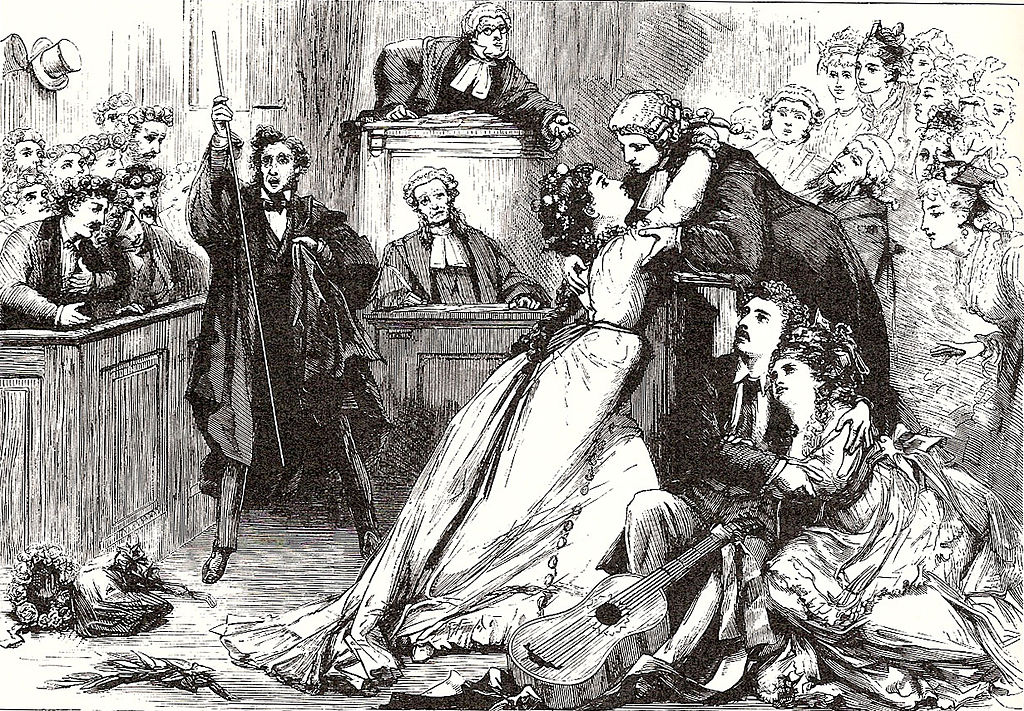
The courtroom chaos of Gilbert and Sullivan’s “Trial By Jury” was nothing compared to this!
One thing we do know for sure: the lawyer was rushed. And therein lies much of the problem.
This mind-blowing scenario, that could have easily been an episode on “Boston Legal” or “Ally McBeal,” occurred in California. After a week long trial in a personal injury case where the brain-damaged plaintiff’s lawyer had asked for millions in damages, jurors deliberated only four hours and announced they’d reached a decision. Both lawyers were certain a defense verdict, against the disabled man, was coming. Plaintiffs attorney C. Michael Alder pulled defense counsel into the hallway for last-minute settlement negotiations, hoping that the defense would agree to some damages as insurance against a surprise plaintiff’s verdict. With his developmentally disabled client (who had suffered brain injuries in a fall from an ambulance) and his mother by his side, Alder exchanged figures and rejections with defense lawyer James Siepler, who had an insurance claims adjuster on his cellphone.
Los Angeles County Superior Court Judge Michael Johnson was impatient, for the jury was ready to give its verdict. Literally at the last second, Alder and Siepler agreed to a $350,000 settlement, and returned to the courtroom. “The parties have advised me that they have reached a settlement of the case,” the judge informed the jurors, adding, “They will be happy to talk with you out in the hallway to get your views.”
They got the jurors’ views, all right. The jurors told the attorneys that they were going to award the plaintiff 9 million dollars. Continue reading
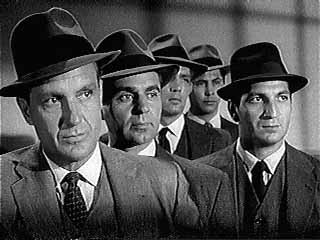
Robert Stack as Eliot Ness with the rest of TV's "The Untouchables." Now THOSE guys were professional. You'd never see THEM text messaging jokes to Al Capone...
The Washington Post ran a story Tuesday describing how the defendants in an elaborate FBI sting operation escaped conviction as a consequence of the revelation of racy text messages between the agents and their undercover informant. Agents and their key informant bantered “about sex, booty calls, prostitutes, cigars, the Village People, the informant’s wives and an agent’s girlfriend.” When the arrests were first announced by the Justice Department, the operation was regarded as a model law enforcement success. But federal prosecutors failed to win a single conviction, in large part because defense lawyers used the text messages to raise juror doubts about the credibility and professionalism of FBI agents. Now the Justice Department says that in light of the first two trials, the government is evaluating “whether to continue to go forward” with the remaining prosecutions of 16 defendants, seven of whom had their cases end in hung juries.
During the most recent trial of six men and women on charges of paying bribes to win business with a foreign government, the defense attorney used the FBI’s texts both to attack the character of the informant and to suggest that the lead agent was an untrustworthy, bigoted, anti-gay misogynist. The FBI believes this was unfair, and an example of a lawyer’s trick defeating justice. Informants, almost without exception, are sleazy characters, and managing them takes skill and guile. The agents felt it was essential to build trust, which meant working to develop a collegial relationship, at least in the informant’s mind. The text banter, they say, was designed to ensure the loyalty of a low-life, which required the agents to sometimes act like low-lifes themselves. Thus they texted messages back and forth that included bawdy jokes, innuendos about sex, anti-gay stereotypes and more, all in a buddy-buddy tone that the jury found troubling. “The texts were one of many things that point to an absolutely amateurish operation,” the jury foreman told the Post. Continue reading
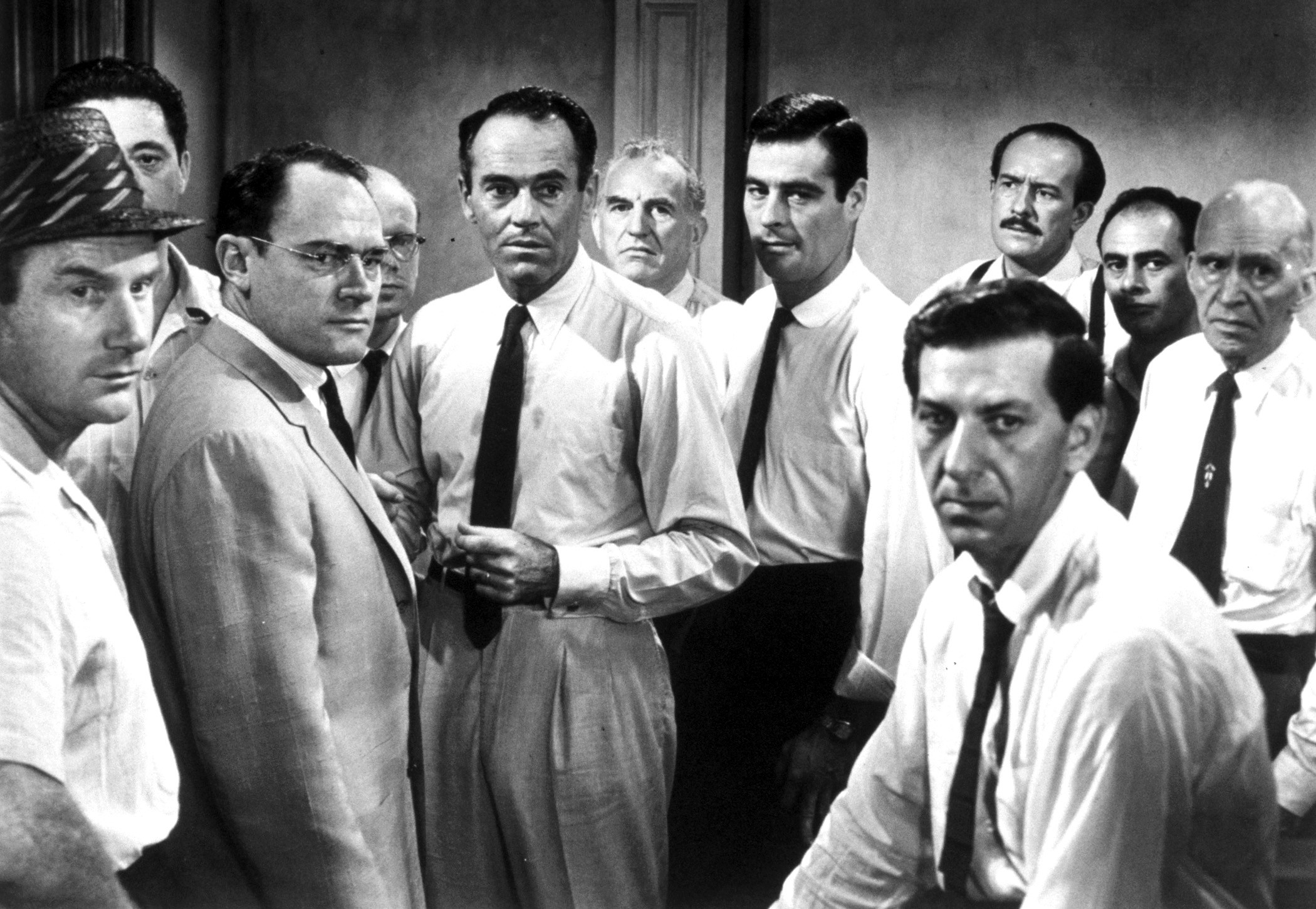
Their defendant was probably guilty too.
Ethics Alarms All-Star Lianne Best sent me this link about a member of the Casey Anthony jury who is going into hiding because of all the hate and criticism being directed at jury members and their controversial verdict. Her plight, which must be shared by other members of the much-maligned jury, highlights the unethical, not to mention ignorant, reaction of the public to the Florida ex-mother’s narrow escape from a murder conviction she almost certainly deserved.
The problem begins with publicity. We may need to re-examine the logic behind broadcasting high-profile cases. The combination of live courtroom feeds and quasi-semi-competent commentary gives viewers the mistaken belief that they are qualified to second guess the jury, and they are not. They are not because the jury is in the courtroom, and the viewers aren’t. The jury and TV watchers see different things; individuals communicate different emotions and reactions in person than they do on camera. There is only one fair and sensible way to answer those on-line instant polls that ask, “Do you think Casey Anthony should be found guilty?”, and that is “I don’t know.”
Most of all, the viewers and pundits are not present in the jury room. Continue reading

America saved Casey Anthony, and we should be glad it did.
A Florida jury pronounced Casey Anthony not guilty of murder, aggravated child abuse or aggravated manslaughter in connection with the 2008 death of her two-year-old daughter, Caylee. It did find that she had lied to investigators and police, which was well-established during the trial.
Did she murder her daughter, as the prosecution claimed? Oh, sure she did; I don’t think any of the jury members will be asking Anthony to babysit for their kids any time soon. But the case against her was circumstantial. She was proven to be a liar, irresponsible, feckless, self-centered, deluded and callous, and the prosecution’s theory made a lot more sense that the defense’s alternative scenario. Still, there was not enough evidence to find Casey Anthony guilty of murder beyond a reasonable doubt. That’s the standard, not “it’s almost certain that she did it.” Despite all the media pundits who said it would be a slam-dunk conviction, despite all the community sentiment to make the party girl mother pay with her life for killing her child, the evidence to meet the intentionally tough standard of American justice just wasn’t there.
Already, reporters and commentators are comparing the verdict to the O.J. Simpson trial. Wrong. Continue reading
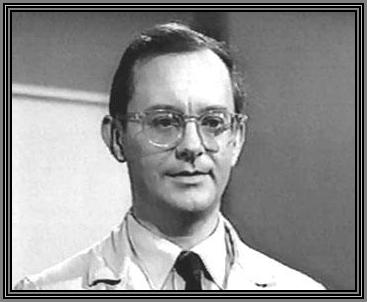
Mr. Peepers, axe-muderer
Terrorist and mass murderer Ahmed Khalfan Ghailani was acquitted this week of 284 counts of murder , deaths that he unquestionably engineered, planned, a brought about in the 1998 bombings of the U.S. embassies in East Africa. He was convicted of just one count: conspiracy to destroy U.S. property and buildings. Since one logically cannot conspire to destroy buildings with people in them and not be guilty of murder, the verdicts make no sense. There was indeed plenty of evidence presented to prove Ghailani guilty of all the murder counts beyond a reasonable doubt, but this was just a bad jury, or to be more precise, a jury with a bad juror. We now know that one women held out against the rest, insisting on acquittal for the murder charges for reasons known only to her. Maybe she thought he was Ghailani. Maybe she wanted to make the Obama Administration, and specifically the Department of Justice, look inept, though it hardly needs any assistance. Maybe she’s a fan of terrorism. Maybe she’s just a dolt….who knows? The bottom line is that a terrorist got away with murder. Continue reading
It was bound to happen, which is not to say that there is any excuse for it. A juror during on a day off from trial, told the world via Facebook that she had already decided the defendant was guilty, writing that it was “gonna be fun to tell the defendant they’re guilty.” This statement, in addition to showing a disturbing lack of compassion and empathy, not to mention meanness, also was a violation of her duties as a juror. The trial wasn’t even finished, the jury hadn’t deliberated, and yet Hadley Jons, 20, had already decided on her vote and was bragging about it. Continue reading
After January 1, 2011, when you begin to process all the new taxes coming your way and all the deductions you can no longer take, think about this:
The nation’s largest trial lawyer trade group, the American Association for Justice, has announced it was informed by Obama Administration officials that the U.S. Department of Treasury will give its members (and all tort lawyers) a tax break on contingency fee lawsuits. The new provision is expected to mirror proposed legislation by Sen. Arlen Specter, himself a lawyer, that was previously rejected by Congress last year. That bill would have allowed attorneys to deduct up-front costs in contingency fee lawsuits. Continue reading
Personal injury lawyers, along with their close trial lawyer cousins, the medical malpractice and product liability lawyers, have an unjust reputation. The American tort system is the fairest in the world, and the work of trial lawyers saves lives while it is getting compensation and damages for people who have been injured by the careless, negligent, reckless or malicious acts of others.
Unfortunately, rare cases like that of Lauren Rosenberg overshadow all of this, which is just one of the reasons her lawsuit against Google is objectionable. When you walk down the middle of a highway and get hit by a car, you may have some justification for suing the driver of the car. But suing the website that suggested that you walk on the road? That’s the theory of Laura and her lawyer. According to PC World, Rosenberg was trying to get from 96 Daly Street, Park City, Utah, to 1710 Prospector Avenue, Park City, Utah, and looked up the walking directions on her Blackberry using Google Maps . Google suggested a half-mile walk down “Deer Valley Drive,” also known as “Utah State Route 224,” which should have been a clue. But Google-trusting Laura started walking down the middle of the highway, and sure enough, a car hit her. Her complaint says: Continue reading
 Ethics Alarms