Undercutting the “Nerd Defense”

“A killer? Him? Come on, look at him. He couldn’t hurt a fly!”

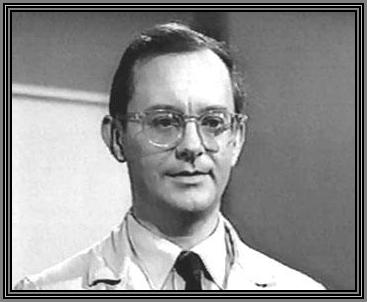
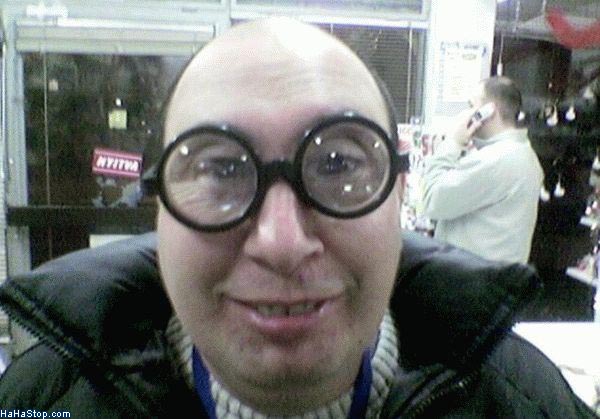
More than a year ago, Ethics Alarms discussed the ethics of a current criminal defense tactic employed by lawyers with clients accused of violent crimes, putting them in nerdy glasses:

“It’s not a guarantee, but  the Daily News report says that criminal defense lawyers “swear by the gimmick, believing the right spectacles can make a sinister-looking murder suspect seem like a perfect gentleman.” “Glasses soften their appearance so that they don’t look capable of committing a violent crime,” veteran lawyer Harvey Slovis told the paper.”I’ve tried cases where there’s been a tremendous amount of evidence, but my client wore glasses, dressed well and got acquitted.” Cordero, who was represented by Slovis, wore bifocals throughout his trial, but threw them away the moment he was free.”

I’ve quizzed lawyers about the ethics of this tactic in my CLE classes, and they nearly unanimously agree that the tactic crosses no ethical lines that can be drawn with appropriate precision. I’m not so sure. I think it goes beyond merely giving your axe-murderer a shave and a haircut so he doesn’t look like an axe murderer, and edges into the realm of intentional deception. Apparently some courts may agree. Continue reading →

“Is We Getting Dummer?” Oh,Yes. Does We Care?

Why yes, it DOES remind me of “Idiocracy,” which is only funny if it isn’t true.

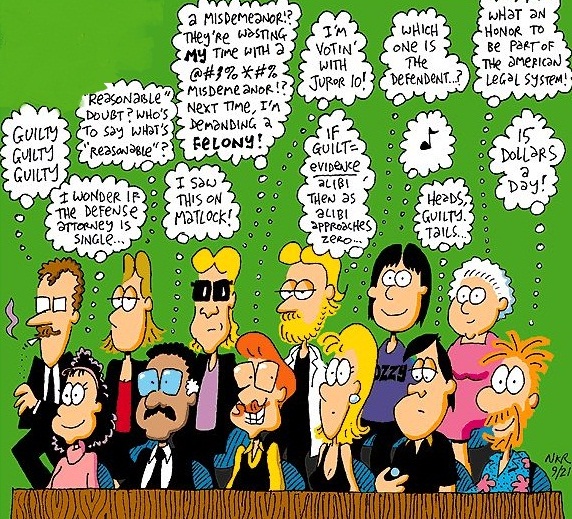
Today, just prior to convicting Drew Peterson of killing his wife, his jury sent a message to the judge asking what the word “unanimous” meant.

Think about the implications of this. First of all, it means that one man’s life and the U.S. justice system’s integrity is resting on the judgment of twelve people, not one of whom possesses a fifth grade vocabulary, or, if one of them does, he or she did not possess the skills of persuasion or credibility to convince a majority of his colleagues that yes, “unanimous” means that everybody is in agreement. It means that the voir dire system managed to carefully select the most ignorant and inarticulate jury of adults imaginable for a first degree murder trial.

That’s not all. It means that in Joliet, Illinois, a select group of twelve adults, in addition to possessing only a rudimentary English vocabulary, were completely uninformed about the jury system. To reach adulthood this stunningly ignorant about one of the basic features of our justice system and  democracy, these individuals could not have regularly read newspapers or watched the news, and if they did, could not possibly have understood what they were reading or seeing. Continue reading →

Roger Clemens Was Acquitted, Not “Vindicated”

The first ethics breach is the utter incompetence of reporters who nonetheless are permitted to go on the air and mislead the public. A jury acquitted baseball great Roger Clemens  of 6 counts of perjury today, and I have just screamed in my car, frightening Rugby (my Jack Russell Terrier), after hearing three reporters on three radio stations say that Clemens was “vindicated.”

Incompetents. Ignoramuses. Continue reading →

Bizarro World Legal Ethics Update….

This just in:

You know that aneurysm-inducing defense in the case of the Republican consultant who created a robocall designed to trick black Democrats into not voting on election day?

It worked. Continue reading →

The Messy Case of the Courageous/ Zealous /Inept/ Dedicated/ Venal/ Lying/ Unethical/ Ethical Lawyer

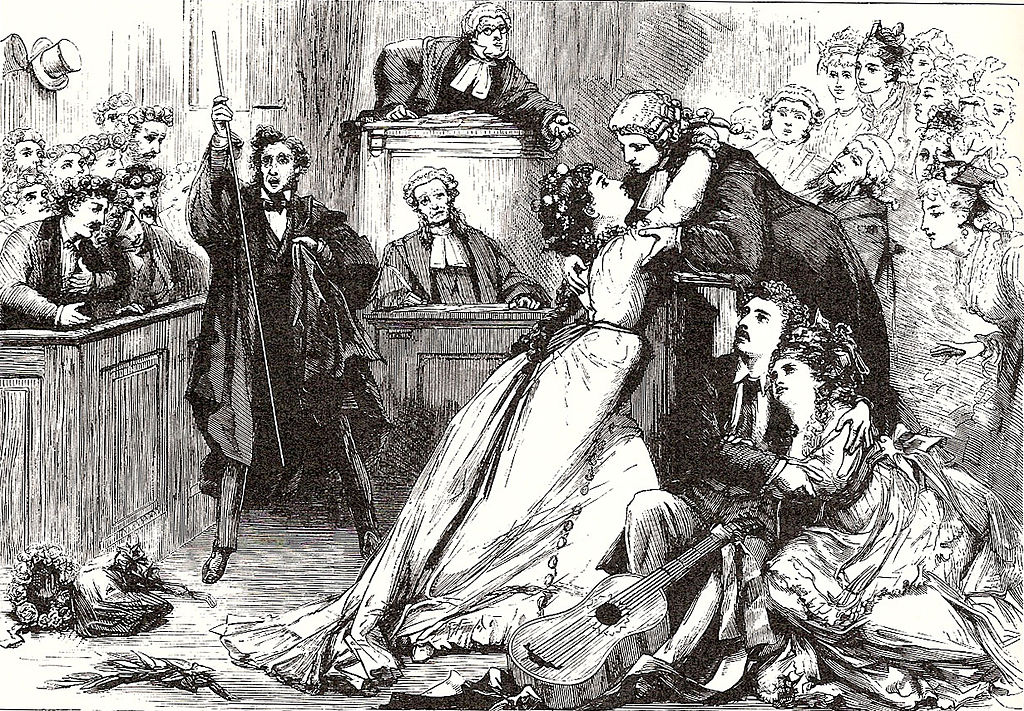
The courtroom chaos of Gilbert and Sullivan’s “Trial By Jury” was nothing compared to this!

One thing we do know for sure: the lawyer was rushed. And therein lies much of the problem.

This mind-blowing scenario, that could have easily been an episode on “Boston Legal” or “Ally McBeal,” occurred in California.  After a week long trial in a personal injury case where the brain-damaged plaintiff’s lawyer had asked for millions in damages, jurors  deliberated only four hours and announced they’d reached a decision. Both lawyers were certain a defense verdict, against the disabled man, was coming. Plaintiffs attorney C. Michael Alder pulled defense counsel  into the hallway for last-minute settlement negotiations, hoping that the defense would agree to some damages as insurance against a surprise plaintiff’s verdict. With his developmentally disabled client (who had suffered brain injuries in a fall from an ambulance) and his mother by his side, Alder exchanged figures and rejections with   defense lawyer James Siepler, who had an insurance claims adjuster on his cellphone.

Los Angeles County Superior Court Judge Michael Johnson was impatient, for the jury was ready to give its verdict. Literally at the last second,  Alder and Siepler agreed to a  $350,000 settlement, and returned to the courtroom. “The parties have advised me that they have reached a settlement of the case,” the judge informed the jurors, adding, “They will be happy to talk with you out in the hallway to get your views.”

They got the jurors’ views, all right. The jurors told the attorneys that they were going to award the plaintiff 9 million dollars. Continue reading →

The Perils of Ignoring Professionalism

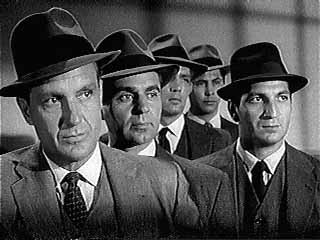
Robert Stack as Eliot Ness with the rest of TV's "The Untouchables." Now THOSE guys were professional. You'd never see THEM text messaging jokes to Al Capone...

The Washington Post ran a story Tuesday describing how the defendants in an elaborate FBI sting operation escaped conviction as a consequence of the revelation of racy text messages between the agents and their undercover informant. Agents and their key informant bantered “about sex, booty calls, prostitutes, cigars, the Village People, the informant’s wives and an agent’s girlfriend.”  When the arrests were first announced by the Justice Department, the operation was regarded as a model law enforcement success. But federal prosecutors failed to win a single conviction,  in large part because defense lawyers used the text messages to raise juror doubts about the credibility and professionalism of FBI agents. Now the Justice Department says that in light of the first two trials, the government is evaluating “whether to continue to go forward” with the remaining prosecutions of 16 defendants, seven of whom had their cases end in hung juries.

During the most recent trial of six men and women on charges of paying bribes to win business with a foreign government, the defense attorney used the FBI’s texts both to attack the character of the informant and to suggest that the lead agent was an untrustworthy, bigoted, anti-gay misogynist. The FBI believes this was unfair, and an example of a lawyer’s trick defeating justice. Informants, almost without exception, are sleazy characters, and managing them takes skill and guile. The agents felt it was essential to build trust, which meant working to develop a collegial  relationship, at least in the informant’s mind. The text banter, they say, was designed to ensure the loyalty of a low-life, which required the agents to sometimes act like low-lifes themselves. Thus they texted messages back and forth that included bawdy jokes, innuendos about sex, anti-gay stereotypes and more, all in a buddy-buddy tone that the jury found troubling. “The texts were one of many things that point to an absolutely amateurish operation,” the jury foreman told the Post. Continue reading →

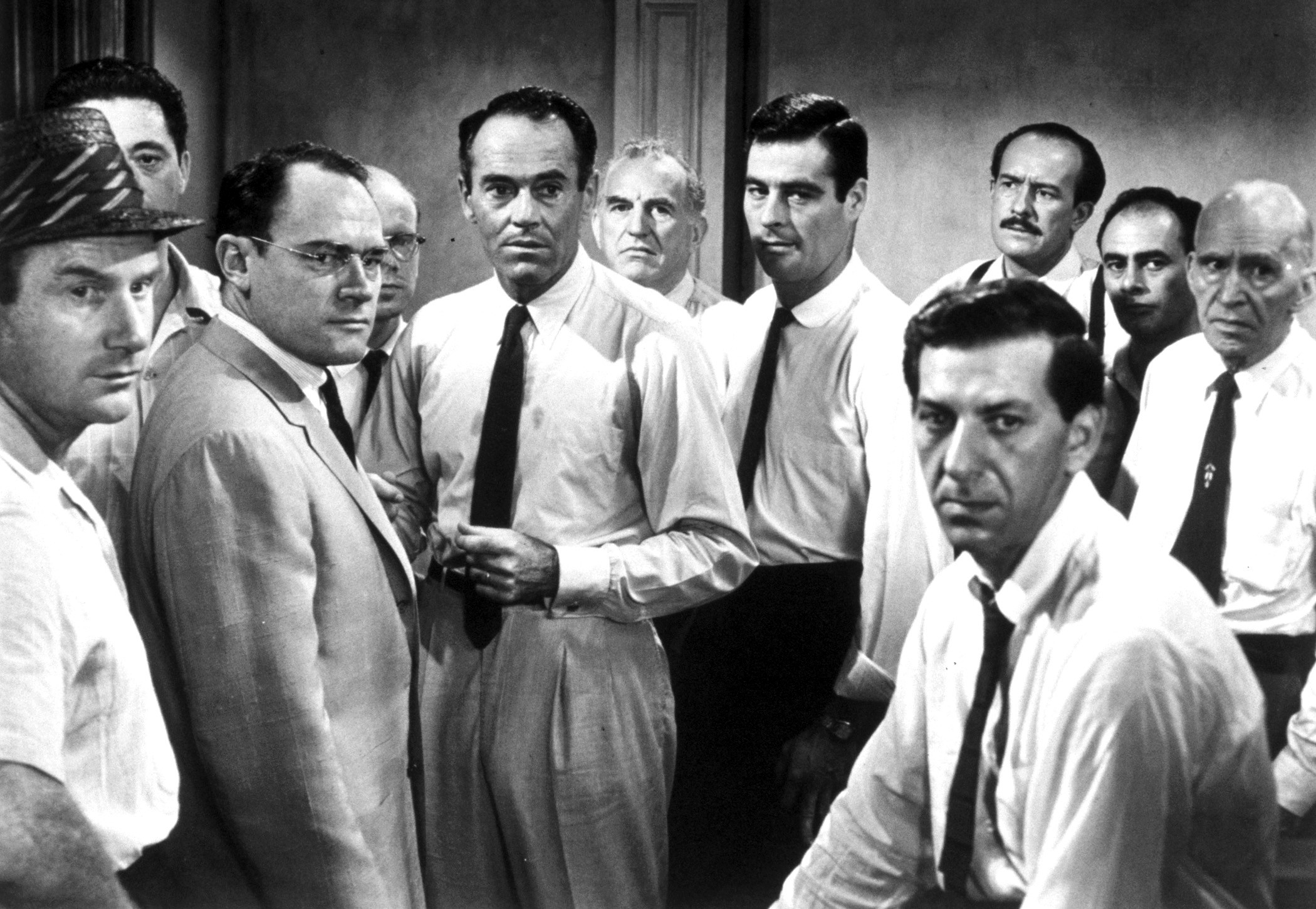
“Twelve Angry Men,” A Million Angry Fools, and the Jury System

Their defendant was probably guilty too.

Ethics Alarms All-Star Lianne Best sent me this link about a member of the Casey Anthony jury who is going into hiding because of all the hate and criticism being directed at jury members and their controversial verdict. Her plight, which must be shared by other members of the much-maligned jury, highlights the unethical, not to mention ignorant, reaction of the public to the Florida ex-mother’s narrow escape from a murder conviction she almost certainly deserved.

The problem begins with publicity. We may need to re-examine the logic behind broadcasting high-profile cases. The combination of live courtroom feeds and quasi-semi-competent commentary gives viewers the mistaken belief that they are qualified to second guess the jury, and they are not. They are not because the jury is in the courtroom, and the viewers aren’t. The jury and TV watchers see different things; individuals communicate different emotions and reactions in person than they do on camera. There is only one fair and sensible way to answer those on-line instant polls that ask, “Do you think Casey Anthony should be found guilty?”, and that is “I don’t know.”

Most of all, the viewers and pundits are not present in the jury room. Continue reading →

Ethics Heroes: The Casey Anthony Jury

America saved Casey Anthony, and we should be glad it did.

A Florida jury pronounced Casey Anthony not guilty of murder, aggravated child abuse or aggravated manslaughter in connection with the 2008 death of her two-year-old daughter, Caylee. It did find that she had lied to investigators and police, which was well-established during the trial.

Did she murder her daughter, as the prosecution claimed? Oh, sure she did; I don’t think any of the jury members will be asking Anthony to babysit for their kids any time soon. But the case against her was circumstantial. She was proven to be a liar, irresponsible, feckless, self-centered, deluded and callous, and the prosecution’s theory made a lot more sense that the defense’s alternative scenario. Still, there was not enough evidence to find Casey Anthony guilty of murder beyond a reasonable doubt. That’s the standard, not “it’s almost certain that she did it.” Despite all the media pundits who said it would be a slam-dunk conviction, despite all the community sentiment to make the party girl mother pay with her life for killing her child, the evidence to meet the intentionally tough standard of American justice just wasn’t there.

Already, reporters and commentators are comparing the verdict to the O.J. Simpson trial. Wrong. Continue reading →

The Ghailani Verdict Spin

Terrorist and mass murderer Ahmed Khalfan Ghailani was acquitted this week of 284 counts of murder , deaths that he unquestionably engineered, planned, a brought about in the 1998 bombings of the U.S. embassies in East Africa. He was convicted of just one count: conspiracy to destroy U.S. property and buildings. Since one logically cannot conspire to destroy buildings with people in them and not be guilty of murder, the verdicts make no sense. There was indeed plenty of evidence presented to prove Ghailani  guilty of all the murder counts beyond a reasonable doubt, but this was just a bad jury, or to be more precise, a jury with a bad juror. We now know that one women held out against the rest, insisting on acquittal for the murder charges for reasons known only to her. Maybe she thought he was Ghailani. Maybe she wanted to make the Obama Administration, and specifically the Department of Justice, look inept, though it hardly needs any assistance. Maybe she’s a fan of terrorism. Maybe she’s just a dolt….who knows? The bottom line is that a terrorist got away with murder. Continue reading →