The SCOTUS Ruling In Trump v. Hawaii [UPDATED]

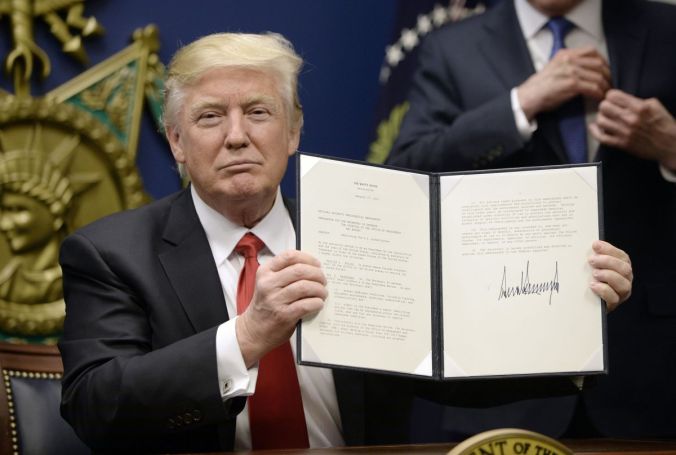
The Supreme Court properly and ethically  killed the burgeoning liberal judicial theory that different Presidents have different restrictions on how they can exercise established Presidential powers. The majority in in the just announced decision in Trump v. Hawaii conclusively struck down a Hawaii judge’s ruling that Trump’s hostile comments about Muslims on the campaign trail rendered his travel restrictions unconstitutional, while a similar measure ordered by a nice President for the right intuited reasons would be presumably acceptable. This seemingly partisan ruling required substituting mind-reading for the President’s stated reasons for the Executive Order, and would have established a terrible precedent in a number of areas.

Sadly, this was another 5-4 ruling where the Court seemed to divide along ideological lines. However, since it seems clear that the five conservatives would have ruled the same way no matter which party’s President had issued the order, while the liberal bloc was indulging “the resistance” with a “Trump is special” approach, only one side of the political divide appears to have left integrity and and objectivity in their spare robes. Many, many commentators around the web have noted that this should have been a 9-0 decision, and that the political bias of the Hawaii decision was flagrant from the start. I agree. The President’s authority in this area is clear and unambiguous.

Writing for the majority, Chief Justice John Roberts wrote that the government “has set forth a sufficient national security justification” for its action. “We express no view on the soundness of the policy,” Roberts added.

More, from the holding: Continue reading
Four Supreme Court Decisions: Abortion, Guns, Affirmative Action, Corruption…And Ethics. Part 4: Voisine v. United States

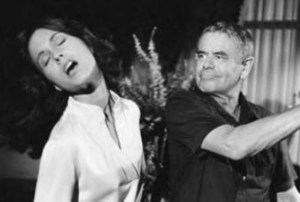
"Aw, come on, that was a love tap! Now put some ice on that while I go out and buy a Glock...."

“Aw, come on, that was a love tap! Now put some ice on that while I go out and buy a Glock….”

Be honest, now: you thought I’d never finish this series, did you? (Part 1 was posted June 28.)

In Voisine v. United States, a 6-2 U.S. Supreme Court holding issued on June 27 approved extending a federal statute banning firearms possession by anyone convicted of a “misdemeanor crime of domestic violence” to include individuals who have “misdemeanor assault convictions for reckless (as contrasted to knowing or intentional) conduct.”

Justice Elena Kagan, writing for the majority, said that “the federal ban on firearms possession applies to any person with a prior misdemeanor conviction for the ‘use…of physical force’ against a domestic relation. That language, naturally read, encompasses acts of force undertaken recklessly—i.e., with conscious disregard of a substantial risk of harm.”

The opinion isn’t remarkable, nor is it a significant attack on gun rights. The case is really about language, as so many Supreme Court cases are. From the opinion:

“Congress’s definition of a “misdemeanor crime of violence” contains no exclusion for convictions based on reckless behavior. A person who assaults another recklessly “use[s]” force, no less than one who carries out that same action knowingly or intentionally. The relevant text thus supports prohibiting petitioners, and others with similar criminal records, from possessing firearms.”

The real question, from an ethical standpoint, is whether Congress can and should remove a citizen’s Second Amendment right based on a misdemeanor conviction for domestic abuse. Is that fair? Sure it is. It is already settled law that it is Constitutional to prevent convicted felons from owning  guns, even if it was a non-violent felony. From an ethical public policy standpoint, why would it be overly restrictive to ban gun ownership from those who engage in a violent misdemeanor?

Writing in dissent, Justice Clarence Thomas, joined by Justice Sonia Sotomayor (of all people), rejected the majority’s “overly broad conception of a use of force.” In the view of the two dissenters, “the majority blurs the distinction between recklessness and intentional wrongdoing” and thereby does a grave injustice to criminal defendants. Continue reading

Res Ipsa Loquitur Ethics Quote Of The Day: Law Professor/Blogger/Irony Master Ann Althouse

free-bingo-design

The NYT article tells us that Sotomayor’s remarks were published in the Berkeley La Raza Law Journal and that she also said:

“Whether born from experience or inherent physiological or cultural differences,” she said, for jurists who are women and nonwhite, “our gender and national origins may and will make a difference in our judging.”…

… Judge Sotomayor questioned whether achieving impartiality “is possible in all, or even, in most, cases.” She added, “And I wonder whether by ignoring our differences as women or men of color we do a disservice both to the law and society.” She also approvingly quoted several law professors who said that “to judge is an exercise of power” and that “there is no objective stance but only a series of perspectives. Personal experiences affect the facts that judges choose to see,” she said.

So has Donald Trump refrained from doing a disservice both to the law and society?

—-Ann Althouse, making a slam-dunk point about the hypocrisy of the uproar over Donald Trump’s “racist”suggestion that a Hispanic-American judge might be biased against him.

Althouse and I are right, and almost everyone else is wrong. It’s obvious, and beyond rebuttal on the facts. Althouse has joined me as one who also deplores everything about Donald Trump but who is determined to call out intellectual dishonesty and unfairness in the attacks against him. She also posted this… Continue reading

Ethics Dunce: U.S. Supreme Court Justice Sonia Sotomayor

"Hey, when you leave, will you ask the bar rep with the gun outside my office what a good job I did for you? I can get bonus credit!"

“Hey, when you leave, will you tell the bar rep with the gun outside my office what a good job I did for you? I can get bonus credit!”

Speaking before an audience at the American Law Institute, U.S. Supreme Court Justice Sonya Sotomayor said that she advocated mandatory pro bono service ( that is, for no compensation) to poor citizens by all lawyers. “If I had my way, I would make pro bono service a requirement,” she said.

“I believe in forced labor.”

This is the quality of thought that we get on the highest court in the land, that must decided our most difficult, controversial and society-molding legal. This is what we end up with when a Justice is appointed in order to check off group identify boxes for “diversity” rather than on the basis of ability.

Sotomayor made the comment at the American Law Institute’s annual meeting in Washington, in response to a question from institute director Richard Revesz about the problem of improving access to low-cost and effective legal services for low-income individuals. I’m pretty sure the “forced labor” comment was delivered as a joke, but it looks terrible in print, and immediately drew a predictable response from conservative pundits. “YOU BELONG TO THE STATE” quipped Instapundit’s Glenn Reynolds.
Continue reading