Mahmoud v. Taylor: No, LBGTQ Indoctrination Is Not The Theory of Evolution

…and shame on the three Progressive, woke Justices who are implying that it is.

24-297 Mahmoud v. Taylor (06/27/2025), just handed down by the Supreme Court, should have been an easy 9-0 decision. Sadly, the three female radicals on the Court (I once had high hopes for Justice Kagan, who’s not, you know, an idiot like the other two, but she clearly has been brain-washed with Clorox or something, so the tally was 6-3) opposed the holding that families choosing not to have their children exposed to pro-gay, bi-, trans, etc propaganda in their public school classes have a right to do so. (At least the majority didn’t say parents have an obligation to do so, which would have been my position.)

The decision declared illegal a Maryland school board’s decision to deny opt-outs for religious students during such scintillating in-class readings as “Uncle Bobby’s Wedding,” a story about a child’s gay uncle marrying a man, and “Pride Puppy,” an alphabet primer about a dog who gets lost at a gay pride parade. Incredibly, the lower court and Court of Appeals had sided with the school against a group of Muslim, Roman Catholic and Ukrainian Orthodox parents who argued that the school board’s lack of an opt-out policy breached their right to exercise their religion under the First Amendment.

“The Board’s introduction of the ‘LGBTQ+-inclusive’ storybooks, along with its decision to withhold opt outs, places an unconstitutional burden on the parents’ rights to the free exercise of their religion,” Justice Samuel Alito Jr. wrote for the conservative majority. “[F]or many people of faith across the country, there are few religious acts more important than the religious education of their children…In the absence of an injunction, the parents will continue to be put to a choice: either risk their child’s exposure to burdensome instruction, or pay substantial sums for alternative educational services.”

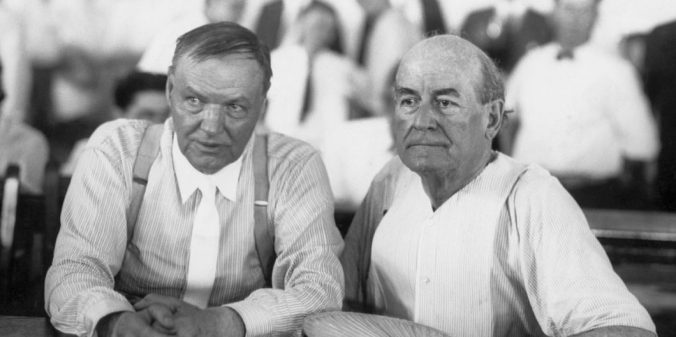
To read the hysterical dissent from the three knee-jerk progressives, SCOTUS just returned to the bad old days of Tennessee v. Scopes (1925), when a state made it illegal to teach Darwin’s theory of evolution because it contradicted the Bible (as Clarence Darrow showed by making a monkey out of William Jennings Bryan on the witness stand, Darwin didn’t and doesn’t).
Continue reading

Sorrell v. IMS Health: Legal, Ethical, and Unjust

The case of Sorrell v. IMS Health, which the Supreme Court decided yesterday, sharply focuses the philosophical disagreement over the role of the courts in public policy. The legal question was rather straightforward; the ethical issues are complex. Is it the Court’s duty to make bad—but constitutional— laws work, or is its duty to follow the laws, and leave it to the legislature to fix their flaws?

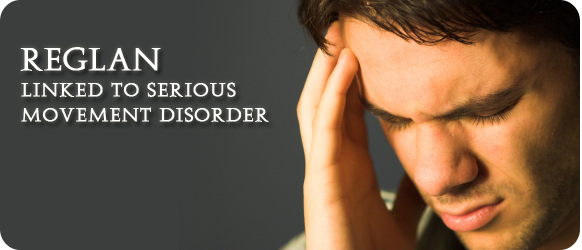
This was a case about incompetent  lawmaking. Gladys Mensing and Julie Demahy had sued Pliva and other generic drug manufacturers in  Louisiana and Minnesota over the labels for metoclopramide, the generic version of Reglan. The drug, used to treat acid reflux, had caused them to develop a neurological movement disorder called tardive dyskinesia. None of the generic drug’s manufacturers and distributors included warnings on the labels about the danger of extended use of the medication, even though the risk was known to them. Neither did the manufacturers of the brand-name drug. The problem was that the state statutes required generic drug manufacturers to included warnings about dangerous side effects, while federal regulations required generic drugs to carry the exact same label information as their brand name equivalent.  Continue reading

The Supreme Court Looks at Miranda and Ethics

The recent Supreme Court ruling in Berghuis v. Thompkins is another in the long line of opinions attempting to determine what the familiar words (to all you “Law and Order” fans), “You have the right to remain silent” really mean. At its core, however, it is about ethics.

The various opinions interpreting the landmark 1966 case ruling in Miranda v. Arizona, which ended the common police practice of sweating, beating and otherwise coercing confessions from criminal suspects in marathon interrogation sessions had, amazingly, never before dealt with the wrinkle presented in Thompkins. The suspect in a shooting was given the Miranda warning, but never said that he wanted his lawyer or that he refused to testify, as he had the right to do. He just sat through almost three hours of questions without saying a word, and then, near the end, uttered a one word answer, “Yes,” to the question of whether he would pray to God for forgiveness for the shooting.

This admission helped convict him at trial. Continue reading

State of the Union Ethics Alarms

President Obama’s State of the Union message didn’t quite set off accusations of mendacity on the scale of President Bush’s yellow cake uranium comment in 2003, and Rep. Joe Wilson didn’t yell out “You lie!” (thanks for that, Joe), but the President did make some assertions that, if not intentionally inaccurate, were recklessly misleading. The most striking one was contained in the President’s attack on the recent Supreme Court decision in Citizens United v. Federal Election Commission He said:

“With all due deference to separation of powers, last week the Supreme Court reversed a century of law that, I believe, will open the floodgates for special interests, including foreign corporations, to spend without limit in our elections.”

This prompted Justice Joseph Alito, sitting with his colleagues, to say quietly, to himself or to Justice Sotomayor who was next to him, “Not true, not true.” And he was right: much of the statement wasn’t accurate. (Was Alito’s mouthed protest any sort of civility breach? No. Obama couldn’t see it; it is possible nobody heard it at all. Justice Alito was not mouthing the words for lip-readers in the television audience. No ethics foul. However, Alito may want to practice his poker face in the future.  Next time, he won’t be so surprised: for a President to directly criticize the Supreme Court in his address is almost as rare as a Congressman shouting “You lie!”) Continue reading