The ethics quiz on banning leggings and yoga pants for some female students and not others produced several excellent responses. I was surprised that the majority here supported selective enforcement, which is normally regarded as per se unfair. This response is especially remarkable considering that the selective enforcing will be done by the kinds of geniuses that punishe little girls for shaving their heads to make cancer victims feel better.
Here is the Comment of the Day by the intriguingly named “The Wednesday Woman” (whose comment arrived on a Sunday) on the post Ethics Quiz: Targeted Dress Coding, which answered the quiz query, “Is targeted dress coding ethical?”
It is a debate that erupts here periodically: Do you vote for the honest and trustworthy politician whose policies you despise, or the lying rogue who stands for all the “right” things? Washington Post editor Hilary Krieger raises the issue with gusto in the Sunday Washington Post, with an essay titled (in the print edition) “Is a little political corruption all that bad?”
Yes, Hilary, it is.
Next question?
But perhaps that’s not sufficient to kill this particular snake, so let’s delve a bit deeper into this truly fatuous, ethically obtuse article. Continue reading →
Yoga pants, leggings, and other form-fitting outer-wear for girls are causing controversies among students, parents and school administrators. Some of the controversies are, frankly, wrong-headed. Here is an excerpt from an indignant letter sent to an Evanston (Illinois) middle school that banned the fitted lower-wear as inappropriate:
“This kind of message lands itself squarely on a continuum that blames girls and women for assault by men. It also sends the message to boys that their behaviors are excusable, or understandable given what the girls are wearing. And if the sight of a girl’s leg is too much for boys at Haven to handle, then your school has a much bigger problem to deal with.”
Ugh. Once again, we confront the burgeoning attitude that “don’t be an idiot” translates into making excuses for jerks. School girls need to learn where and when it is appropriate to send sexual messages (and how such messages are sent), or else they will be getting notes like this one when they are theoretically adults. Telling school girls that certain kinds of garb and make-up are not for the classroom is both responsible and reasonable. That is the message, and “assault by men” is not the issue in middle school. The issue is distracting from learning. The letter concludes…
“Girls should be able to feel safe and unashamed about what they wear. And boys need to be corrected and taught when they harass girls.”
Well, let’s just let them come to school naked, then! School has a legitimate function of teaching students appropriate boundaries, both boys and girls. This is the “My Little Pony” issue, in a different form. There, the lesson is 1) don’t tolerate the bullies and 2) don’t gratuitously encourage and provoke them either. For “bullies,” substitute “middle school sexual harassers.” Continue reading →
Several readers sent me this case, which is as odd as it is horrible. In 1998, Don Willburn Collins allegedly attacked, possibly raped, and set on fire an 8 year-old boy named Robby Middleton when Collins was 13, and Middleton was only 8. Collins spent several months in juvenile detention but was released when prosecutors decided they did not have enough evidence to convict him. Middleton survived, permanently scarred and maimed, his health ruined. In 2011 he died of skin cancer, which doctors attributed to his burns. Shortly before he perished, he gave a video deposition accusing Collins of the crime.
Now a judge has ruled that Collins can be prosecuted for Middleton’s murder, since he died as a direct consequence of the attack 13 years earlier. Moreover, the judge said, he can be charged as an adult, though he was a juvenile when the attack took place.
The case raises many legal issues, and I am neither prepared nor interested in exploring those. I suspect that the task facing prosecutors is insuperable, given the time that has passed, issues of proof and law, and the gut feeling many jurors will harbor that such a conviction would be unfair.
I will render this ethics verdict, however: If Collins was the attacker, I believe it would be fair, just and ethical for him to be punished for it now as an adult, for that is what he is. Continue reading →
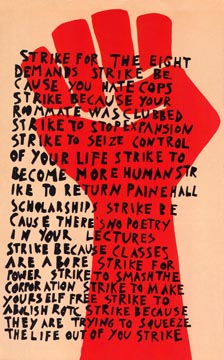
Luckily for him, the bank president who wrote this foolishness in 1969 didn’t sign his name to it…Ah, my old college days!
My attention has been drawn recently to two essays by college students, both presumably sent to me on the theory (or hope) that reading them would kill me. The first, published in the Drexel Triangle (the student paper), argues that stage directors should be prevented from casting actors who look the way the playwright envisioned them. The second, published in the Harvard Crimson, makes an even more disturbing assertion: its author asserts that Harvard should stop guaranteeing professors and students the right to advocate controversial views or pursue research that challenges liberal views and assumptions.
I don’t want to devote the bulk of this post to rebutting these two essays, which are, I think self-rebutting. In the theatrical essay, student actress Alyssa Stover argues that a stage director shouldn’t have the right to decide that, say, casting an Asian dwarf as black boxer Jack Johnson in “The Great White Hope” would lead to a less effective production (that is my example, not hers—she objects to a director of “Cabaret” refusing to cast African-Americans as a matter of historical accuracy):
“These arguments are fundamentally flawed. What the audience wants is almost impossible to measure because the “audience” is composed of anyone who can get a ticket. A director or producer’s right to deny someone a role due to their appearance is debatable because this is a judgment based on one person’s preferences and may not actually create something that is stage worthy. The current status quo allows people to be barred from the stage due to physical “flaws,” as determined by the direction. These judgments are not harmless, and when the issue of race is involved, the problem only gets bigger.”Continue reading →
Miami performance artist Maximo Caminero walked into the Pérez Art Museum in Miami, entered a special exhibit of sixteen ancient Chinese vases painted over in bright colors by celebrated Chinese dissident artist Ai Weiwei, picked up one of them, and immediately after a security guard instructed him not to touch the exhibit, allowed the vase to fall from his hands, shattering into bits. Some strange and interesting details of the incident:
He did not say “Oopsie!”
In fact, he admitted that smashing the pottery was intentional, and was his protest against in support of local artists like himself whose work is not exhibited at the museum while the art of international artists like Weiwei is.
The painted vase the 51-year-old artist destroyed is said to be valued at a million dollars. Each of vases used in the exhibit are about 2,000 years old, dating back to China’s Han Dynasty. The artist often uses ancient artifacts in his work, and has drawn criticism that his art consists of defacing the original work or another artist.
Caminero says he thought the vases were cheap pottery purchased at Home Depot, and never suspected that they were so old or valuable. (And yet he still didn’t say “Oopsie!” Or “Doh!”
The museum HAS exhibited local artists.
He broke the vase directly in front of a series of larger-than-life photos of Weiwei dropping and destroying another Han Dynasty vase.
He says that he interpreted the photos as a fellow artist’s provocative statement, encouraging him to break the vase.
Caminero was charged with criminal mischief, which is not a trivial charge. At very least, he would be required to pay for the destroyed item.
The news reports say that the museum is assisting police in the investigation. What investigation? The entire episode on video.
No, you can’t make this stuff up.
And our Ethics Alarms Ethics Quizis this:
Should the justice system treat Caminero’s act more leniently than any other act of deliberate vandalism resulting in the destruction of a million dollars worth of property?
To me, the answer is a resounding “no”:
The fact that the vandalism is a protest? It doesn’t matter why he destroyed the vase. It wouldn’t mitigate the crime even if he had something legitimate to protest, which he did not.
The fact that he didn’t mean to break a a million dollar vase, just a cheap one? Too bad. You break it, you’ve bought it.
The fact that the photo display behind him showed the artist doing exactly the same thing? Completely irrelevant. The artist was breaking his own vase.
The fact that the art that Caminero was destroying was itself created by a destructive act? Oh, there are a number of bad rationalizations he can use in his defense, and I wouldn’t be surprised if he uses them all. The protest was performance art, and punishing it severely infringes on free artistic expression! Punishing him is the ultimate hypocrisy, as he was calling attention to Weiwei’s own vandalism! He started it! Tit for Tat! It’s for a good cause! All ethically invalid.
Someone this stupid, irresponsible, self-centered and reckless is a danger to the community. His next protest may harm more than a vase.
Tau Kappa Epsilon fraternity at the University of Arizona decided that hosting an African-American stereotype party on Martin Luther King Day was a cool idea, and soon thereafter posted photos of the bash on various social media, showing drunk students posing like rappers,wearing baggy pants around their knees and drinking liquor out of watermelon cups. The college community was appropriately horrified, and many are calling for the fraternity to be expelled for the incident and the students who attended the party punished. The Detroit Free Press story about the incident is headlined, “Racism or Free Speech”? This is the equivalent of a headline saying “Stupidity or Freedom of the Press?” It’s both. That’s the conundrum. Continue reading →
And while we are on the topic of offensively lenient sentences to horrible and dangerous criminals:
“The Flaying of Marsyas” by Titian
In Michigan, St. Clair County Judge Daniel Kelly sentenced Sara Ylen to at least five years in prison Friday for falsely accusing two men of rape. She’s a vicious serial liar: a few days earlier, she pleaded no contest to a cancer scam in a separate case.
Thirty-eight-year-old Ylen had accused a construction company owner and a mental health worker of invading her home and raping her after she drove her children to school in 2012. To help frame them, she went to the extreme of using makeup to create what looked like bruises and carving an epithet in her arm. They would have been charged, too, except that both men had airtight alibis. While working to ruin the lives of the innocent pair (they went to the same church as her ex-husband), Ylen also accepted thousands of dollars from supporters while claiming to have end-stage cervical cancer that had spread throughout her body.
At trial her attorney, David Heyboer, argued (zealously, as is his duty) that she was obviously disturbed, and that a single year in the local jail was sufficient punishment, even though this was her second set of false rape accusations. He made this argument without laughing, too. That’s a professional. Continue reading →
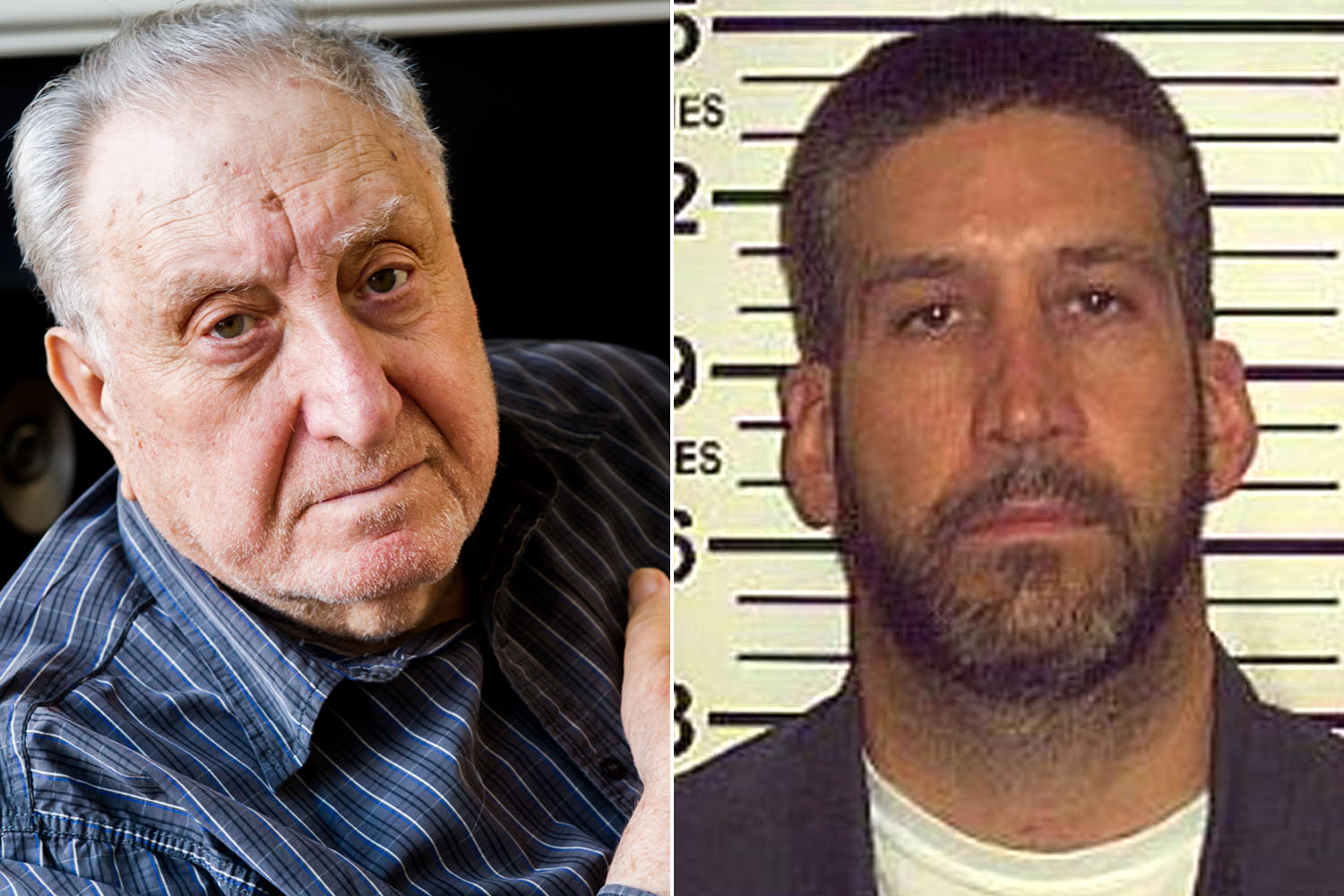
The judge’s conscience gnawed at him a little more every year after he retired from the bench. With every news article he read about a wrongful conviction, Frank J. Barbaro, the former Brooklyn judge and assemblyman, would return to a particular murder case in 1999, and question whether he had made the right decision to send a man to prison for 15 years to life. Not long ago, Mr. Barbaro, 85, decided to contact the lawyer for the man, Donald Kagan. He got a transcript of the trial, during which Mr. Kagan had waived his right to a jury and put his fate in Judge Barbaro’s hands.
“As I read it, I couldn’t believe my eyes,” the former judge said in an interview. “It was so obvious I had made a mistake. I got sick. Physically sick.”
Mr. Barbaro’s change of heart led to a highly unusual spectacle this week in a Brooklyn courtroom: He took the witness stand in State Supreme Court to testify at a hearing that his own verdict should be set aside. His reason was even more unusual: As a die-hard liberal who had fought as a politician against racism in Brooklyn and weathered the race conflicts in Bensonhurst, he said he had been biased against Mr. Kagan because he was white and the shooting victim, Wavell Wint, was black.
“I believe now that I was seeing this young white fellow as a bigot, as someone who assassinated an African-American,” Mr. Barbaro testified on Wednesday before Justice ShawnDya L. Simpson. He added: “I was prejudiced during the trial.”Continue reading →
Media executive Justine Sacco tweeted an impulsive, racially provocative joke on the social media site Twitter that a lot of people found offensive, didn’t like, or felt they could justify participating in cyber-bullying as if they found it offensive. As a result, she has lost her job, is being portrayed as a virulent racist across the web, receiving threats and hate messages from strangers, and has become an international pariah.
It doesn’t matter what the tweet said. It was a tweet–140 characters directed at nobody in particular, that harmed nobody in any way, unlike, say, the tweets by various celebrities trying to direct mobs to where George Zimmerman could be found and beaten. Nobody attacking her knows this woman, what’s in her mind and heart, what she has done in her life or the good works and deeds she may be responsible for. And yet thousands of strangers, many of whom are almost certainly, on balance, less admirable people than Justine Sacco in many ways, have chosen to use her 140 ill-chosen characters as provocation to throw a huge, greasy monkey wrench into the gears of her life. Continue reading →
 The ethics quiz on banning leggings and yoga pants for some female students and not others produced several excellent responses. I was surprised that the majority here supported selective enforcement, which is normally regarded as per se unfair. This response is especially remarkable considering that the selective enforcing will be done by the kinds of geniuses that punishe little girls for shaving their heads to make cancer victims feel better.





 Ethics Alarms