Ethics Quiz: Who is the Most Incompetent Elected Official—the DA Who Doesn’t Care If A Convicted Prisoner Is Really Guilty, Or The Assemblywoman Who Doesn’t Know About The First Amendment?

California Assemblywoman Fiona Ma. " First Amendment? Where the heck did THAT come from?"

For this weekend’s Ethics Alarms quiz—the blog’s 2000th post!—I am asking readers to help me determine the Incompetent Official of the Week, when two unusually qualified candidates are running neck and neck.

Candidate A is McLennan County (Texas) District Attorney Abel Reyna:  Defense attorney Walter M. Reaves has filed a motion asking for DNA testing as part of his efforts to exonerate Anthony Melendez, currently serving a life sentence for the 1982 slayings of three teenagers in Waco.  Reaves says the test is needed because DNA analysis was not available when Melendez was convicted, and Melendez still maintains that he is innocent. D.A. Reyna, however, opposes the test. Why? He argues that such testing shows a lack of faith and support of the jury system, and what the jury has decided usually ought to be free of such post-trial attempts to discredit the verdict.

In other words, the D.A. believes that it is better to honor the jury system by letting an incorrect verdict stand than to use newly available scientific evidence to set an innocent man free.  Continue reading

“I Am One of Those Untouchables” : The Unethical Persecution of Former Sex Offenders

No ethical person can read this and conclude that such treatment by society is fair, responsible, compassionate or American. It is the ethical duty of every citizen who believes in our society’s commitment to the freedoms guaranteed by the Declaration and the Constitution to oppose efforts to persecute former sex offenders, because our elected officials will not oppose them. It is, in the end, a matter of choosing national integrity over bigotry and fear.

“I am one of those untouchables. And I’m not one of those ones that everyone agrees shouldn’t be on the registry. Continue reading

Comment of the Day: “Unethical Quote of the Month: Canadian Judge Joanne Veit”

The Comment of the Day, by Eric Monkman, is one of many excellent comments on yesterday’s post on the words of a Canadian judge in allowing a woman who murdered her newborn infant to go free.

There are many threads in the discussion, and I am not caught up. I officially apologize to combatants Eric and tgt especially for not being able to respond in sufficient detail, or in some cases at all, to their thoughtful posts. This an example of the limitations of the blog comment format. I wish I could organize a conference call.

The discussion went into so many directions that the initial post’s point was distorted, in part by me. Here is how I would summarize it:

Judge Veit’s quote, the actual focus of the post, strikes me as ethically offensive because 1) the statement that “many believe” abortion is a less than ideal solution to unprotected sex suggests that abortion is acceptable as a primary method of birth control. The commenters object to my interpretation of the judge’s phrasing to mean that she personally believes the adverse of the statement, that abortion is an ideal solution to unprotected sex. (The ideal solution to unprotected sex is not to have unprotected sex.) OK. I see their point. I still read it differently, and my comments are based upon my reading. At best, it is a sloppy, imprecise statement. 2) The comparison, and equivalency, between grief for the child—who is dead, and who was killed by the person who was most responsible for her welfare—and grief for the murderous mother, who is alive, and who is avoiding legal sanctions for her crime, shows a warped set of ethical values. The implication is that the life of a child is no more important, nor has any more regard from the society, than the emotional comfort of the mother. I know that is the standard in Canada, and in much of the US. It is wrong.

The subsequent discussion about how acceptance of abortion leads to acceptance of infanticide was focused on the U.S., but mistakenly assumed that this was the order of events in Canada. It was not; I think that is affirmatively strange, as one would assume that a human life would not be less valued in a society as it became more viable. It doesn’t change my analysis regarding the U.S., however.

Eric asks some good questions which I will address at the end. Here is his Comment of the Day, on “Unethical Quote of the Month: Canadian Judge Joanne Veit”: Continue reading

Unethical Quote of the Month: Canadian Judge Joanne Veit

“…While many Canadians undoubtedly view abortion as a less than ideal solution to unprotected sex and unwanted pregnancy, they generally understand, accept and sympathize with the onerous demands pregnancy and childbirth exact from mothers, especially mothers without support…Naturally, Canadians are grieved by an infant’s death, especially at the hands of the infant’s mother, but Canadians also grieve for the mother.”

—- Canadian Judge Joanne Viet, announcing that Katrina Effert, who strangled her newborn child and threw the body over a fence into the neighbor’s yard when she was 19, will serve a three-year suspended sentence with no jail time for the murder, reflecting a “fair compromise of all the interests involved.”

This is a cautionary ethics tale indeed for those who deny that a callous attitude toward human lives in the womb, giving them no standing against a mother’s desires and convenience, will gradually, inevitably, coarsen and warp a culture’s respect for life and its comprehension of wrong. [Addition: Many commenters have pointed out that Canada had designated infanticide as a relatively minor crime before fully legalizing abortion. That is a strange progression, though once infanticide had been declared “understandable,” abortions days were numbered. In the US, the gradual de-valuing of young life is moving in the more obvious way, from younger to older. The process, however, is the same.] Continue reading

Perry, Insomnia, Leadership, and the Death Penalty

When should a leader lose sleep over a decision?

A lot of ink has been spilled over NBC’s Brian Williams’ question to Rick Perry regarding the death penalty, the Republican candidates debate audience’s strange reaction to it, and Perry’s response. Conservatives see Williams’ question—“Your state has executed 234 death row inmates, more than any other governor in modern times. Have you struggled to sleep at night with the idea that any one of those might have been innocent?”—as a loaded query by a biased questioner who is pressing the progressive anti-death penalty agenda. Liberals see Perry’s answer as proof-positive that he is an unthinking, unfeeling, blood-thirsty monster. Continue reading

Ethics Bulletin: Payback Is Not Always Unethical

"Sure, honey, take all the photos you want. And if your girlfriend wants to see the birth of our daughter, she's welcome too!"

Washington Post advice columnist Carolyn Hax, as I have noted before, has an almost pitch-perfect ethical sense, and negotiates difficult relationship dilemmas with consistent skill and wisdom. She is too nice sometimes, however, and her recent advice to an expectant mother is a striking example.

The woman wrote Hax about how to handle the request of her AWOL husband, who left her mid-pregnancy to move in with his mistress, to witness the birth of his daughter. He also wants his family to be present. The mother-to-be said that she fully intends to allow her child to have a good relationship with her father, but she does not want either her weasel husband or his family, which hid his affair from her, around when the baby comes. “I don’t want any of them there,” Expectant Mom writes. “Many of them knew about the girlfriend but kept it from me, and I don’t want my husband to have the satisfaction of comforting me when I’m in pain. Do I have the right to tell them this, in some collected, nonconfrontational way?” Continue reading

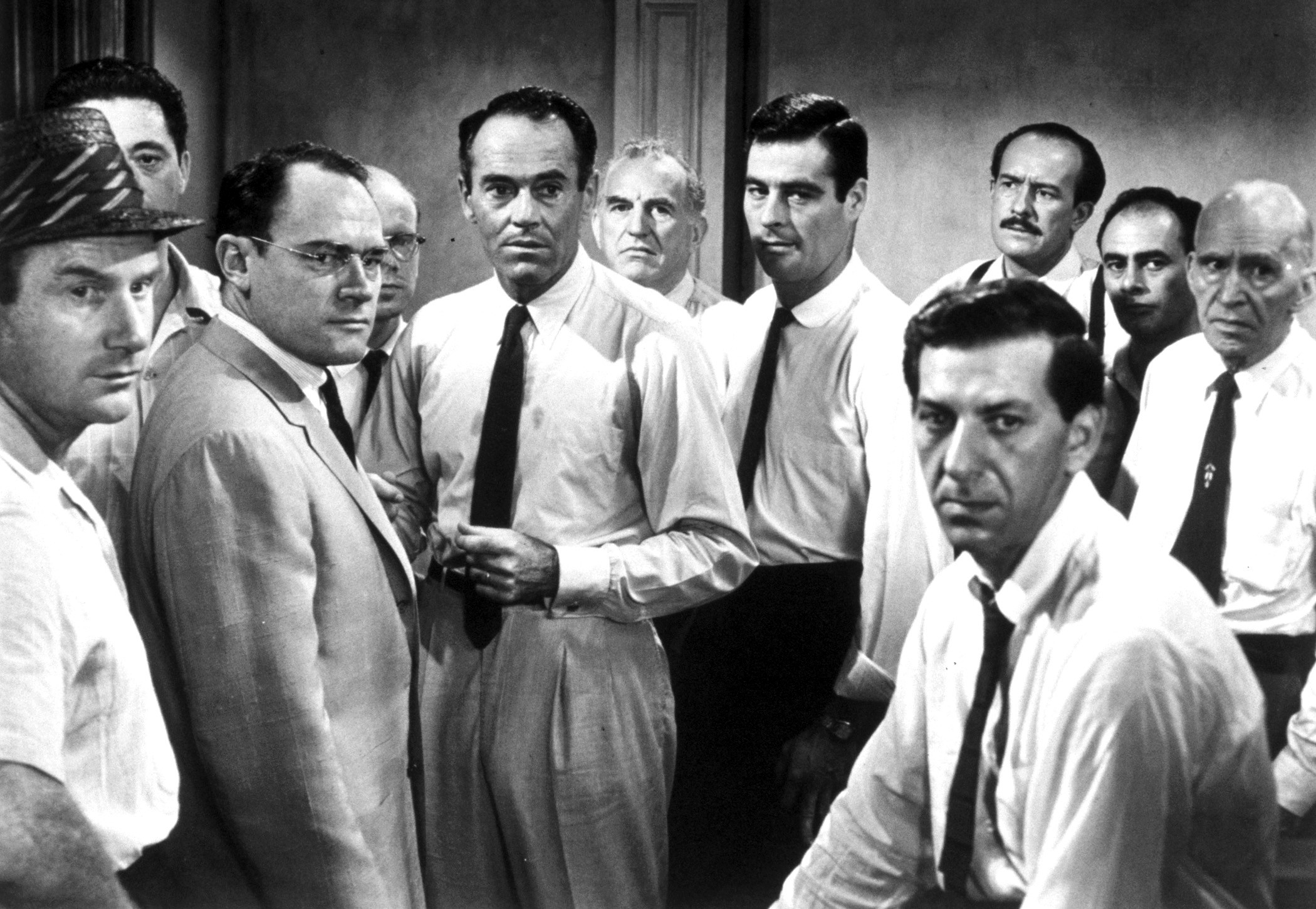
“Twelve Angry Men,” A Million Angry Fools, and the Jury System

Their defendant was probably guilty too.

Ethics Alarms All-Star Lianne Best sent me this link about a member of the Casey Anthony jury who is going into hiding because of all the hate and criticism being directed at jury members and their controversial verdict. Her plight, which must be shared by other members of the much-maligned jury, highlights the unethical, not to mention ignorant, reaction of the public to the Florida ex-mother’s narrow escape from a murder conviction she almost certainly deserved.

The problem begins with publicity. We may need to re-examine the logic behind broadcasting high-profile cases. The combination of live courtroom feeds and quasi-semi-competent commentary gives viewers the mistaken belief that they are qualified to second guess the jury, and they are not. They are not because the jury is in the courtroom, and the viewers aren’t. The jury and TV watchers see different things; individuals communicate different emotions and reactions in person than they do on camera. There is only one fair and sensible way to answer those on-line instant polls that ask, “Do you think Casey Anthony should be found guilty?”, and that is “I don’t know.”

Most of all, the viewers and pundits are not present in the jury room. Continue reading

Comment of the Day: “Unethical Blog Post of the Week: ‘But What About Caylee?”’

As comments, accusations and retorts featuring the Ethics Alarms All-Stars were flying around on the blog in reaction to the Casey Anthony verdict and my reaction to some of those reactions (here, here, here, and here), Lianne Best came through with an  especially measured take, one that was immediately cheered by other commenters.

There is nothing wrong with feeling deeply, and emotions are important; after all, Mr. Spock had limitations as a leader. When emotion rather than analysis drives public opinion, however, there is a risk of real harm: those attempting objective analysis may be vilified, marginalized or ignored, and rash, reckless decisions and consequences can result.  (I could, but won’t, argue that the 2008 presidential election was a classic case in point.)  Lianne cuts to the real issue deftly. Here is her Comment of the Day:

“I too often find myself embroiled in emotional opinion, with no basis in facts. It’s easy here: an adorable and completely innocent, dependent little girl was killed. Virtually every human, particularly parents, want to see that vindicated, justice found and brought. That somehow makes it better. But you know what? It doesn’t make it better to go racing off on just a blazing gut reaction, not when people’s lives are affected by our lack of thought and analysis. I was a juror in a kidnapping and murder trial. It was an immensely difficult two weeks, and the decision was agonizing. Luckily, it was also popular; it would have been awful to suffer through loud, manic public criticism of our reasoned decision on top of the process … loud, manic public criticism by people who weren’t there, who knew less (or at least differently) than we did. We have a jury system for a reason, 12 people found Casey Anthony not guilty (13 if you count the alternate juror) and we have to trust them.

“Personally, I appreciate Jack’s cooler head prevailing when my mother’s heart is shrieking.”

Marcia Clark, Exploiting the Anthony Verdict for Her Own Sake

Marcia Clark. OK, this really isn't Marcia, but the real picture of her doesn't look like her either.

Marcia Clark’s article on the Casey Anthony verdict is so tainted with obvious conflicts of interest that it should have been rejected by The Daily Beast…or rather would be rejected by any website more selective and less shameless than the Daily Beast. This would be any fair site that does not deal in over-the-top opinion as a matter of course.

Marcia, like her colleague Chris Darden, is a rather tragic figure these days. The former lead prosecutor in the O.J. case is struggling to make it as a pundit, freshly botoxed and rendered almost unrecognizable so as to be fetching in those close-ups. After she sold the inevitable cash-in book about the Trial of the Century, she has wandered in the C-List celebrity wilderness, and will soon join Newt Gingrich and William Shatner as a celebrity novelist. She will be remembered, quite correctly, as the prosecutor who botched the O.J. murder trial, even if we give Darden an assist for the gloves debacle. (Why cable news shows insist on recycling failures as experts is an enduring mystery, the mystery being “how can the producers look themselves in the mirror after choosing recognizable flops over less well-known but more accomplished authorities?”)

But Clark apparently saw an opportunity in the Casey Anthony verdict to rehabilitate her tarnished reputation, and grabbed it. The result is “Worse Than O.J.!”, a new low in self-serving analysis. Continue reading

Unethical Blog Post of the Week: “But What About Caylee?”

Sad but true: the trial's purpose was not to find justice for Caylee.

If I responded to even one out of a hundred ethically muddled, logically addled posts by the hoard of bloggers in cyberspace, I’d have time for nothing else. Now and then, however, I am directed to a post that typifies the kind of free-floating, fact-starved gut sentiment that rots public discourse in America and that helps keeps the public confused and panicked.

In this case, I was directed to the post by the blogger herself, who managed to annoy me by accusing my post on the Casey Anthony jury of being callous to the victim in the case, two-year old Callie. I re-read my post; there wasn’t anything callous toward the child in any way. Puzzled, I went to the blogger’s page, a blog by someone who calls herself wittybizgal, and called Wittybizgal. Sure enough, there it was: an anguished lament about the verdict in the Casey Anthony trial entitled, “But What About Callie?”

The post is frightening, because I am certain that this kind of non-reasoning is epidemic in the United States, nourished by touchy-feely bloggers, pundits and columnists and made possible by the ingrained habit of having opinions without knowledge. Since their opinions are not supported by facts or reasoning, they can’t be debated. If you aren’t persuaded, you’re just mean, that’s all. That’s no way to decide what is right and wrong, but it certainly a popular way. Here is wittybizgal’s argument, one fallacious step at a time: Continue reading