Ethics Heroes: The Casey Anthony Jury

America saved Casey Anthony, and we should be glad it did.

A Florida jury pronounced Casey Anthony not guilty of murder, aggravated child abuse or aggravated manslaughter in connection with the 2008 death of her two-year-old daughter, Caylee. It did find that she had lied to investigators and police, which was well-established during the trial.

Did she murder her daughter, as the prosecution claimed? Oh, sure she did; I don’t think any of the jury members will be asking Anthony to babysit for their kids any time soon. But the case against her was circumstantial. She was proven to be a liar, irresponsible, feckless, self-centered, deluded and callous, and the prosecution’s theory made a lot more sense that the defense’s alternative scenario. Still, there was not enough evidence to find Casey Anthony guilty of murder beyond a reasonable doubt. That’s the standard, not “it’s almost certain that she did it.” Despite all the media pundits who said it would be a slam-dunk conviction, despite all the community sentiment to make the party girl mother pay with her life for killing her child, the evidence to meet the intentionally tough standard of American justice just wasn’t there.

Already, reporters and commentators are comparing the verdict to the O.J. Simpson trial. Wrong. Continue reading

Ethics Quote of the Day: The Washington Post

OK, Tea Party, this should be right up your alley.

“We hope that some members of Congress’s new “Tea Party Caucus” can make it down to the fireworks Monday night. It might be a good time to reflect on the primary motivation for the original Boston Tea Party, which was that Americans should not be taxed by a government in which they had no parliamentary representation. That right to a voting representative is still denied to all who live in the nation’s capital, and some of them must be wondering why members of Congress who so revere the Founders haven’t done something about it.”

The Washington Post editorial board, in a “footnote” to its editorial about the enduring importance of the Declaration of Independence.

Little more needs to be said. The fact that the citizens of the District of Columbia, who number more than the populations of several states, are unrepresented in the House and the Senate is beyond disgraceful. Yes, there are troublesome issues to be worked out. It is also clear that if the either political party placed a higher priority on fairness and self-government than it did on political considerations, the problem would have been settled by now—after all, the District has been without representation for more than 200 years.

Most of the blame, however, goes to the Republicans, who have been obstructing D.C. representation for the most naked of self-serving motives: it is a predominantly African American, knee-jerk liberal city, and would surely contribute two Senators and one Representative to the Democratic cause. (This is also an example of a self-fulfilling prophecy, since the memory of how the GOP blocked its citizens from the most basic American right will and should keep the District deep blue until the stars turn cold.)

Well, too bad: the fact that most DC residents are Democrats is no excuse for keeping them from meaningful participation in national lawmaking. The Post is exactly right: if the Tea Party has integrity and is true to its principles, it will firmly endorse representation for the District of Columbia. This would also have the beneficial side effect of ending the liberal trope that the Tea Party is racist at its core. The main reason for doing it, however, could be more obvious. It is the right thing to do, and overdue as well.

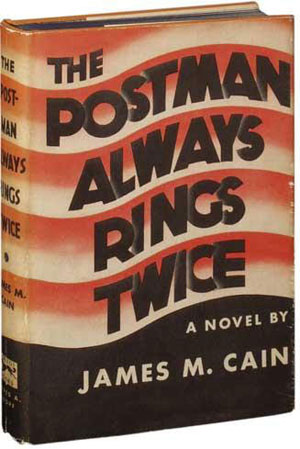
Strauss-Kahn and His Accuser, Victims of The Postman

The accuser of Dominique Strauss-Kahn, the former IMF head who has been devastated by her sensational rape charge, now admits that parts of her original account of the incident and an earlier accusation of rape she made to seek asylum in the U.S. were false.

The Altantic’s Megan McArdle sums up the Ethics Train Wreck thusly:

“There are two possibilities here, neither of them good:

1) A woman with an unsavory past, who has done desperate things to get out of terrible economic conditions, was raped by a prominent figure, and he’s going to get away with it because of her history.
2) A serial cad had consensual sex with a chambermaid, and she attempted to destroy him with a false rape allegation for personal gain. And because of the presumption that women don’t lie about rape, she has succeeded in destroying him . . . though not so much in the personal gain part. To quote Ray Donovan, ‘Where do I go to get my reputation back?'” Continue reading

Sorrell v. IMS Health: Legal, Ethical, and Unjust

The case of Sorrell v. IMS Health, which the Supreme Court decided yesterday, sharply focuses the philosophical disagreement over the role of the courts in public policy. The legal question was rather straightforward; the ethical issues are complex. Is it the Court’s duty to make bad—but constitutional— laws work, or is its duty to follow the laws, and leave it to the legislature to fix their flaws?

This was a case about incompetent  lawmaking. Gladys Mensing and Julie Demahy had sued Pliva and other generic drug manufacturers in  Louisiana and Minnesota over the labels for metoclopramide, the generic version of Reglan. The drug, used to treat acid reflux, had caused them to develop a neurological movement disorder called tardive dyskinesia. None of the generic drug’s manufacturers and distributors included warnings on the labels about the danger of extended use of the medication, even though the risk was known to them. Neither did the manufacturers of the brand-name drug. The problem was that the state statutes required generic drug manufacturers to included warnings about dangerous side effects, while federal regulations required generic drugs to carry the exact same label information as their brand name equivalent.  Continue reading

Ethics Dunce: Broward (Florida) Circuit Judge Barbara McCarthy

Come on! How can you put a guy like this in jail?

Many Americans don’t comprehend the meaning of “justice.”  It is unfortunate that some of these Americans are  judges.

Ryan LeVin, 36, is a drunk, a drug abuser, a playboy, a scofflaw and a killer. He killed Craig Elford, 39, and Kenneth Watkinson, 48, as they were walking to their beachside hotel in 2009. LeVin was driving recklessly in his $120,000 Porsche 911 Turbo, ran them down, and  fled the scene. That was only the latest of his offenses: LeVin was already on probation in Illinois for crashing into a Chicago police officer and instigating a high-speed chase. He has more than 50 traffic violations. What really matters, however, is that Ryan LeVin is rich.

Because he is rich, when LeVin offered enough money to the widows of the two men he killed in his act of vehicular homicide, a Florida judge agreed to let him off with two years of house arrest rather than the 45 years in prison that you or I would serve for a similar crime. Continue reading

Comment of the Day: “Two Mothers, Young Love and Deception”

Lianne Best, who writes a weekly newspaper column about the challenges of a working wife and mother, weighs in with the alternative point of view regarding my post about a friend’s handling of her daughter’s boyfriend’s deception. I was afraid someone was going to write this, because I find the argument persuasive and it makes me doubt the wisdom of my advice. Still, I think I support my friend’s decision not to blow the whistle on the boyfriend, primarily because he’s 17, not 15. By 17, a child is engaged in an ongoing controversy about autonomy, trust and boundaries; the boyfriend is accountable for defying his mother, but it is his life and I would grant him the right to make his own mistakes, if mistakes they are, without my active interference. Lianne is persuasive, however…and she has a teenage daughter and son of her own:

“I like the advice … but because the horse has already left the barn far behind.

“I am actually pretty horrified that Julia is actively participating in and abetting the subterfuge. Even if she doesn’t agree with Ishmael’s mother’s rules (and let’s note they could be his father’s rules too; and maybe his church’s rules, and his culture’s rules), that doesn’t mean she should be actively plotting to subvert them.

“In this instance were it my own daughter, I would NOT take the decisive action of contacting Ishmael’s mother, but NEITHER would I allow him to spend the night there, and help my daughter make up stories and situations to enable the relationship. She’s happy? Please. Teenage female happiness is tenuous and temporary at best. (Has anyone on here LIVED with a 16-year-old girl??) It’s one year, probably less, until Ishmael is 18. So much can (and will) change in that year! Until then, group get-togethers (movie dates and parties) should be fine. Continue reading

Ethics Challenge: Two Mothers, Young Love and Deception

A good friend—call her Julia— with a teenage daughter (she’s 16) recently  asked me for help with an ethical dilemma.

Julia’s daughter is quiet, seemingly conservative, and socially restrained. She has never had a boyfriend, and has been on few dates, until now. She has been seeing a young man—call him Ishmael— her own age (well, he’s 17) who seems to match her to perfection in every respect. He’s sensitive, polite, and witty,  and on top of everything, he’s really cute, the object of every one of her friends’ and rivals’ awe.

Of course, there is a problem. Ishmael’s mother is fanatically protective: he is not supposed to date until he is 18, and has to check in with her every hour when he is out of the house. The relationship with my friend’s daughter only exists through an elaborate subterfuge, involving complicit friends and relayed phone messages. Once, in order to facilitate a special date to go to a concert, Julia allowed the boy to sleep overnight (in the guest room), when he was supposedly staying a male friend’s house.

My friend wanted to know if she should tell the boy’s mother about his web of lies. A parent has a right to have his or her own rules respected, and not undermined by other parents. The Golden Rule, applied to Ishmael’s mother, yields a demand that she be told; Julia would want to be told if her child was systematically defying her.

On the other hand, she firmly believes that the mother’s restriction on her son are excessive, and she has never known her daughter to be so happy.  She is worried that informing the mother will cause a serious rift with her daughter, and perhaps worse. “What is the ethical course?” she asked me. “What should I do?” Continue reading

Justice? Michigan Prosecutors Say Davontae Sanford Can’t Get There From Here

Davontae Sanford is 18 and in prison. He was 14  when he confessed to shooting and killing four people in a drug house, but now Davontae says he confessed in order to please police.

Vincent Smothers is a professional hit man already convicted of eight murders. He now says that he killed the four victims Sanford took the rap for. There doesn’t appear to be any reason for Smothers to lie about it: the hit man  is not known for his compassion toward others. Smothers even waived his attorney-client privilege with former attorney Gabi Silver so  Silver could testify on Davontae Sanford’s behalf, and say under penalty of perjury that Smothers told her he was responsible for  the killings, and that Sanford didn’t help him.

Prosecutors, however, are trying to block Silver’s testimony, which could free a wrongly imprisoned teen, arguing that it would be hearsay. While Sanford’s attorney, Kim McGinnis, says she has done everything in her power to convince Smothers to testify himself, he refuses, leaving it up to her.

Continue reading

“The Mentalist” Ethics: Patrick Jane Osamas “Red John”

Red John's bloody calling-card will be found at serial killing scenes no more.

Tonight marked the season finale of “The Mentalist” on CBS, and by happy coincidence, Bruno Heller’s odd-ball murder mystery drama ended with its hero, Patrick Jane (played with brio by the excellent Simon Baker) executing his nemesis, the serial killer “Red John,” in a crowded food court…a Osama bin Laden style killing that, like the death of the Al Qaida mastermind, was both technically illegal and completely ethical.

Bravo.

Red John, for those of you who do not follow “The Mentalist,” is the self-chosen monicker of a brilliant maniac with financial resources, who slaughtered California Bureau of Investigation consultant Jane’s family as well as untold others. Jane has spent the three years of the series in an Ahab-like quest for revenge, wittily solving other murders along the way. In the final episode, Red John plotted the death of Jane’s boss and maybe love interest, Theresa Lisbon, played by Robin Tunney. Red John’s henchman managed to kill two officers and wound Lisbon before he was foiled, leading to a dramatic confrontation between the serial killer himself and the hero. Continue reading

Comment of the Day: “The Jaundiced Eye of Noam Chomsky”

You can find the original post here, and under it, my response to this comment by reader Trafford Gazsik. I’d say that Christopher Hitchens’ rebuttal to Chomsky, linked in the post, and my post about the ethics of bin Laden’s execution address the issues raised, make up your own mind.

“I like Chomsky and as a non-American, I can assure you that rather than filling my head with anti-American sentiments, his writings have reassured me that America remains a country populated with mostly decent people and that the world at large should not give up on the place just yet.

“I’m interested to know which part of Chomsky’s analysis you do not agree with:

– Do you disagree with the assertion that the Bin Laden ‘takedown’ was an assassination?

– Do you reject the assertion that the assassination took place within the territory of another sovereign state without the knowledge or permission of the government of that state, in clear contravention of international law and customs?

– Do you deny that Bin Laden had not been tried in any court, and was for legal purposes, an innocent civilian of Non-US nationality residing in Non-US territory? Continue reading