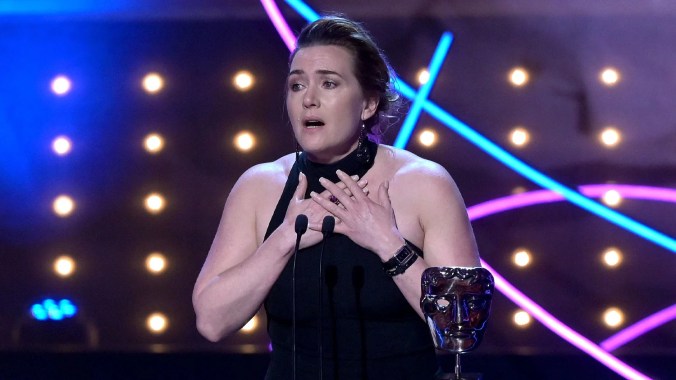
The ethical formula is to concentrate critical evaluations on the message rather than the messenger, but celebrities using their popularity and influence to push for policies they are unqualified to evaluate and activism they are too corrupt to promote have to be in a separate category. They use their cognitive dissonance scale weight to make irresponsible positions seem reasonable to those sad and numerous members of the public who assume that being rich, beautiful and talented automatically makes one wise.
I know the temptation for these stars of both the glittering and the shooting- variety is great, but it is their duty to resist it except in the rare instances where they have more practical experience and knowledge of an issue than the average airport show-shine stand proprietor, and fully functioning ethics alarms. (Remember: Hollywood shorts out ethics alarms .)
Two prominent actresses in recent days have illustrated the principle.
1. Kate Winslet
Winslet is one of my favorite actresses, but unfortunately she’s British. The British don’t understand or support freedom of speech and expression, as anyone who watched the anti-monarchists being hauled away by police at King Charles’ coronation can attest. Accepting a British Academy of Film and Television Arts award for her performance in a show about the dangers of social media, Winslet said,
To people in power and to people who can make change, please criminalize harmful content. Please eradicate harmful content. We don’t want it. We want our children back.”
Shut up, Kate.
Who is “we”? What is “harmful?” Dim bulbs like Winslet, waving the “Think of the Children!” banner, will lead us right to Big Brother’s door. If you’re worried about what your children see online, set rules for them and enforce them yourself. Better yet, teach them about what social media is and how to avoid its many perils. Monitor what they are hearing from their teachers in school, if you want them “back.” Educate yourself, and then educate them. It’s your job, not the government’s.
2. Natalie Portman
 Ethics Alarms