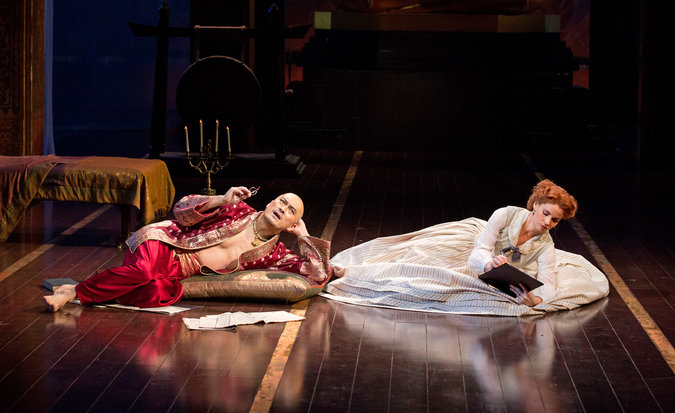
“I hear child screaming in audience, so audience cannot hear King. Is a puzzlement! But brave…”
I don’t want to be harsh, because Mr. Loh is obviously a sensitive and compassionate young man who means well. However, he is also receiving plaudits on Facebook and in the media for taking a position that is not ethical, and is in fact just more political correctness guilt-mongering and double standard-peddling. It is also likely to provoke disrespectful and arrogant parents to believe that they have a right to impose their problems on unsuspecting theater audiences.
At Broadway’s Vivian Beaumont Theater, a screaming child disrupted a matinee performance of “The King and I.” Some members of the audience agitated for the child to be removed, and the woman with the child indeed left.
One of the understudies in the production, Kelvin Moon Loh, defended the woman who brought the child to the performance in a post on his Facebook page, in which he assumed the kid was autistic and used the incident to argue for compassion and “inclusiveness” in the theater, and compassion. Loh actually praised the woman as “brave.” Brave she may be; she also was selfish, irresponsible, disrespectful and absolutely wrong.
This is not an issue of tolerance. This is not an issue of compassion. The ethical issue is whether one person has a right, and can be right, to ruin a theatrical performance for the rest of the audience, or to unreasonably risk doing so. It’s an easy call: no. Never. It is no more “brave” to take a child who cannot behave properly to a Broadway show (or any show) than it is to take a cranky infant to a movie. This is not like the airplane situation, where the mother has no choice, and the child’s noise doesn’t interfere with the flight’s main purpose, which is to get to the destination. The mother doesn’t have to see “The King and I,” nor does she have to bring her child to potentially disrupt it. Doing so is inconsiderate; defending her conduct, as Loh does, stands for a kind of etiquette affirmative action, in which being the mother of an autistic child relieves one of any obligation to care about anyone else. Continue reading
 Ethics Alarms