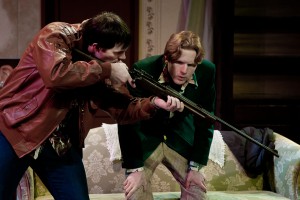
A live performance of Jules Feiffer's "Little Murders" at a regional theater in Arlington, Va. that holds "pay-what-you-can" performances over the periodic objections of its artistic director, me.
Toronto Star ethics columnist Ken Gallinger does a pretty good job today answering a query from a financially strapped theater-lover who feels guilty about attending “pay-what-you-can” professional stage productions. “…My husband says paying less than full fare takes advantage of the theatre company. Technically, we could pay the ticket price; we still have access to credit. And there are things we could cancel…What do you think?” asks the inquirer.
Gallinger explains the benefits to the company of not having a sea of empty seats facing the actors, and also how discount tickets have promotional value to theater companies. All true: the theater companies wouldn’t offer “pay-what-you-can” if they didn’t think it was in their companies’ long term interest. There are other benefits that Gallinger doesn’t mention. For example, the increased audience size still contributes to the average audience statistics that a non-profit company can use to seek advertisements and to argue for community foundation grants.
Even this wouldn’t cover the topic, however. “Pay-what-you-can” and other discount ticket programs are essential if theater companies are going to meet their own ethical obligations to the community, and if live theater is going to survive at all. The ticket prices at most large, established regional theaters are, in a word, unconscionable. Justifiable perhaps, since live theater costs more to produce than can be paid for by box office receipts, but still unconscionable. Continue reading
 Ethics Alarms