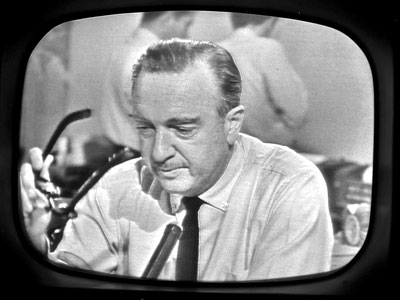
In November of 1963, the American public’s trust in its government stood at over 75%. The previous President had been a revered general who guided the Allied forces to victory over Japan and Germany. We were united against a sinister, common enemy, world Communism, led by a shoe-banging dictator who promised to bury us. The new President was a young, glamorous and inspiring man of wit and vision, whose signature policy initiatives embraced American exceptionalism and virtue—the Peace Corps, space exploration. Even in a city with more JFK foes than fans, the President and his wife drove through the streets of Dallas in an open limousine. And on a bright and beautiful fall day, two rifle shots blew John F. Kennedy’s brains out.
Today, 48 years later, public trust in the government is below 15%, an all-time low. Protesters are in dozens of American cities, challenging the foundations of American progress and success. Large numbers of the public believe that the U.S. Supreme Court assisted in a successful plot to steal a presidential election, and that a U.S. President planned the attacks on the World Trade Center and the Pentagon in 2001; that the CIA invented AIDS to kill African-Americans; that Barack Obama’s presidency is illegal; and, of course, that there was a massive government cover-up of a conspiracy to assassinate Kennedy, a conspiracy that might well have involved his successor, Lyndon Johnson.
It is the lack of trust, more than any single factor, that feeds the ruinous hate and partisanship that has made American government impotent at the worst possible time, with crises intentional, domestic and spiritual surrounding us. Continue reading
 Ethics Alarms