Oh, You Didn’t Think I Would Forget Presidents Day, Did You? [Embarrassing Gaffe Corrected]

Well, to be truthful, I almost did. The contrived holiday seldom occurs this early. Nevertheless, I’m going to recognize Presidents Day with re-posts of two essays about U.S. Presidents, neither of which were originally written for the holiday.

The first is one of my favorite mysterious tales about any President, in this case George Washington, and the second, from 2015 and re-posted five years ago, is my favorite story about any President ever.

Here they are:

Pssst! Bill Maher! The “Saved By God” Belief Has Inspired Some of Our Greatest Presidents. Shut Up.

Atheists and agnostics in the public sphere don’t have to be obnoxious, but an awful lot of them are. Their explanation for where the universe came from is no more persuasive that that of the faithful (The Big Bang? Come on.) but they just can’t restrain themselves. HBO’s Bill Maher is a prime example: along with mocking committed relationships (he hates the concept of marriage), extolling drugs and debauchery, and generally keeping his Axis of Unethical Conduct membership current, he ridicules Christianity at every opportunity.

The fact is, and it is a fact, that the United States of America had a much healthier and ethical culture before organized religion had discredited itself so thoroughly, driving whole generations away. Moral codes are especially essential for those who don’t have the time or ability to puzzle through ethics, and believing in God is the best catalyst for an ethical society that there is….and it has always been thus.

Heck, just look at what a jerk Maher is. That’s what atheism can do to you. But I digress.

My target here is more narrow. On last week’s “Real Time,” Maher sneered at the belief that God saved Donald Trump from being assassinated as stupid and “dangerous.” “People see signs because they want to see them. It’s why stalkers think Taylor Swift is blinking ‘marry me’ to them in Morse Code,” he explained. “It gets dangerous when the signs make someone think God is on their side,” Maher continued.  “Republican Congressman Mike Collins said after the shooting, ‘God spared Ronald Reagan for a reason. God spared Donald Trump for a reason. God doesn’t miss.’ Really? Tell that to John Lennon, Lincoln, JFK, RFK, and Martin Luther King. Look, the asshole who shot at Trump was cowardly, unpatriotic, selfish, vile, and weak, and he should rot in hell, but thinking that God protects your heroes but not mine? That isn’t cool either.”

How do you know, Bill, that God doesn’t protect your heroes for a very good reason? I can think of several good reasons for that, as well as for squashing you like a bug. Of course the certitude that God is responsible for anything is confirmation bias: my wife, the daughter of a Methodist minister, frequently expressed contempt for the faithful who simultaneously said that “God works in mysterious ways” and “there are no coincidences” while conveniently asserting that they had figured out those mysterious ways. But if Bill knew as much about American history, leadership and the Presidency as he should, he would know that the belief that God has saved them for a reason motivated many of America’s greatest leaders. It could have been dangerous, I suppose, but so far, that belief had been overwhelmingly beneficial to our nation. Perhaps even its salvation.

Leadership requires special character traits, the right formative experiences and a lot of luck. National leadership arises out of an individual’s conviction that they are uniquely qualified to do a better job than anyone else, accompanied by the passion, conviction and charisma necessary to convince others of their abilities. That’s why so many of our Presidents have been narcissists, true, but the anti-American trope that our leaders only seek power, wealth and personal benefits is, based on my lifelong study of history, garbage.
Incident At Harris-Teeter’s

Last night I found myself bereft of several food items, basics like bread, spaghetti sauce, milk, hot dog relish and grape soda, so I took a jaunt over to the local grocery store to re-stock. The place was almost literally deserted; I thought of Dick Van Dyke, on his show’s famous flying saucer episode (“Unny Uffs!”) working late in an empty office and saying to himself in his best Boris Karloff impression that he felt like “the only living thell in a dead body.”

But one human being was in evidence…a short, slight little middle aged man with slicked down hair who is apparently on the job all day and night, all week long. I see him every time I visit that branch. He is always bustling about, restocking shelves, giving directions to customers, and generally hurrying up and down aisles like the White Rabbit in Disney’s animated “Alice in Wonderland.”

I had thought before, in past visits, that he was as hard working and professional an individual as I had ever encountered anywhere in any occupation, always cheerful, always cheerily greeting me and anyone else he came across. My only discourse with him before last night was to answer his “How are you today. sir?” greetings and to answer, “No, I’m okay, thanks!” when he asked. “Can I help you find anything?’

Last night, however, when we passed in an aisle and briefly ended up face to face, I noticed that he had a blackened, swollen eye and a large bandage over his cheek beneath it. So I inquired, “What happened to your face?” His expression immediately brightened, his demeanor relaxed, and he began telling me that he had that week an operation on a basil carcinoma. Animatedly, the man, whose name I did not know and still don’t know, told me about his history with skin cancers, the experiences of his three sisters, the size of the small growth removed, and more: where he grew up, how much time he has spent in the sun as a child, and his favorite sports and activities growing up. I stood there for 20 minutes listening to him. It seemed that he was so grateful to receive a caring response from one of the hundreds of Harris Teeter’s shoppers he must encounter every day, most of whom treat him as if he were a mannequin at Target, as I always had.

Continue reading

The Most Ethical Christmas Carol

Well, unfortunately I started thinking that it’s beginning to look a lot like Christmas this week, so I’m depressed and miserable.

It’s my favorite time of the year because its the most ethical time of the year, but my wife, who was a Christmas fanatic, is dead; my son, who now insists that she’s my daughter, barely speaks to me though I have been nothing but supportive (because that’s my job); my sister is going to be across country for the holiday; and my mom, who was the center of every Christmas in my life as long as she was breathing, breathes no more. I have neither the time to decorate a tree properly (like I used to) nor the resources to  purchase one, and half-hearted decorations will only remind me of 2702 Westminster Place glories past. But I can’t avoid Christmas, just as I can’t avoid ““It’s a Wonderful Life”” as you know.  So I’ll be celebrating my favorite holiday here, on Ethics Alarms, with my five loyal readers and the other visitors who drop in, and pretty much nowhere else. That means, among other gifts, I will be bestowing various Christmas-related post from the Ethics Alarms Christmas attic. Like this one…

*** Continue reading

Believe It or Not! The Murder Wasn’t The Most Disturbing Aspect Of The Charlotte Stabbing

It seems incredible, but Ukrainian refugee Iryna Zarutska’s murder on a Charlotte light rail train was not the most disturbing aspect of her murder by a deranged man who just decided to kill her for no discernible reason. Nor is the fact that the killer had been arrested 14 times and turned back into the streets as part of the Mad Left’s urban “de-incarceration” agenda the worst aspect of the story, or even the deliberate burying of the event by the mainstream media, which felt that the public didn’t need to know this occurred because it undermines so many Axis narratives (gun control, how safe Democrat-run big cities are despite all evidence to the contrary, “Black on white crime? What black on white crime?,” the virtues of public transportation). And it isn’t the fact that so many Americans have been brainwashed that many (including commenters on this blog) have defended the media’s censorship of inconvenient reality.

No, I have concluded upon watching the various surveillance camera videos that the worst aspect of the incident is that even after the young woman was stabbed and was bleeding out in her seat, not one of her fellow passengers lifted a finger to try to save her life.

That’s some community you have there, Charlotte. Be proud…

Continue reading

Ethics Zugzwang Exemplified: The “Friend in a Lousy Show” Conflict

I’d be surprised if I haven’t posted on this before, but a recent advice column article about the issue made me realize that the common conflict almost all of us with friends in the performing arts face routinely is as perfect example of the phenomenon I have termed “ethics zugzwang” as there is.

A theater reporter in the New York Times wrote a column titled, “My Friend’s Show Was Kind of Terrible. What Do I Say When I See Them? (You can always consider telling the truth, but it may not be advisable in this case.) [Gift link!] He breaks down the options as,

  • “Tell the truth, as a form of tough love.
  • Find something to say that is appreciative but also incomplete.
  • Lie.”

After reporting on interviews with performers and others in show biz, the reporter concludes that the most ethical option is “Lie.” He concludes, “So what to do? The consensus among those I spoke with is that the best way to be a friend is to be supportive. Leave the critical feedback to other people and other settings. ‘I think the move is always to lie,’ said the musical theater composer Joe Iconis . ‘Whether you enjoyed the show or not, if you’re actually a friend to the person who is part of the production, your job is to say ‘great job, fantastic show.’ I have never once appreciated a friend who came to a show of mine and offered unsolicited negative comments.’”

Continue reading

Ethics Hero: Some Rich Person In Idaho

The holiday-appropriate heart-warming tale is told in this video I can’t embed here. Apparently a wealthy “Secret Santa” is giving $1 million to “deserving people in eastern Idaho,” and the East Idaho News is publicizing the plan with daily surprise visit to the lucky recipient. “Brenda in Blackfoot”is first up. From the News: “She is a single mom with eight adopted children who all have special needs. She works from 4:30 a.m. to approximately 1 p.m. every day to support her children… She has really struggled… In May, they experienced a small house fire, which caused a lot of damage to her home….Googling the repairs for instructions , [Brenda] did all of the repairs herself. Her family also had a flood in their home about six weeks ago….Brenda went through cancer treatment last year as well…”

Continue reading

Ethics Quiz: The Offensive Compliment

This quiz comes from the latest inquiry to “The Ethicist.” I disagree with much of Prof. Appiah’s answer, as I often have lately, but I do concede that the question is worthy of a serious ponder.

On their way out a restaurant, a family group was interrupted by a stranger who had also dined there. He said to the inquirer’s comely daughter-in-law, “With all due respect, you are very attractive.” The inquirer rebuked him saying, “That is wholly inappropriate, sir.” The inquiry continued,

“My cousin snapped at me that it was only a compliment. My sister got mad at me for upsetting my cousin. My daughter-in-law appreciated my reaction but said that she has had “way creepier men say way creepier things to her.” I responded to them all that a stranger has no business commenting on the looks of a person, good or bad, and that this man would never have said a word if any man had been standing with us. Who is right?”

Before I give you The Ethicist’s answer and mine,

Your Ethics Alarms Ethics Quiz of the Day is….

“Are spontaneous  compliments on a stranger’s appearance per se unethical?”

Continue reading

The Student and the Homeless Man: A Cautionary Ethics Tale

Or, “Why It’s Unethical to Behave in Defiance of Reality.”

Or, “Why the old saw ‘the road to hell is paved with good intentions’ is constantly being affirmed.”

Or, “Why progressive wishcraft keeps blowing up in society’s metaphorical face”

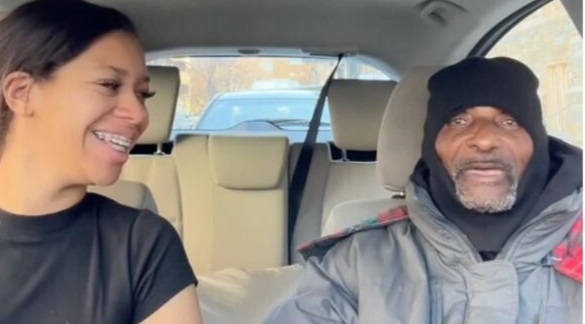
Sanai Graden (left), a University of California at Berkeley senior (presumably you know what that means) was hit up by a homeless man as she visited Washington, D.C. He said his name was Alonzo, and told her he had just been diagnosed with prostate cancer. The sympathetic young woman paid for his medication at CVS. She also got him a hotel room for the night. Sanai was a TikToker , and told her followers that she needed to raise money for Alonzo, whom she called “Unc.” Soon she bought Alonzo, aka. “Unc,” a cell phone, and put him up in a hotel for a week.

Awwww. How Christian! How kind! How progressive!

Her video became a Tik Tok sensation, with millions of views. Graden started a GoFundMe account, and it quickly raised more than $400,000. Her legion of followers multiplied: one admirer set up a GoFundMe for her that eventually raised over $26,000.

Isn’t that a nice story?

Then a report from local D.C. TV station Fox 5 revealed that “Unc” was Alonzo Hebron, 64, a long-time criminal who numbered among his convictions one for a violent assault on a homeless woman. In another, he stabbed a man in the neck with a screwdriver. Donors started asking for their money back.

Continue reading

Ethics Hero: Lya Battle, “Our Lady of the Strays”

John Hammond, as every fan of Michael Crichton, “Jurassic Park” and dinosaurs knows, built an aspirational cloned dinosaur park on a Costa Rican island, and thanks to chaos theory and “Newman,” it turned out to be a deadly disaster. But the InGen founder wasn’t too far off; he just chose the wrong species. In Costa Rica’s Central Valley and its surrounding highlands, a woman named Lya Battle has been presiding over a farm inherited from her dog-loving father (who shot her mother, but that’s another story) known locally as Territorio de Zaguates (“kingdom of strays”). She and her staff take care of, feed and love nearly 1000 stray dogs, which Costa Rica, like most non-affluent countries has far more of than it does pet dogs. (There are an estimated one million strays.) Lya boasts that she knows the name of every one of them on her farm. Here’s another photo:

Netflix featured the Lya and the Territorio in the second episode of its series “Dogs;” National Geographic has featured her story, and I learned about the amazing dog haven from an old episode of Jack Hanna’s nature series.

Lya’s Territorio takes responsibility for spaying and neutering every new dog arrival. It operates like a typical shelter, providing food and medical attention, except that the dogs run free. The most stunning scene is when all 900-plus dogs “go for a walk,” with staff leading them into the hills and forests in a noisy, barking pack.

You can get a sense of what this is like from this video…

Ethics Heroes: The L.A. Dodgers Management

Ethics Heroes have been far and few between so far this year, but this one is not only an easy call, it’s from the world of Major League Baseball.

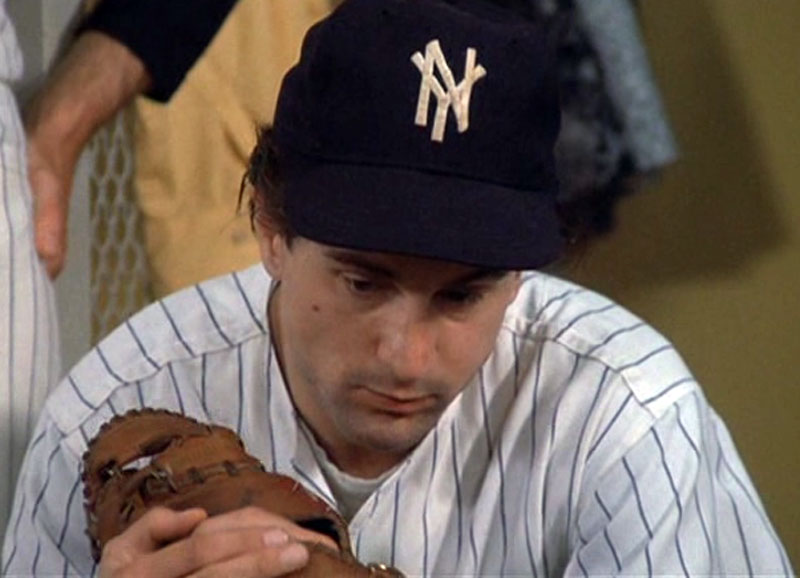
Andrew Toles played 96 games as a member of the Dodgers from 2016 to 2018. The speedy outfielder did well in limited playing time, but he did not report to spring training in 2019 and was subsequently diagnosed with bi-polar disorder and schizophrenia. A year later, Toles was arrested and charged with trespassing after he was found sleeping behind a FedEx building at Key West International Airport. He has been in and out of mental health hospitals ever since. But the Dodgers signed the now 30-year-old Toles to a contract in March, and revealed that the team has signed him to a contract every year since the 2019 season so he would be eligible for the organization’s health insurance.  

Nice.

_______________

Source: Sports Illustrated