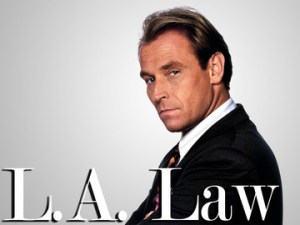
Surprisingly, Many California Lawyers Want To Have The Option Of Having Sex With Their Clients

It's all your fault, Arnie...

It’s all your fault, Arnie…

For most of the last century, sensible and rational lawyers accepted that exploiting the attorney-client relationship to have sex with their clients was unprofessional and unethical, without needing a formal rule to tell them the obvious. Then along came Steven Bochco’s popular TV drama “L.A. Law,” the over-heated saga of a high-rolling Los Angeles law firm and its libidinous lawyers. Most libidinous of all was domestic law specialist Arnie Becker, played by the then-blonde and dashing Corbin Bernsen. Arnie habitually slept with his clients when they were wealthy, sculptured, beautiful trophy wives trying to shed their husbands. This was not the image that the family law bar wanted to see broadcast to America, so lobbying efforts were undertaken in many state bars to formally declare Arnie’s nocturnal client conferences unethical, as they undoubtedly were.

California, being partially at fault for the uptick in the public’s false belief that lawyers use their practice as a virtual dating bar, was among the first states to pass an “Arnie Becker Rule,” though it had company, like Oregon, which amusingly anticipated Bill Clinton by including a strangely specific definition of what sexual intercourse was, and New York, which narrowly limited its prohibition to Arnie Becker and domestic relations lawyers like him. Other jurisdictions demurred, as well as the American Bar Association, which is supposed to seek consistency in the legal ethics rules. California’s new rule was one of the more wishy-washy ones, with Rule 3-120 stating that Continue reading

Encore: “The Ethics of Letting a Lying Defendant Testify”

"Objection! The defendant's pants are clearly on fire!"

“Objection! The defendant’s pants are clearly on fire!”

I’m in Ohio today, talking about legal ethics with a large law firm, and the discussion there turned to the difficult problem of the lying criminal client. Here is a post on the topic from the early days of Ethics Alarms, slightly updated, and the disturbing thing is that we are no closer to finding a satisfactory and ethical solution to the problem.

What do you do when your guilty client wants to claim he’s innocent in the witness chair, under oath? Continue reading

Ethics Dunce: Innovative Legal Marketing

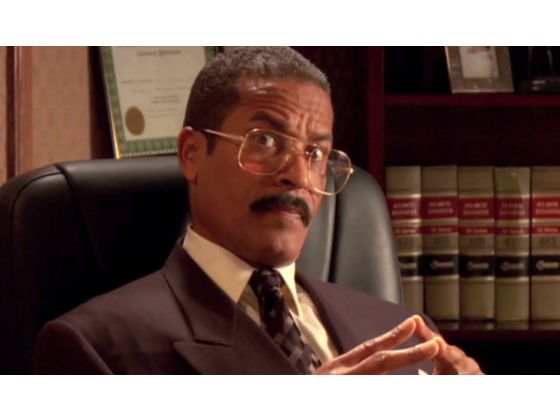
Would "Seinfeld's" Jackie Chiles be a worse spokeperson for lawyers than Arnie Becker? Hmmmm...

L.A. Law’ Actor Corbin Bernsen, whom we originally got to know as priapic divorce attorney Arnie Becker on the old TV lawyer series  “L.A. Law,” was recruited in 2009, fifteen years after “L.A. Law” went to re-run heaven, to serve as the paid spokesperson for Innovative Legal Marketing, a Virginia-based company providing marketing services for lawyers and law firms. Now Bernsen has filed a lawsuit claiming he’s owed more than $668,000 after the company allegedly breached its contract and dropped him.

I have no idea whether Bernsen or the marketing firm has the law on its side in the suit, but I do know this: for a legal services marketing firm to recruit the actor who played Arnie Becker to promote legal services is an implicit insult to the legal profession and the intelligence of the public. Continue reading

The Ethics of Letting a Lying Defendant Testify

It’s snowing like crazy outside, and I’m stuck putting the lights on a nine-foot tree.  My only escape from the pine needles assaulting my tender skin is ethics reverie, and I find myself thinking, once again, about the classic criminal defense attorney’s ethical challenge:

What do you do when your guilty client wants to claim he’s innocent in the witness chair, under oath? Continue reading

The Arnie Becker Rule [Updated 12/11/16]

For about 20 years, the consensus has been building in the legal profession that a lawyer sleeping with his clients is not only a bad idea, but also should be prohibited by the formal ethics rules. States like California, Oregon and New York quickly adopted such a rule while other bars resisted; when the ABA added the “no sex with clients” provision to is Model Rule 1.8 in 2003, more states followed suit. Now Virginia, one of the most respected bars in the country, is considering its first  pronouncement on the subject, in the form of a formal ethics opinion. Continue reading