UDDATE! With apologies to all, I’m retracting this post. I had bad information: the entire thesis of the post is based on the false belief, which I acquired literally decades ago, that baseball union chief Marvin Miller was a lawyer. I know that a lawyer should not be celebrated for achieving the goals of his client; I’m not at all sure about my conclusions if the individual is a non-lawyer labor leader. I haven’t considered Miller in that context. I have to think about it.
I apologize to Ethics Alarms readers and also the admirers of Mr. Miller, and I hope he won’t be visiting me on Christmas Eve. One thing the web doesn’t need is more bad information, and I regret adding to it, even for a couple of hours.
My sincere thanks to reader LoSonnambulo for the slap in the face…
Last week, Major League Baseball’s 6-member Modern Baseball Era committee considered ten Hall of Fame candidates, previously passed over in the regular voting process, whose biggest contributions to the game came between 1970 to 1987. It elected former Detroit Tigers and Minnesota Twins starting pitcher Jack Morris and his Tiger team mate Alan Trammell, one of the very best shortstops of the era. Both were borderline choices, but Trammel was certainly deserving. Morris got over the hump because of a single memorable game, his Game 7, 10-inning, 1-0 shutout that won the 1971 World Series for Minnesota over Atlanta in of the 1991 World Series. Now that starting pitchers in the Series seldom go even 5 innings, much less ten, Morris’s performance seems especially god-like, but the fact remains that single achievements are not supposed to put players in the Cooperstown, New York Museum. Among the candidates who were rejected was my beloved Luis Tiant, the spinning, whirling, Cuban ace of the Cleveland Indians and Boston Red Sox, one of the most unique pitchers in the history of the game, and while he was active, universally considered a great player, which he was. “Looie” deserves to be in the Hall, and is in his eighties now. He should have been voted in over Morris.
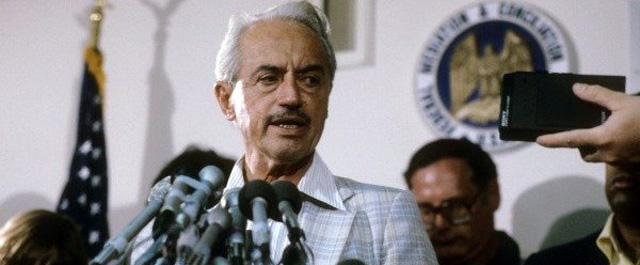
But the rejected candidate that sportswriters have long been rooting for wasn’t even a player. He’s Marvin Miller, who died in 2012 and who headed the players’ union from 1966 to 1982. Under Miller’s direction, the MLB players’ union became one of the strongest unions in the United States. He is credited with leading the efforts to eliminate the Reserve Clause, which once bound players to teams until they were traded, released, or retired. When he took over the union, the top baseball salary was about $100,000 a year. Today it is about 30 million a year, and the minimum salary is over $500,000. Legendary broadcaster Red Barber once said that Miller, “along with Babe Ruth and Jackie Robinson, is one of the two or three most important men in baseball history.”
Well, Arnold Rothstein, Barry Bonds and the inventor of anabolic steroids had immense impact on baseball too. Continue reading

 Ethics Alarms