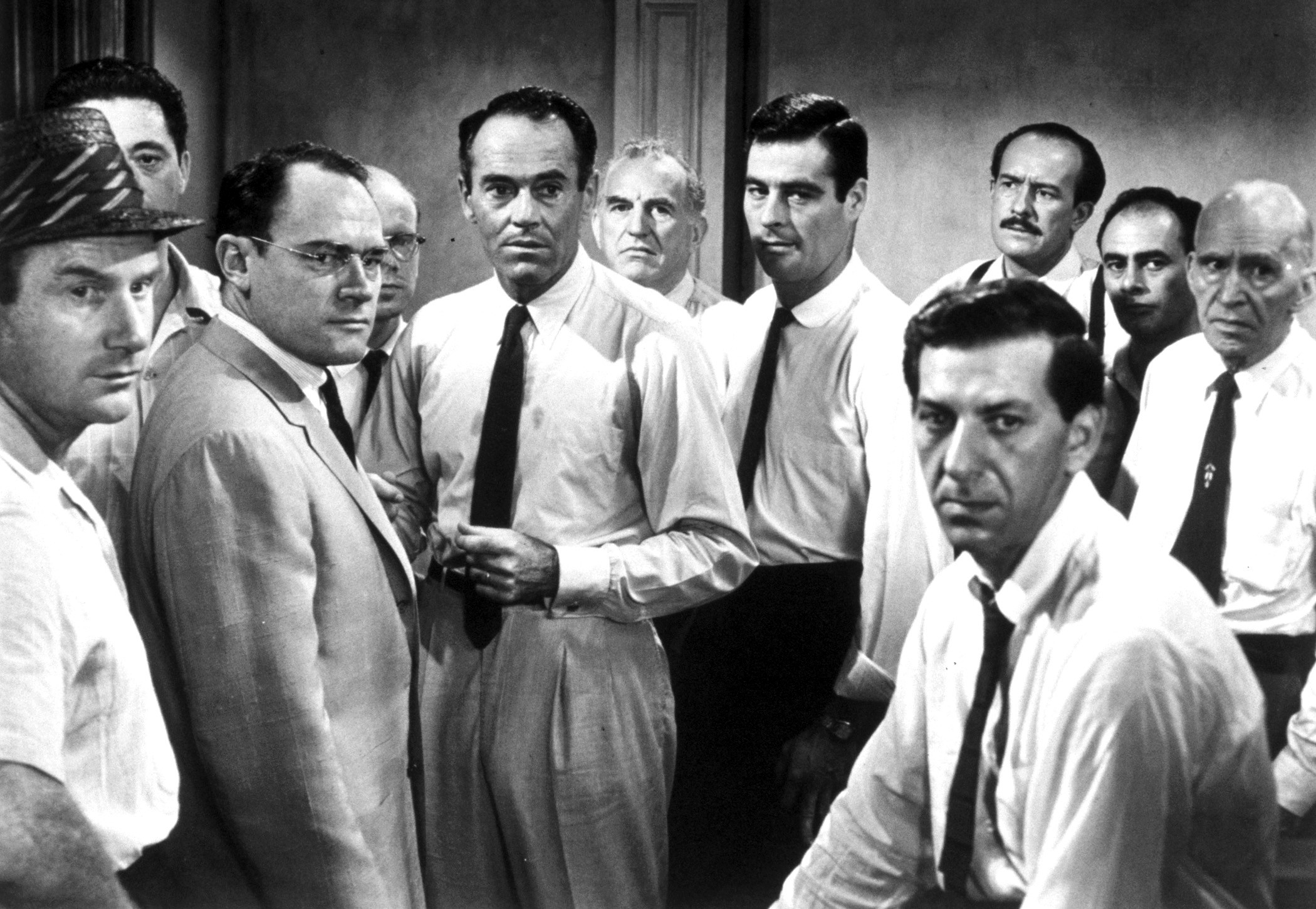
A Prosecutor Lies, But It’s For A Good Cause…

Yes, Jack McCoy would probably be disbarred in the real world...

Yes, Jack McCoy would probably be disbarred in the real world…

Aaron Brockler, an assistant Cuyahoga County (Ohio, including Cleveland) prosecutor, was fired last month for  using a false identity on Facebook  to try to influence the testimony of  defense witnesses in a homicide case.

He initiated Facebook discussions with two women listed by the defense as alibi witnesses in a murder prosecution. Brockler pretended to be a former girlfriend of the defendant who had a child fathered by him, and urged the witnesses not to “lie for him.”  County Prosecutor Timothy J. McGinty fired Brockler, who by my count violated at least Ohio legal ethics rules 3.4, 3.7, 3.8, 4.1, 4.2 and 8.4, (tampering with evidence, suborning perjury, becoming a necessary witness, prosecutorial misconduct, misrepresentation of facts, contact with a person represented by counsel and dishonesty) and perhaps some others. Prosecutors are not allowed to tamper with defense witnesses, or try to influence any witness testimony. They are not permitted to contact represented parties in connection with a prosecution, unless the lawyers are involved. They are not permitted to lie or pose as someone they are not over the internet. They are not permitted to make themselves witnesses in their own cases. Brockler wasn’t just fired for cause, he was fired for multiple causes, any one of which would have justified kicking him out the door. Continue reading

Parenting While Drunk

“The hell with the kid—SAVE THOSE DUCKS!!!”

We have enough laws; too many, in fact. This ridiculous incident reminded me of a question that has been bothering me for a long time, however.

In York County, Pennsylvania,  mother and wildlife-lover Justina Laniewski was taking care of her toddler.  She was also drunk as a skunk, and decided, in her wisdom, that a flock of wild ducks were endangered by the  swift currents of Codorus Creek, swollen by Hurricane Sandy. Ducks are water birds, swim well, have webbed feet and also can fly away in the presence of danger. They seldom, if ever, drown. Never mind all that: Justina—who has no wings or webbed feet, or a brain either, apparently–-jumped in to rescue them. Her toddler, left unattended on the shore, was about to toddle in after her mother, but was grabbed at the last second by a neighbor. Firefighters had to rescue Laniewski from the neck-high water, as the ducks, I presume, laughed their tail-feathers off. Continue reading

So Wrong It Defies Belief: The Green Bay Police Heist

Maybe the public and the media are finally waking up to the astoundingly un-American abuse of power that are the  civil forfeiture laws,  which allow property and cash to be seized as helping to facilitate a crime, and later are divvied up between the police and the state. There are some promising signs. Libertarians like Radley Balko have been trying to ring the ethics alarms on this horrendous example of government misconduct for years, and the Institute for Justice continues its lonely battle to defeat the most egregious offenses, but George Will just used the trumpet of his weekly column to expose the Caswell family motel scandal, which Ethics Alarms discussed in February here. Now comes a tale of civil forfeiture from Wisconsin that is so brazen that it defies belief, and also compels the following question:

How can this happen  in America? Also this one: If the government will use its power to steal money and property from law-abiding citizens, and no effort is made on the part of national government leaders to do anything to stop it, how can at least 50% of the American public continue to advocate giving more power and money to a government that obviously cannot be trusted with either?

The first question is frightening in its implications.

The second is a mystery, on par with “What happened to the Mary Celeste?” Continue reading

The Perils of Ignoring Professionalism

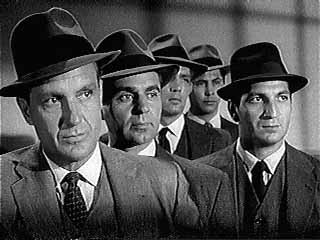
Robert Stack as Eliot Ness with the rest of TV's "The Untouchables." Now THOSE guys were professional. You'd never see THEM text messaging jokes to Al Capone...

The Washington Post ran a story Tuesday describing how the defendants in an elaborate FBI sting operation escaped conviction as a consequence of the revelation of racy text messages between the agents and their undercover informant. Agents and their key informant bantered “about sex, booty calls, prostitutes, cigars, the Village People, the informant’s wives and an agent’s girlfriend.”  When the arrests were first announced by the Justice Department, the operation was regarded as a model law enforcement success. But federal prosecutors failed to win a single conviction,  in large part because defense lawyers used the text messages to raise juror doubts about the credibility and professionalism of FBI agents. Now the Justice Department says that in light of the first two trials, the government is evaluating “whether to continue to go forward” with the remaining prosecutions of 16 defendants, seven of whom had their cases end in hung juries.

During the most recent trial of six men and women on charges of paying bribes to win business with a foreign government, the defense attorney used the FBI’s texts both to attack the character of the informant and to suggest that the lead agent was an untrustworthy, bigoted, anti-gay misogynist. The FBI believes this was unfair, and an example of a lawyer’s trick defeating justice. Informants, almost without exception, are sleazy characters, and managing them takes skill and guile. The agents felt it was essential to build trust, which meant working to develop a collegial  relationship, at least in the informant’s mind. The text banter, they say, was designed to ensure the loyalty of a low-life, which required the agents to sometimes act like low-lifes themselves. Thus they texted messages back and forth that included bawdy jokes, innuendos about sex, anti-gay stereotypes and more, all in a buddy-buddy tone that the jury found troubling. “The texts were one of many things that point to an absolutely amateurish operation,” the jury foreman told the Post. Continue reading

The Civil Forfeiture Outrage: American Government At Its Worst, So Naturally We Ignore It

Do progressives and conservatives have the courage to confront the illusion-shattering outrage of civil asset forfeiture in America? Not so far they haven’t. That shouldn’t be too surprising.

There are some things our governments do that are so frightening, wrong and un-American that we tend to look right by them—ignore them, pretend they aren’t happening, focus on other things—because their implications are too confounding to deal with. For fans of big government, who look to central authority to micro-manage our economy, distribute our resources, protect us from every threat and isolate us from the consequences (and often the benefits) of human nature, the fact that government power corrupts as surely as any power is an inconvenient (and undeniable) truth that threatens the foundation of their ideology. How irrational is it to place more responsibility on the government if we can’t trust the government, because we can’t trust the inevitably flawed and conflicted individuals who run it?

The willful blindness is no less insidious with conservatives, whose core belief is the inherent goodness of the American system and way of life, as defined by our founding documents. Accepting that the largest and oldest democracy on earth sometimes targets and plots against law-abiding citizens means accepting the possibility that the system itself doesn’t work, and that its supposedly sacred ideals—life, liberty, and the pursuit of happiness—are a cynical lie. Aiding and abetting the blindness is the traditional media, which is substantially populated by self-important, inadequately-educated, ethically-shaky pseudo-professionals who believe their duty to objectively tell the public what it needs to know should be tempered by what they believe will persuade members of the public to adopt the “right” views, and, of course, by what will pull their attention away from the competition. Better to have features about Michelle Obama’s healthy eating crusade than to tell Americans about government wrong-doing, especially when the journalists support the party in power.

As a result of this toxic mix of bias, self-interest, self-delusion and incompetence, many of the most illuminating examples of how far America can go wrong can take a long, long time to enter into public consciousness. A recent example is insider trading by members of Congress, which had been well-documented for a decade before a “60 Minutes” report combined with the Occupy protest visibility and the widespread distrust of Wall Street suddenly made it a significant public concern. But other equally important issues, like the abuse of U.S. convicts, including the tolerance of prison rape, haven’t broken through the willful blindness yet.

Neither has civil asset forfeiture, despite the efforts of libertarian activists, publications like Reason, websites like Popehat, and organizations like ACLU and  The Institute for Justice, a libertarian, human rights public interest law firm that I have been negligent in not plugging earlier. (I apologize.) Right now, the Institute is going to court in a Massachusetts civil forfeiture case, United States v. 434 Main Street, Tewksbury, Mass, that serves as an excellent introduction to the sinister nature of this institutionalized abuse of power. Here’s the story, from the Institute’s website: Continue reading

Comment of the Day: “Look Out! There’s a Speed Trap Ahead!”

Veteran commenter Tim LeVier updates an older Ethics Alarms post about the ethics and law regarding the practice of flashing headlights at oncoming cars on the highway to warn them of speed traps. Police had been ticketing the flashers; I said that this was wrong, there being no law against the practice, but that warning law-breakers of a police presence was poor citizenship and unethical nonetheless.

I still feel that way, but insufficiently considered other reasons, ethical ones, that might prompt the same conduct. Tim, while pointing us to a more recent story on the topic, remedies my failure….as he has before. As usual, I am grateful.

Here is his Comment of the Day on Look Out! There’s a Speed Trap Ahead!:

“…A couple of points: Continue reading

Ethics Quiz: “The Video Vigilante” of Oklahoma City

The Video Vigilante

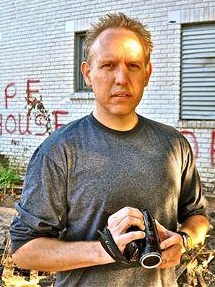
Brian Bates, or “The Video Vigilante,” has spent 15 years exposing and documenting street prostitution in Oklahoma City. He lurks around an area of south Oklahoma City known for frequent prostitution, waits for a prostitute to get into the car of a customer and follows it to their destination. Then, videotape engaged, he opens the driver’s side door and shouts, “You’re busted, buddy!”

Then he places the video on YouTube’s John TV channel, Bates’ website, JohnTV.com, or his Facebook page or Twitter feed. He sometimes send the links to the guilty men’s spouses. Sometimes, knowing this, his prey beg for mercy, which is never forthcoming.

A two-part Ethics Quiz:

1. Is this admirable behavior? Ethical behavior? Continue reading

“Look Out! There’s a Speed Trap Ahead!”

Who is your ally, the speeding motorist, or the traffic cop?

A lawsuit filed this week claims that 2,900 motorists were illegally ticketed in Florida between 2005 to 2010 for flashing their lights at oncoming, and speeding, cars to warn of speed traps ahead.  Apparently the police have been giving tickets to drivers sending a friendly “Cheese it! The cops!” message to scofflaws, in solidarity against the hated men and women in blue without benefit of an applicable statute.  The matter came to light when a college student on her way to school  spotted two  police officers on the side of the road and flashed her headlights to warn other drivers about the speed trap ahead. A police car pulled her over and the officer wrote her a ticket, saying she’d just broken the law by flashing her lights. She challenged the ticket and won, giving an enterprising lawyer an idea for class action lawsuit.

There is no Florida law that prohibits light-flashing, says Oviedo, Florida attorney J. Marcus Jones. He claims officers are simply misapplying a law that was designed to prohibit drivers from adding after-market emergency lights to their vehicles. He also claims that  officers writing those tickets are violating a driver’s constitutional right to free speech. If motorists want to flash their lights to warn about a speed trap ahead, they are free to do so, according to his suit.

Hmmmm. Continue reading

“Twelve Angry Men,” A Million Angry Fools, and the Jury System

Their defendant was probably guilty too.

Ethics Alarms All-Star Lianne Best sent me this link about a member of the Casey Anthony jury who is going into hiding because of all the hate and criticism being directed at jury members and their controversial verdict. Her plight, which must be shared by other members of the much-maligned jury, highlights the unethical, not to mention ignorant, reaction of the public to the Florida ex-mother’s narrow escape from a murder conviction she almost certainly deserved.

The problem begins with publicity. We may need to re-examine the logic behind broadcasting high-profile cases. The combination of live courtroom feeds and quasi-semi-competent commentary gives viewers the mistaken belief that they are qualified to second guess the jury, and they are not. They are not because the jury is in the courtroom, and the viewers aren’t. The jury and TV watchers see different things; individuals communicate different emotions and reactions in person than they do on camera. There is only one fair and sensible way to answer those on-line instant polls that ask, “Do you think Casey Anthony should be found guilty?”, and that is “I don’t know.”

Most of all, the viewers and pundits are not present in the jury room. Continue reading

Comment of the Day: “Ethics Dunce: Guitarist Carlos Santana”

Michael has posted the Comment of the Day regarding my post of Carlos Santana’s criticism of Georgia’s new anti- illegal immigration law. The post expresses my continuing amazement and dismay at the strong support for illegal immigrants in the media and in segments of the public, which I view as both irrational and impossible to defend without recourse to rationalizations and dishonesty. In his comment, Michael is less critical of these defenders as he explores the factors that could make reasonable people oppose efforts to crack down on illegals.

“I can understand why reasonable people are against laws that punish illegal immigrants. I understand your conviction that a law should be either enforced or repealed, but sometimes a law is a bad law that, for whatever reason, legislators cannot or will not turn into a good law (given your frequent posts criticizing Congress, you can understand why some bad laws are not changed). When such a bad law is in place, there is often sympathy for those who break it because reasonable people conclude that, if they were in the same position as those who break the law, they would break the law as well. Continue reading