Welcome To The World Of “Expert Witnesses”

Then there’s the arrow that reads, “Willingness to say what we need to win the case.”

It doesn’t happen often, but it does pay well and can be interesting: occasionally I accept an engagement as a testifying ethics expert in a law suit. I have a rule, however, that surprisingly (or not) seems to come as a shock to many potential clients. They may be buying my opinion, but they are not necessarily buying the opinion they want. After I review the facts, documents and issues involved, I will render my opinion, but no promises. I won’t take a case unless I generally agree that the theory of the side hiring me is plausible, but after all the facts are in and I’ve done my analysis, if the case of the client whose lawyer hired me is weak, I will say so.

Strangely, some lawyers seem to have a problem with this, even when the expert insisting on integrity is an ethics expert. I am currently in settlement mode with a law firm that hired me to render my opinion regarding the billing submitted by another firm to the law firm’s client. Part of their argument, in claiming malpractice against the billing firm, was that its billing was excessive, unreasonable and inflated, a violation of  Rule 1.5 of the Rules of Professional Conduct governing lawyers. I reviewed the billing statements, and they could have been inflated—some of the methods of stating who did what work was vague, and there sure was a lot of work billed on the matter, by an astounding number of lawyers—-but I could only assess that to a level of certainty sufficient to be certain in my own mind, much less state it under oath, if I could examine what all that work produced. This the law firm that hired me refused to produce, perhaps because the time it would have taken me to review it thoroughly would have been very expensive. But how could I decide whether the amount of money billed for a product was unreasonable without being able to determine what the product was? I couldn’t. Thus my written opinion stated what I could say honestly and with authority: based on the billing statements and the materials I was allowed to review,  I could only speculate on whether the billing was proper or not. It was possible. More than that, I could not say.

The law firm was not happy, although they never spoke to me about it. The firm just settled the case, and never paid me. (My very reasonable fee for services was $6,000, and if you’ve ever spent much time reviewing legal billing statements, you would know that they got off cheap.) You see, it didn’t really want an ethics expert, or an independent expert, or an honest, informed, professional analysis. They wanted a pre-determined opinion, bought with cash, delivered to specifications. Well, they won’t get that from me.

Welcome to the world of “expert witnesses.”

 

Story Update: the Fake Law Firm’s Purpose Revealed

Ethics Alarms honored the web site for Cromwell and Goodwin, an apparently imaginary law firm, in its

Yeah, these people always seemed a little creepy to me...

“Unethical Website” category, without being certain what unethical purpose the site served—though I had my suspicions. As many suspected, it was fishing for scamming victims, and one of them contacted The American Law Daily in May to tell his story. The Am Law Daily, to its credit, held on publishing the story until his efforts to recover the money failed, and now we can all read about it. David Tucker, a 66-year-old fire investigation scientist from London, lost roughly $6,775 to the Cromwell & Goodwin scammers, and gave the legal news publication copies of documents printed on “firm” letterhead to support his claims. You can find his account here.

Unethical Website of the Month: Cromwell and Goodwin

These lawyers do not exist.

Cromwell and Goodwin’s new website is a mystery. Nobody knows why it exists, or who created it. It appears to be the website of a law firm, if a somewhat language-challenged one. The problem: the law firm doesn’t exist. Its history is imaginary. Its partners do not exist. Its headquarters in New York at 221 E 18th St # 1 New York, NY 10003-3620 are vacant.

The firm, or whatever it is, claims to be 30 years old but only got around to launching  a website on March 19 of this year. A press release on a free publicity distribution service called PRLog.org about Cromwell & Goodwin’s involvement in an upcoming conference  regarding telecommunications consolidation projects in emerging markets also surfaced, for no discernible reason. The release referred to Joachim Fleury, a London-based Clifford Chance  partner, as “Global Head of Cromwell & Goodwin.”  Yet neither Clifford Chance, one of the largest law firms in the world, nor Fleury, who is real, knew anything about Cromwell & Goodwin when they were queried by reporters. Continue reading

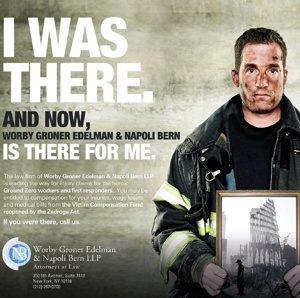
The Fireman, the Cheater, and Media Muddling

Come on, Robert! It's less embarrssing than Joey's gonorrrhea poster!

One of the reasons I launched The Ethics Scoreboard and later Ethics Alarms was that I felt  the media did not recognize ethics stories and failed to cover them. Well, more ethics stories are finding their way into the news, but true to the warning “Be careful what you wish for,” the reports usually botch them, and get the ethics lessons wrong. The saga of Enzo and the “Barefoot Contessa” was a particularly nauseating example, but there have been others recently. For example… Continue reading

Law School and High School Credential Corruption

In many high schools around the country, as many as fifty graduating seniors were designated “valedictorians,” because the traditional honor for the top academic performer is a coveted credential, and the schools wanted as many students as possible to have the benefit of it. On their future resumes, will these students footnote “valedictorian” to let potential employers know that it doesn’t mean they were #1 in their class? Of course not. Their schools have given them a license to inflate their qualifications and achievements. Until every school clones its valedictorians, the credential now is inherently deceptive, and it is the high school administrators, not the students, who are doing the deceiving.

Ah, but “you ain’t seen nothin’ yet!” The New York Times reported that at least ten law schools, S.M.U., New York University, Georgetown, and Tulane among them, have deliberately altered their grading curves—-some retroactively—in order to make their graduates artificially look better to employers. Continue reading

Blumenthal’s Lies and Professional Discipline

I know I’m harping on Richard Blumenthal, but:

An Illinois attorney has just been suspended from the practice of law for three years for using a doctored resume to obtain his job at a big law firm.

Richard Blumenthal has doctored his resume, in public, by leading voters and media to believe he was a Vietnam veteran, when he was not. He is seeking a job, not with a law firm, but in the U.S. Senate.

The Illinois attorney has been found unfit for the practice of law by dint of his dishonest conduct, which raises doubts about his trustworthiness. Is filling out a resume to acquire a legal job itself the practice of law? No. Can anyone think of a reason why it is less indicative of bad character for a lawyer to fabricate credentials in pursuit of a non-legal job (albeit for a position that makes laws!) than a legal one? I can’t. That would seem to be an absurd distinction. Lying to the hiring partner at a law firm is worse than lying to the citizens of Connecticut? Blumenthal is the State Attorney General: he works for the people of Connecticut; they are his clients!  His lie is certainly worse.

Forget about not voting him into the Senate. Connecticut should work on kicking Richard Blumenthal out of the Attorney General’s office.