Pre-Unethical Conditions: Surrogate Mother Contracts And Making Babies With Jerks

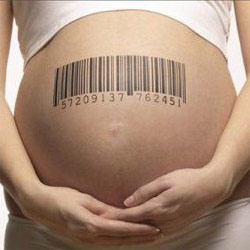
womb-for-rent2Most surrogate mother arrangements work out exactly as intended by the participants. A couple or a single parent gets the biologically linked baby they bargained for, and the mother gets what she wanted, cash. To many the contracts seem unethical because the idea, only recently beyond the realm of science fiction, of a woman bearing another couple’s child, or allowing a stranger’s seed to impregnate her,  appears strange, unnatural and  icky, which it is. No, it is not unethical, but it is what we call a pre-unethical condition, a situation that lays a foundation for unethical conduct and results if care isn’t taken and one or more participants lack functioning ethics alarms. Three recent episodes demonstrate how icky can turn to unethical, especially when the wrong kind of people are involved.

I. The Unwanted Triplet, continued.

Earlier this year, Ethics Alarms hosted a spirited debate regarding Melissa Cook, a surrogate who fought against the man who owned her three unborn triplets, having rented out her womb to gestate them. He wanted to have one of them aborted, because two babies were all he felt he could support. She refused, and challenged the surrogacy contract in court. I asked… Continue reading

Hypnotist Ethics Amuck: I’ll Take the Chicken, Thanks

Hypnotist

[I’m on the road, and have a commentary on last night’s debate to file, but it’s hard doing it right in cabs and airports. This stupid tale, however, doesn’t take as much thought.]

Like the last post, this one begins in Minnesota. Something strange is going on up there. I didn’t write about this lawsuit  a year or so ago when it first came to my attention, but it is apparently still live. It is unbelievable, but also true.

PRIDE Institute Inc. of Eden Prairie is a non-profit agency that works with lesbian, gay and transgender clients, helping them deal with “mental health, substance abuse and sexual health” issues. As a special treat for its staff, the HR department hired a hypnotist as entertainment at a staff holiday party. The hypnotist, Freddie Justice, started his act  by telling the employees that he recognized it was a work event and that they didn’t have to worry about, for example, being hypnotized to “cluck like a chicken.”  His audience put at ease, Freddie entertained the group for nearly an hour and a half, hypnotizing volunteers and persuading them to do various silly things for the amusement of their colleagues.

Then the hypnotist asked the agency’s director of human resourcesor permission to conduct a final special demonstration.. With her permission, Justice selected three female volunteers, hypnotized them and told them they were going to experience an intense orgasm, like Meg Ryan’s fake version in “When Harry Met Sally.” All three did, spectacularly so, in front of their co-workers and the CEO of the agency. Continue reading

#FreeKesha Ethics: Ignorance, Indignation And Feminist Bias Vs. The Law

Kesha

Perhaps, if you don’t follow pop music, you managed to miss the long, long ongoing drama of singer Kesha’s (formerly “Ke$ha”—I know, I know… ) legal efforts to get out of her recording contract with  Sony and producer Dr. Luke, (Lukasz Gottwald) who has produced hits by other artists like Katy Perry, Rihanna, Pitbull and Miley Cyrus. It isn’t over, but the unethical caterwauling by Kesha and her supporters both in and out of the industry is deafening.

Also off-key.

Kesha Rose Sebert was 18  and an unknown singer from Nashville  when she signed a five or six (I have read both)  album contract with one of Dr. Luke’s recording companies in 2005. It took five years, but the producer’s faith in her paid off when Tik Tok became the No. 1 song in the country. Kesha released two albums in the next two years, but none since 2012.

In October 2014, Kesha’s legal team sued Dr. Luke for alleged sexual assault and battery, sexual harassment, gender violence, emotional abuse, and violation of California business practices since the beginning of their business relationship. The lawsuit claimed that Dr. Luke had  drugged her, raped her while she was drugged,  and also tormented her to the point where Kesha developed an  eating disorder that eventually required medical attention. Kesha asked that the court let her out of her exclusive recording contract because, as she put it in a sworn affidavit, “I cannot work with this monster.”

Dr. Luke, not appreciating being branded a rapist, filed a countersuit against Kesha and her attorneys for defamation, and accused her, her mother, and her management of fabricating the abuse claims to break her contract with him and his partner, Sony. Last November, Dr. Luke asked the judge to dismiss Kesha’s allegations of sexually abusing her. Continue reading

Ethics Dunce (From The Shark-Jumping Files): The National Organization For Women

Fomzi, Homer, The National Organization for Women...

Fomzi, Homer, The National Organization for Women…

It would be good for the nation and national discourse on gender-related matters if there existed a national organization, operated with integrity, intelligence and dignity, that addressed legitimate issues of women’s rights with the zeal of an advocate as well as professionalism and common sense. There was a time, so long ago now that I can’t even recall exactly when it was, that the National Organization for Women appeared capable of evolving into just such an organization. As this incident shows beyond a shadow of a doubt, that chance has passed. NOW has descended into permanent knee-jerk hackery, the realm where its neighbors are such predictable and rightly-maligned one-note fanatics as PETA, the NRA, NARAL, and Media Matters. What a shame. What a lost opportunity to do good.

When the Worst of Ethics 2015 is finally published here (It’s coming! I swear!), the “Rolling Stone” fiasco featuring the fantasy rape accusation of “Jackie” against a University of Virginia fraternity will take one of the “honors,” and maybe more. From that collision of campus sexual assault hysteria and incompetent journalism came real harm, and several of the victims are suing the publication for defamation. One such victim is a University of Virginia associate dean named Nicole Eramo, who is alleging in her lawsuit that the magazine falsely portrayed her as negligently unconcerned with allegations of sexual assault on campus and as the now totally discredited fraternity gang rape tale’s villain.

Counsel for Eramo has asked that a court require “Jackie” to turn over any communications ,related to the alleged assault, between Jackie and  the magazine, friends, family and a campus support organization. Now NOW has presumed to interfere, and is trying to derail the lawsuit. In an open letter published this week, NOW president Terry O’Neill called on UVA president Teresa Sullivan to get Eramo to drop the suit. (She cannot force her to do that, however, and it would be unethical for Sullivan to try.) Continue reading

Comment of the Day (1), on Surrogate Ethics: “The Strange Case Of The Unwanted Triplet”

surrogate-motherIt’s very thoughtful of Ethics Alarms readers to provide such high level content so I have a chance of completing the 2015 Ethics Alarms Awards before March. I am awash in potential Comments of the Day all of a sudden, and this is the first of nesting COTDs, both inspired by the recent post on the surrogate with gestating triplets who is blocking the attempt of the biological father to abort Eenie, Meenie, or Miney, he doesn’t care which.

New commenter J. Jonah Jameson—presumably not really Peter Parker’s employer—submitted a helpful personal story that puts much of that drama in perspective. Here is his Comment of the Day on the post, The Strange Case Of The Unwanted Triplet:

I am the biological father of a child born of a surrogate mother. I’m sure ResurrectedToday is correct that the father fully knew that there was a chance of triplets. But the surrogate knew the same thing, and I’m almost 100% certain that she agreed in advance that she would have an abortion if the father requested it. (If not, then there are a lot of lawyers, doctors and other professionals who did not do their job.) Either she changed her mind, or she never really intended to abide by that agreement.

I can say a few things about my own experience:

1. There were a lot of people involved in the process: me, the surrogate, the donor, the three lawyers representing us, the doctors, and the psychologists and social workers at the lawyers’ and doctors’ offices. In almost every conversation that I had with any of these people, the subject of multiple births was discussed. Everybody involved understood clearly that there was a very high possibility of twins, triplets or even more.

Continue reading

The Strange Case Of The Unwanted Triplet

I want to hear the ethical analysis of this messy situation from abortion advocates/apologists/activists/feminists. In fact, I can hardly wait.

Melissa Cook is a surrogate mother whom a man paid $33,000 to have  his child by in vitro fertilization, using his sperm and the eggs of a 20-year-old donor. The 47-year-old California woman was implanted with three embryos, a not infrequent approach, but when all three developed normally and apparently healthily,  the birth father began to freak out. He didn’t want three kids, only two at most, and directed Cook to have one aborted. When she refused, he began threatening her  with threats of financial penalties if she did not comply with his demands that she undergo a one-third abortion. Continue reading

Update On “The Worst Aunt Ever” Debate

Auntie Maim and Nephew Maimer...

Auntie Maim and Nephew Maimer…

Remember the Ethics Alarms post about the favorite aunt who sued her 12-year old nephew for damages based on her injury when he jumped into her arms at his birthday party when he was 8? Remember the indignant plaintiffs lawyer who couldn’t get his mind around the fact that normal people don’t (ande shouldn’t) always see right and wrong like lawyers do, or that “it’s done all the time” (that is, The Golden Rationalization, #1 on the Rationalizations list, “Everybody does it”) and “there are worse lawsuits” ( or the worst of all rationalizations, #22, “Comparative Virtue” or “Its not the worst thing”) are not sufficient ethical defenses of a woman who voluntarily traumatizes a child who trusts her and who just lost his mother?

The Weekly Standard looks at the episode from some different angles, and writer Charlotte Allen does an excellent job providing a balanced analysis of the case (which I am now using in my ethics seminars to explain to lawyers how legal ethics alone is often not enough to make lawyers ethical). I am awash with regret that I didn’t think of the gag  “Auntie Maim” in the original post, which admittedly went a bit overboard in its condemnation as it was. Mostly, however, I am gratified that I was quoted in the piece after a well-handled interview with Charlotte, and indeed that she used my perspective to sum up the significance of the episode.

You can read it all here.

Comment of the Day: Tesla’s Seat Belt Recall, Moral Luck, and Ethics Chess

2014-honda-accord-airbags

Rich in CT delivers a Comment of the Day amplifying the issues in the post, Tesla’s Seat Belt Recall, Moral Luck, and Ethics Chess. Here it is:

I owned a Honda up until last year, until a deer took a gamble that it could get across the same stretch of faster than my car could. Mr. Deer ended up taking a short flight further down the road, and my car ended up taking a short tow to the junk yard.

No one (human) was hurt in this instance, and for that I am grateful.

Continue reading

Tesla’s Seat Belt Recall, Moral Luck, and Ethics Chess

Jaws victim

Ethics Alarms Chief Ethics Scout Fred found this one. Tesla was alerted to one seat belt failure in its Model S, and  recalled them all. This involved a huge cost, of course, and that cost will be eventually passed on to consumers and investors. Fred asks,

“Abundance of caution” is the phrase they used, one I gather is familiar to lawyers. Could they have justified some other response that was less catastrophically expensive? Would they have had a fiduciary duty to do so? Or would that duty lie in maintaining the brand image of meticulous quality at almost any short-term cost, building a reputation that could command premium prices for decades to come?
The issue was simply this: how much did the company want to bet on moral luck? Tesla was aware of a possible design or manufacturing flaw that could kill passengers. It could have been a fluke, and it could have been widespread. If the cars were not recalled—and I don’t know enough about Teslas to presume that there would be any other way to check every single car or replace the seat belts without the expense of a recall, so I will assume for this discussion that there is not—and one or more passenger was killed, then Tesla management would have suddenly become Sheriff Brodie and Mayor Vaughn in “Jaws,” as articulated, with a slap, by the mother of a little boy who became shark bait while playing on his yellow raft. They knew there was a possible danger, and decided that chancing it was a better call than risking the summer tourist business. They balanced the risks, and did nothing.

Ethics Musings I : The Dark Side Of Personal Injury Lawyers

better-call-saul

I’ve been reflecting, since yesterday, on the bizarrely angry and intellectually dishonest protests registered here and on his own blog by trial lawyer Eric Turkewitz regarding the aunt who sued her 12-year-old nephew. His arguments, if you can call them that, consisted of constantly shifting the issue from ethics (what the aunt should have done) to law (what the aunt had a legal right to do), denying the core problem (Why would anyone assume that a child is harmed by dragging him into court, subjecting him to examination in front of strangers, and focusing on him as a wrongdoer and responsible for his aunt’s alleges misery, all mandated by the aunt who supposedly loves him?), and appealing to a dizzying list of rationalization and fallacies. He then made his exit by accusing me, a lawyer, of “knowing nothing about the law” (I made no assertions about the law at all—this is not a legal issue) making everyone stupid, and being a narcissist, a full-bore ad hominem attack ending in an ominous “May God have mercy on your soul!” Why would he act like that?

The reason, I realize, is that my posts challenge the basic belief system of the plaintiff’s bar, which I know very, very well having worked in an executive position and run such diverse programs as the research data base, conventions, sections, litigation groups and more over seven years with the Association of Trial Lawyers of America. Now ATLA is called “The American Association for Justice,” a name chosen purposefully to disguise the fact that it is a plaintiff’s lawyer’s lobby by keeping “trial lawyers” out of the name because it had a negative response in marketing studies. (I kid you not.)

Trial lawyers have done a lot of good and important things and continue to, but the profession is corrupting. There is a lot of money to be made, and ATLA–excuse me, AAJ, is devoted to eliminating any limits on their members’ ability to sue anyone for any amount, no matter what harm it does to the economy, the nation, the cost of health care, the bonds of trust in society, personal liberty, or public respect for the civil justice system. Individually, members of AAJ are among the top donors to the Democratic Party, in part to make sure that they can block all Republican efforts to limit jury awards, spurious lawsuits, and damages that have to be paid by negligent corporations when they destroy lives through shoddy products, conspiracies, and other conduct. The other reason is that Democrats support the redistribution of wealth, and trial lawyers profit by it.

In the matter of keeping corporations accountable, the AAJ is, as they will constantly remind us, on the side of the angels. But like other interest groups (the NRA, the ACLU, NOW, and may more) that stake out  extreme, self-serving and unethical positions in defense of legitimate rights, trial lawyers often feel that they must take the position that every injury and misfortune deserves compensation by someone else. Eventually, they believe it. Justice is taken out of the equation for all but the plaintiffs bar’s clients. Justice means that someone else is always at fault. Continue reading