Three Republican Candidates: Gaffes, Disqualifications, Or Something Else?

shooting-yourself-in-the-footI felt badly about piling up three posts recently on unethical female Democrats running for office, and was inspired by the Washington Post’s Greg Sargent to do some analysis of Republican candidates who, at least according to Sargent, deserve equivalent criticism to what has been leveled at Alison Lundergan Grimes for refusing to say whether she voted for President Obama. [She did it again last night in her debate with Sen. McConnell.]

Sometimes finding Republican candidates who deserve an Ethics Alarms slap is hard, unless they say something bat wacky like, say, Richard Mourdock. If a Democrat is flagged by The Daily Beast or the Post, I can be pretty sure there was something said or done that was objectively troubling, because the mainstream media will bury anything from a Democrat that is vaguely defensible. A Republican, however, might be accused of certified insanity for a statement that offends progressive cant. Fox and many of the right wing websites, meanwhile, will ignore any Republican whose pronouncements don’t rise to “I am the Lizard Queen!” level of derangement, and will find fault with Democratic candidates on dubious grounds. Here are the GOP candidates for today’s ethics audit: Joni Ernst (U.S. Senate in Iowa); Tom Cotton (U.S. Senate in Arkansas); and Greg Abbott  (Texas Governor race): Continue reading

Ethics Observations On Wendy Davis’s Controversial “Wheelchair Ad” Attacking Greg Abbott

http://www.youtube.com/watch?v=_9hn7GHEhCc

1. The campaign of Texas Democratic gubernatorial candidate Wendy Davis has issued an attack ad directly referencing gubernatorial rival Greg Abbott’s partial paralysis, and includes the image of an empty wheelchair. Davis could claim—and will, if she hasn’t already–that  the implication that his use of a wheelchair argues against his qualifications to be governor is inadvertent or imagined, except that her supporters were caught in a Project Veritas video mocking Abbott for his disability, and Davis has made gaffes relating to his handicap before, as when she said that he hadn’t “walked a day in her shoes.”

2. She is a member of a party with supporters in the media ready to pounce on any Republican who makes a similarly provocative reference to an opposing candidate’s race, religion, ethnicity, gender or “abled status.” The double standard is certainly a campaign boon to Democrats, but they have to take advantage of it a bit more subtly than this.

3. What is primarily wrong with the ad, however, isn’t the wheelchair, or the use of tactics that would called an appeal to bigotry if they were used by Republicans. It is that the arguments the ad seem to be making are stupid, unfair and wrong, and ones that Davis, who is a lawyer, must know are stupid and wrong, or she is stupid and wrong. Continue reading

The Harvard Law Student’s Formula For An Ethical Life

Yes, I hate my job, and yes, my clients are the scum of the Earth, and yes, my life sucks. But think of all the kids I can help get de-wormed!

Yes, I hate my job, and yes, my clients are the scum of the Earth, and yes, my life sucks. But think of all the kids I can help get de-wormed!

When I heard about the Harvard Law Record’s essay by law student Bill Barlow titled “Want To Save The World? Do Biglaw,” I mistakenly  assumed that he had made a persuasive, or at least coherent, utilitarian argument. After all, some fairly distinguished blogs took notice, and set about rebutting him. I was shocked when I actually read the piece. From what I can tell, Barlow understands nothing he was writing about—not the profession of law, not charity, not careers, not values, not law firms, not ethics, not money, not life. Why is someone who thinks like this in law school? What are law schools accepting people capable of writing this? Why is Harvard allowing someone this naive and shallow to display a Harvard degree?

This is literally all there is of substance to the article:

“So there you have it—be a corporate lawyer, donate 25% of your post tax income to charity, and save 150 lives a year, or de-worm 25,000 kids.  Alternatively, go into Public Interest, Government, or Academia, and feel warm and fuzzy about yourself.  Sadly, when people at this school talk about public service, they mean the latter, rather than the former.  If only people applied the same amount of cognitive skill used in just one LSAT logic game to the most critical question of what to do with their law degree, hundreds of lives could be saved.”

Ugh. Where to begin? Continue reading

Abraham Lincoln: Good Lawyer, Bad Lawyer, Conflicted Lawyer

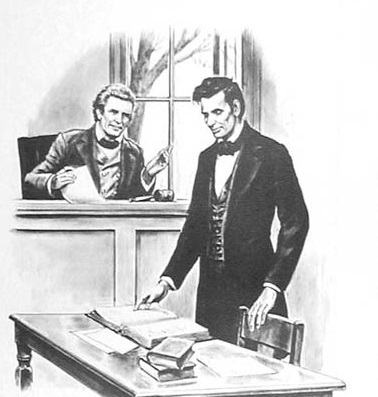
Lincoln in trialI recently quoted a fairly well-known section from some notes Abe Lincoln made for a lecture he was to present to young lawyers in 1850. Some of you asked if would post the whole document, which I am happy to do. Here it is:

I am not an accomplished lawyer. I find quite as much material for a lecture in those points wherein I have failed, as in those wherein I have been moderately successful. The leading rule for the lawyer, as for the man of every other calling, is diligence. Leave nothing for to-morrow which can be done to-day. Never let your correspondence fall behind. Whatever piece of business you have in hand, before stopping, do all the labor pertaining to it which can then be done. When you bring a common-law suit, if you have the facts for doing so, write the declaration at once. If a law point be involved, examine the books, and note the authority you rely on upon the declaration itself, where you are sure to find it when wanted. The same of defenses and pleas. In business not likely to be litigated, — ordinary collection cases, foreclosures, partitions, and the like, — make all examinations of titles, and note them, and even draft orders and decrees in advance. This course has a triple advantage; it avoids omissions and neglect, saves your labor when once done, performs the labor out of court when you have leisure, rather than in court when you have not. Extemporaneous speaking should be practised and cultivated. It is the lawyer’s avenue to the public. However able and faithful he may be in other respects, people are slow to bring him business if he cannot make a speech. And yet there is not a more fatal error to young lawyers than relying too much on speech-making. If any one, upon his rare powers of speaking, shall claim an exemption from the drudgery of the law, his case is a failure in advance.

Discourage litigation. Persuade your neighbors to compromise whenever you can. Point out to them how the nominal winner is often a real loser — in fees, expenses, and waste of time. As a peacemaker the lawyer has a superior opportunity of being a good man. There will still be business enough.

Never stir up litigation. A worse man can scarcely be found than one who does this. Who can be more nearly a fiend than he who habitually overhauls the register of deeds in search of defects in titles, whereon to stir up strife, and put money in his pocket? A moral tone ought to be infused into the profession which should drive such men out of it.

The matter of fees is important, far beyond the mere question of bread and butter involved. Properly attended to, fuller justice is done to both lawyer and client. An exorbitant fee should never be claimed. As a general rule never take your whole fee in advance, nor any more than a small retainer. When fully paid beforehand, you are more than a common mortal if you can feel the same interest in the case, as if something was still in prospect for you, as well as for your client. And when you lack interest in the case the job will very likely lack skill and diligence in the performance. Settle the amount of fee and take a note in advance. Then you will feel that you are working for something, and you are sure to do your work faithfully and well. Never sell a fee note — at least not before the consideration service is performed. It leads to negligence and dishonesty — negligence by losing interest in the case, and dishonesty in refusing to refund when you have allowed the consideration to fail.

There is a vague popular belief that lawyers are necessarily dishonest. I say vague, because when we consider to what extent confidence and honors are reposed in and conferred upon lawyers by the people, it appears improbable that their impression of dishonesty is very distinct and vivid. Yet the impression is common, almost universal. Let no young man choosing the law for a calling for a moment yield to the popular belief — resolve to be honest at all events; and if in your own judgment you cannot be an honest lawyer, resolve to be honest without being a lawyer. Choose some other occupation, rather than one in the choosing of which you do, in advance, consent to be a knave.

This is uniformly excellent, and justly cited to show Lincoln’s high ideals as a man and a professional. This quote, however, is also cited for that purpose, and I am not so fond of it. Since it comes to us second-hand, a.k.a as hearsay, from Lincoln’s law partner, friend and biographer William Herndon, I hesitate to hold it against him too much, for it may be a misrepresentation. I am more concerned with the fact that what follows is sometimes packaged with the notes above, as if they are equally worthy of emulation. No, they are not. Continue reading

Ethics Quiz: “I Don’t Know What This Cover Means, But It Must Be Racist”

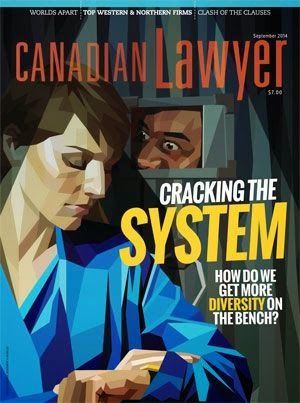
COVER-CANADIAN Law

The recent thread regarding the supposedly racist Boston Herald cartoon has prompted me to ponder how much we are obligated to know what was, is and will be considered offensive, and whether the cultural rules or guidelines regarding this are fair or clear. That post is in the works, but this one interposed itself.

The latest issue of Canadian Lawyer magazine  features a cover story about the lack of diversity on the Canadian bench. Above the Law joins outraged students, lawyers and civil rights advocates in being convinced that the cover is racist.

Your Ethics Alarms Ethics Quiz for today:

Is it?

Continue reading

Today’s Ethics Understatement: “This Story Does Not Encourage Trust In The Legal Profession”

photoshoppinglawyer_screenshot

Svitlana and her fake friends

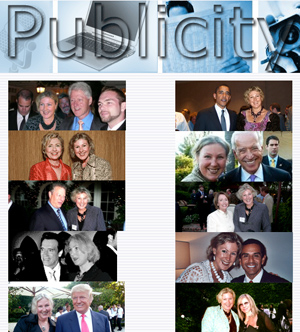
The ABA Journal informs me this morning that a California bar court judge has recommended a six-month suspension for attorney Svitlana Sangary. Oh, she has some client ethics complaints against her, but that was the least of her problems.

On her firm website, she had posted photographs showing Sangary with politicians and celebrities, including President Obama, Bill Clinton, Hillary Clinton, George Clooney, Donald Trump, Arnold Schwarzenegger, Morgan Freeman and Paris Hilton. An expert testified that most or all of the images were photoshopped, making them visual lies. A lawyer is not allowed to lie on her website, or anywhere else when it may mislead clients and the public.

Paris Hilton? Continue reading

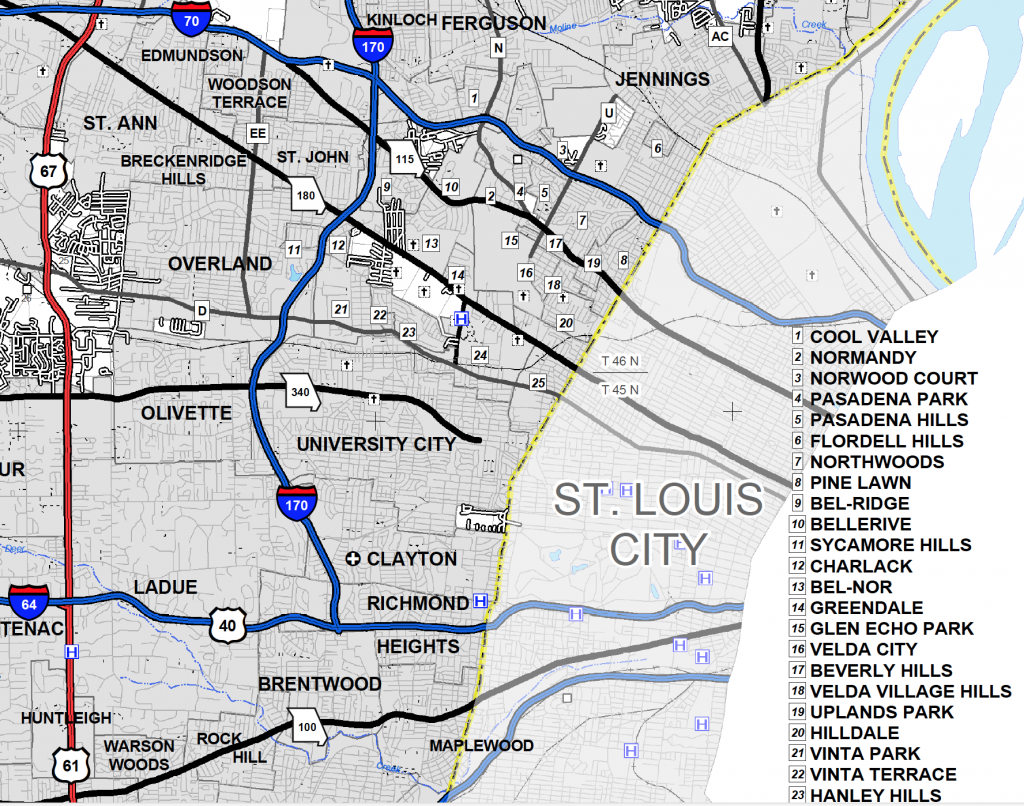
The Problem In Ferguson Goes Deeper Than Racism…

A horror story lies within this map.

A horror story lies within this map.

….and focusing only on race just makes understanding and dealing with the real problems impossible. Nonetheless, activists, the news media and the government intentionally ignore the complexities involved, which collectively define a human tragedy and a failing of U.S. governments at all levels.

Washington Post writer Radley Balko has delivered a shocking, disturbing, depressing and eye-opening investigative report on how small municipalities in St. Louis County operate, and how demographic, political and economic trends inevitably cause the tensions and distrust we saw burst into conflagration in the wake of the Mike Brown shooting. If Balko does not win a Pulitzer for this marvel of reporting and analysis, then the awards should eliminated.

You must read the whole piece here. It’s unethical for a responsible citizen not to; I really believe that.  I was originally going to post some excerpts,but I’m not going to, because I know many will just read them and skip the whole, long report. This is a significant and brave work, and attention must be paid. Continue reading

Is There An “Almost Naked Lovely Lawyer Principle”?

cathy-mccarthy

Not really.

But it’s complicated.

Cathy McCarthy (above) is a 2013 graduate of Loyola Law School-Los Angeles, and she is sounding the clarion call for the right of bikini model-lawyers to be taken seriously. She wrote…

I graduated law school a year ago after receiving an academic scholarship and passed the California Bar last November on my first try. I am also a model and have had moderate success, building fan base of over 26,000 people where I do mostly bikini promotions. Does this make me better or worse at my job? According to some people, it makes me unable to be taken “seriously” in the business community. In fact, two weeks ago, I was reprimanded by a coworker for my online presence and was told to “handle the situation.”I fought back and was ultimately let off the hook, but this is not the first time that I have faced backlash from colleagues who think that a lawyer should not also get the privilege of “looking hot in a bikini.”

Unlike the case with primary and secondary school teachers, where a published presence on the web that is sexually provocative can interfere with a healthy student-teacher relationship, there is no automatic impediment to a lawyer client relationship posed by the lawyer moonlighting as a bikini model, a fold-out, or even a porn star. The profession acknowledges this in several legal ethics opinions affirming lawyers’ First Amendment rights. Lawyers can express themselves any way they choose, provided that it does not undermine their ability to represent their clients in any way. Continue reading

A Puzzlement! Non-Lawyers Desperately Need A Legal Education, And Unemployed Lawyers Think Theirs Is Worthless


Quick, get a non-lawyer to pay you to teach him about the law, then you will have  rent money, and he'll be unemployable!

Quick, get a non-lawyer to pay you to teach him about the law, then you will have rent money, and he’ll be unemployable!

From the Fordham Law Review comes an article making an important point about American life: it is so intertwined with laws, regulations and procedures that citizens are overwhelmed, and at risk of serious adverse consequences. This provides a function for lawyers, indeed an essential one: allowing citizens of a democracy to be protected and served by laws rather than victimized by them. That is a function lawyers often serve, however, after legal ignorance has raised the specter of harm. From the abstract of Bridget Dunlap’s “Anyone Can Think Like a Lawyer,” which argues for “legal empowerment” for non-lawyers, and the duty of  lawyers to provide it: Continue reading

Ethics Observations On Rep. Braley’s Anti-Farmer Insult

A farmer, a framer, a farmer (and law school drop-out), and a lawyer. Final Score: Farmers 3, Lawyer 1.

A farmer, a farmer, a farmer (and law school drop-out), and a lawyer. Final Score: Farmers 3, Lawyer 1.

You wouldn’t know it if you read only mainstream media sources (Translation of ” mainstream media sources”—“supposedly objective and neutral news outlets that edit the news to do minimal damage to candidates, parties and policies that their overwhelmingly left-leaning staffs support”), but the presumptive Democratic candidate for Sen.Tom Harkin’s soon to be vacant U.S. Senate seat in Iowa insulted farmers (this is Iowa, remember) in a speech and was caught on video.

In a private fund-raising appearance before Texas trial lawyers, Rep. Bruce Braley warned of the consequences of a  Republican Senate majority by saying

“You might have a farmer from Iowa who never went to law school, never practiced law, serving as the next chair of the Senate Judiciary Committee. Because, if Democrats lose the majority, Chuck Grassley will be the chair of the Senate Judiciary Committee.”

Some observations:

  • The insulting characterization of farmers (as well as  Grassley) is being compared to Mitt Romney’s infamous statement to some big money donors about “the 47%,” which was captured surreptitiously by Jimmy Carter’s son-in-law and used to stir up the Democratic base. As in the case of Romney, I will point out that surreptitious recording and publicizing of what is said at any private event is unethical, flat-out wrong, no matter who does it, or for what reason. Private functions should be respected, as should what is said there, unless there are criminal conspiracies afoot.

Continue reading