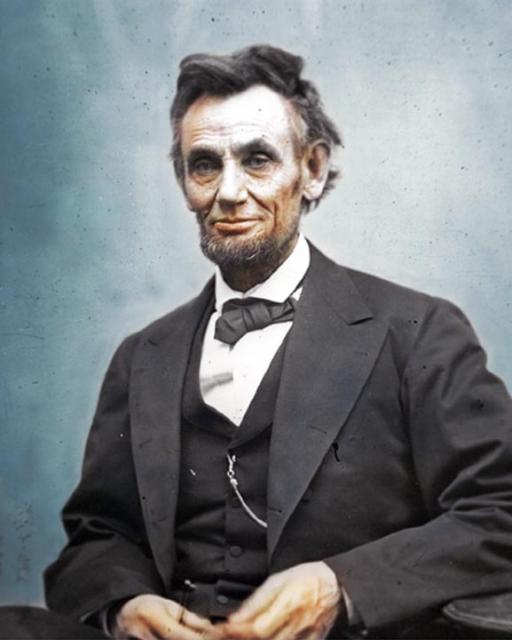
Happy Birthday, Mr. Lincoln: Abe on Lawyer Ethics

John Steele, on his essential blog, the Legal Ethics Forum, had the wit and wisdom to post Abraham Lincoln’s “Notes for a Law Lecture” today in commemoration of Abe’s birthday. I had been looking for an appropriate post for the occasion, and I cannot improve on John’s selection.  Written around 1850, it is as excellent a statement of what lawyers should aspire to in 2011 as it was when Lincoln was practicing, and it also confirms our 16th President’s eloquence, clarity of thought, and instincts for good.

Happy Birthday, Mr. Lincoln.

________________________________________________________________

Abraham Lincoln’s Notes for a Law Lecture Continue reading

Now THIS is Incivility!

Michael Rausch, a 46-year-old Cherry Hill, N.J., lawyer, threw three punches at a Scranton lawyer who, he said, called him stupid and bald.

The fisticuffs occurred in July at the Lackawanna County Courthouse during a civil suit regrading a car accident. Lawyer Rausch was placed on probation, and he resigned from his law firm as a result of the incident.

Hey…what’s wrong with being called “bald”?

When a Law Makes a Problem Worse

Where should we file this legislative botch? Perhaps we should file it under incompetence, lack of diligence, irresponsibility, or inexcusable ignorance of unintended—but completely predictable–consequences.

In California, a statute  passed overwhelmingly by the State Legislature required that lawyers who work on loan modification agreements for homeowners facing foreclosure cannot require any payment until the work is complete. The law was intended to eliminate unscrupulous firms from running scams on desperate Californians, more of whom face foreclosure than in any other state, in which the firms charged large up-front fees and then did nothing. Unfortunately, it also made it unprofitable and risky for legitimate, honest lawyers to put in many hours battling lenders skilled at running out the clock in the hopes of being reimbursed by clients who are already in financial deep water. Thus stressed California homeowners, having been given protection by their tunnel-visioned representatives, now can find no legal help at all, honest or otherwise. Continue reading

Gallup’s 2010 Ethics Poll: Little Trust Where We Need It Most

As it does periodically, Gallup has released the results of its surveys to determine what professions Americans regard as ethical, and which ones they don’t. Gallup notes that there has been very little change over the last two years; on its site, it compares the results to those of polls taken from 2004 to the present.

The professions that have positive ratings from the public are nurses, the military, pharmacists, grade school teachers, doctors, police, clergy, judges, and day care providers.

The rest are in the red, trust-wise, with TV and newspaper reporters coming in below auto mechanics and bankers, lawyers below them, business executives even below lawyers, and well below them, Congress, which comes in barely above car salesmen—and more people actually have a low opinion of Congress members than of car salesmen. Congress inches ahead because a larger number also think that members of Congress are ethical.

Probably federal workers… Continue reading

Why Lawyers Should Work “For Good”

Pro bono legal work (short for pro bono publico, or “for the public good”) is when lawyers take on cases free of charge. Some lawyers—and you know who you are!—would say that the primary reason to take on pro bono cases is that membership in the Bar requires it. That’s compliance, however, driven by non-ethical considerations, not ethics. There are excellent reasons to work pro bono that have nothing to do with being able to check off mandatory hours, and everything to do with the crucial roles lawyers have a duty to fulfill in a free society.

Georgia attorney Dawn Levine compiled this list of  “The Top Eight Reasons to Take Pro Bono Cases;” I recommend the whole article. Her list, however, should be posted on the walls of every attorney’s office. It represents the best aspirations of an unfairly maligned profession. Here it is… Continue reading

John Adams: Conflicted?

John Adams’ heroic defense of the British soldiers accused of murder in the Boston Massacre has moved to the front of the line in the competition for favorite historical comparison to the controversy over the so-called “Al Qaeda 7,” the Justice Dept. attorneys under attack for their former representation of Gitmo prisoners. Over at The Legal Ethics Forum, law professor Richard Painter has posted a fascinating essay on John Adams’ own ethical conflicts in his most famous case, and they were far from minor. You can, and should, read it here.

The Unethical and Illogical Smearing of Justice Dept. Lawyers

The Senate Republicans, bolstered by the political Right, are angrily criticizing Attorney General Eric Holder for having former Gitmo defense lawyers on the Justice Department anti-terror team.  This demonstrates many things, none of them good, some of them sad.

At least seven Justice Department lawyers previously worked on the legal defenses of Guantanamo Bay prisoners. Apparently this makes them terrorist sympathizers in the eyes of the Angry Right. This is the sad part. A flat learning curve is always sad. Continue reading

The Legal Ethics Forum’s Top Stories of 2009

It is the time for year-end lists—Ethics Alarms will post its 2009 ethics award winners  soon—and one of the best is out. From the always excellent Legal Ethics Forum comes legal ethics ace John Steele’s list of the Top Legal Ethics Stories of 2009. Even though John left out my personal favorite, it is a thorough and enlightening compendium. Even if you aren’t a lawyer (perhaps especially if you aren’t!), it is worth reading. Something on his list will affect your life sooner or later, if it hasn’t already.