President Barack Obama Has Appointed A Zealous And Competent Civil Rights Lawyer To the U.S. Commission On Civil Rights, And There Isn’t A Thing Wrong With That.

Perry Mason would have defended Mumia Abu-Jamal...

Perry Mason would have defended Mumia Abu-Jamal…

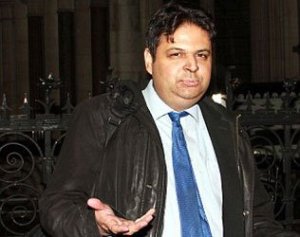
President Barack Obama has appointed Debo Adegbile,  who had served as an former attorney for convicted controversial police-killer Mumia Abu-Jamal, to a six-year post on the U.S. Commission on Civil Rights. The eight-member commission consists of four members appointed by the president and four appointed by Congress.

Adegbile worked at the NAACP Legal Defense and Educational Fund when he represented Abu-Jamal in the appeal of his conviction and death sentence for the  1981 shooting death of Philadelphia police officer Daniel Faulkner. Abu-Jamal’s sentence was reduced to life in prison. Predictably, rightish-commentators and of course police groups are highly critical of the appointment, just as they were in 2014 when they and others convinced the Senate to reject Obama’s nomination of  Adegbile to lead the Justice Department’s Office on Civil Rights. Ethics Alarms noted then, in the post, The Right’s Unethical, Ignorant, Un-American And Dangerous Attack On Debo Adegbile,

“It says nothing of Debo Adegbile’s fitness as a public servant that he represented a convicted cop killer, a cannibal, Son of Sam, Spiro Agnew or Willie Sutton. It simply says that he is a lawyer, and one who embraces the traditional ethics and aspirations of the profession. Abraham Lincoln won fame getting an acquittal for a friend whom Lincoln knew was guilty of murder, but the prosecution didn’t have the evidence to prove it. Good. Does this mean he was pro-murder? Clarence Darrow used his extraordinary persuasive power to stop over a hundred men accused of murder—most of them guilty, some of them certifiable monsters— from being executed. Good. They were citizens, they had as much a right to use the laws that offered them protection as the government had to use other laws to threaten their lives and freedom. Was Darrow a fan of killers? No, he was fan of making sure ordinary people weren’t crushed by laws and systems they could never understand, use or survive without the help of a lawyer, in his case, the greatest lawyer of them all…. The principle [critics of Adegbile’s defense of Abu-Jamal] are advocating… is a sinister one, where lawyers rather than judges or juries pass premature judgment on the claims and needs of citizens, and withhold competent access to legal remedies according the their personal assessments regarding the validity of a citizen’s motives. This, of course, gives unacceptable power to lawyers, making it their choice who gets the protections of our justice system and who does not. The danger of this contention cannot be understated….let’s remind all the conservatives using this irresponsible tactic where it leads. It leads directly to citizens being slaves to their own nations’ laws, because they can’t possibly access them on their own, with lawyers deciding who is worthy of being able to take advantage of our “inalienable” rights, and who has the “privilege” of legal representation.”
Continue reading

Warning From Great Britain: The “Lawscam” Excuse Is Coming To Colleges

It was all the fault of imperial Indian history....

It was all the fault of imperial Indian history….

The controversy died down a bit in 2016, but it is still out there: unemployed young lawyers are still blaming their law schools for the fact that their degrees didn’t deliver riches and success in a competitive field. When a ballyhooed lawsuit by one such lawyer failed last April, it briefly muted the howling, but the central misconception is still virulent. From the Ethics Alarms post about that law suit:

The rejection of Alaburda’s law suit sends a message that young lawyers need to hear, and heed. If they thought a law degree was going to guarantee their success, they have been tragically confused by the culture’s hucksters and politicians, not the law schools.  For too long, education has been sold as the key to income and jobs, when it is nothing but a process designed to make more competent, able, creative and responsible human beings. By itself, a degree proves nothing. It only signifies that its owner has had access to useful knowledge and the chance to develop useful skills. It is up to graduates to use that knowledge and those skills to make a life for themselves. If they fail to achieve their goals, they cannot blame the law school because they perceived a promise that was never made.

One failed suit, however, couldn’t undo the destructive false message society and its leaders have been issuing for decades: “the purpose of earning a diploma is to get a good job.” As more and more young men and women are steered into college and a college degree becomes symbolic of nothing, there will be more law suits by college graduates like the one currently being fought in Great Britain, where Faiz Siddiqui, an Oxford graduate, is suing his alma mater for not giving him a first-class degree 16 years ago. (In British universities, graduating with a “first class degree” is roughly similar to graduating “with honors” in an American college. Based on a student’s grades, Oxford gives out three classes of degrees, first-class being the highest.)

Siddiqui is now 38 years old, angry and disillusioned. In his suit, he alleges that his life and career were stunted because he didn’t earn “a first,” as the degree is called, when he  studied modern history at Brasenose College and graduated from Oxford University in June 2000. “Negligent teaching” in a course on Indian imperial history, he says, pulled down his overall grade and ruined his life. Now he’s asking for a million British pounds in damages for his lack of lifetime earnings in a legal action against the Oxford chancellor, masters and scholars. His barrister, Roger Mallalieu, also claims that Oxford is responsible for Siddiqui’s insomnia and depression.

Apparently the history module was less than optimum while Siddiqui was a student, because half of the teaching staff responsible for Asian history were on sabbatical.  Mallalieu told the British high court that the inferior teaching resulted in his client’s lesser grade and thus “denied him the chance of becoming a high-flying commercial barrister.” Continue reading

More Ethics Movies For The Holidays: “Woman In Gold”

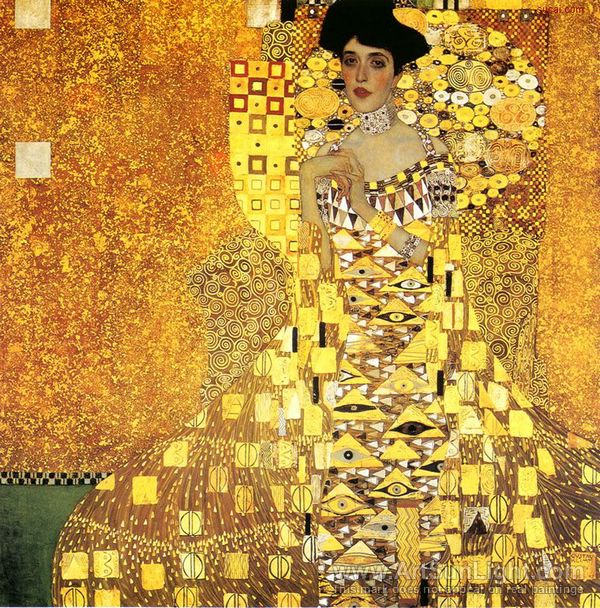
portrait-of-adele-bloch-bauer-i-by-gustav-klimt

The movie critics site “Rotten Tomatoes”calls “Woman in Gold” dull, which tells you pretty much all you need to know about “Rotten Tomatoes.” No, there are no explosions, no sex scenes, no CGI, just a well-acted, powerful story of how justice can take a long time to prevail, but given enough dedication, integrity and luck, it still does prevail with sufficient frequency to stave off despair.

“Woman in Gold” is a 2015 film starring Ryan Reynolds and Helen Mirren. It is a virtual docudrama telling the true story (mostly accurately) of Maria Altmann (Mirren), a plucky Jewish refugee in Los Angeles, who, assisted by her young lawyer, Randy Schoenberg, battled the government of Austria  to obtain the return of Gustav Klimt’s renowned portrait of her aunt, Adele Bloch-Bauer. That painting, along with more by Klimt and  other painters as well, were among the art treasures stolen by the Nazis  prior to World War II. The legal battle ended up before the Supreme Court of the United States, and the conflict was finally settled by a shocking decision by an Austrian panel of mediators. You can read about the real case here.

It may be dull to dull minds, as Red Smith famously said about baseball, but I have seen the film twice now, and it moved me to tears both times. “Woman in Gold” shows once more, as I fervently believe, that right can and often does triumph over bureaucracies, greed, power and stupidity, and that lawyers, maligned as they are, are often essential to that process. Schoenberg shows us the epitome of a zealous and courageous lawyer, making personal and professional sacrifices for a cause he comes to believe is important both to his client and to humanity. Continue reading

From The “Why People Hate Lawyers” File: The Lawyer Who Bit Off More Than He Could Chew

"Bit--off--too-much--chicken--no---plastic---knife---ARRRGH!"

“Bit–off–too–much–chicken–no—plastic—knife—ARRRGH!

Paul Newton Jr., a lawyer in Gulfport, Mississippi, sued Popeye’s after he required emergency surgery to remove a chunk of fried chicken from his throat last November. He claims the fast-food restaurant was negligent and caused his near fatal accident because it didn’t include a plastic knife along with the “spork” in his drive-through order.

Newton says he consumed  the meal (two chicken breasts, an order of red beans and rice, a biscuit and a soft drink…YUM!) in his office, and had to “hold a chicken breast in his hands and to tear off pieces thereof with his teeth.”In the  lawsuit , the lawyer maintains Popeyes had a duty to provide the appropriate utensils so customers will be able “to cut their purchased food orders into appropriate portions.”

Newton abandoned his chicken suit–well, not his chicken suit, but his chicken lawsuit— the Huffington Post reported, after receiving “extreme comments directed to me and my family.”

Like “Learn to eat!”, maybe? Continue reading

Sometimes It All Comes Together…But First, A Song!

As those who have read here for a while know, among my fondest passions, virtually life-long, are baseball,  theater and ethics. Today, I have the pleasure of seeing them all come together in a single event. How often does that happen?

At noon, I will be giving my most recent musical Continuing Legal Education ethics seminar, “Ethics Cabaret,” at Nationals Park in D.C. prior to the Mets-Nats game. “Ethics Cabaret,” like its six predecessors, presents legal ethics hypotheticals  as parodies of pop, rock, Broadway or country-western standards, presented by a professional performer. In this case, the performer is American Century Theater veteran Esther Covington, who accompanies herself on the keyboard. I write the songs that make the young lawyers cry, but she sings them, beautifully and often hilariously.

Speaking of Barry Manilow, my favorite segment of the seminar is the parody of one of his signature songs, which you can hear above—it’s an ear-worm, so be careful. The legal ethics version is about “Bridge of Spies” and the many quandaries raised in the film, which I examined in this post earlier this year. The parody is called “Who is the Client?,” lyrics-only copyrighted by ProEthics. Here they are….you can sing them along with Barry’s version! Continue reading

Monday Ethics Revelations…

Taking stock of ethics from a long and eventful Monday…

1. As of yesterday, Ethics Alarms is about to complete its most successful month ever in terms of traffic and new followers, beating last August by almost 2000 visitors a day. Thanks to everyone who participated. Thanks especially to the untrustworthy folks at Snopes, whose partisan manipulations and the Ethics Alarms exposure of them fueled the single most read Ethics Alarms post in any month, unseating the previous champion, this, which was a trivial post that the Instapundit, Glenn Reynolds, deemed the only Ethics Alarms story worth linking to.

2. Yesterday, I was a guest at a large and combative gathering of personal injury lawyers to work out a dispute involving lots of money, and when the time came for me to speak, I was hooted down and had it made quite clear to me that the majority of participants had no interest in legal ethics whatsoever.

3. They  made it clear that they didn’t know much about ethics either. For example, at one point a lawyer threatened to sue another lawyer for representations made on behalf of a client that the first lawyer felt impugned his character. Lawyers are immune from such suits. To the extent that the lawyer was trying to use a bogus threat to intimidate the other lawyer into representing his client with less zeal, that tactic is unethical, but still not forbidden by the legal ethics rules….because lawyers use the threat to sue all the time.

Just like Donald Trump. Continue reading

From The Ethics Alarms Mail Bag: “Does It Matter If A Lawyer Is A Neo-Nazi?”

"Anyone who would hire this lawyer is evil! EVIL!!!"

“Anyone who would hire this lawyer is evil! EVIL!!!”

“…What if he’s hired for a government job?”

This is a great question, and I’m going to bedevil the lawyers in my upcoming ethics seminars with it. It’s not a hard question, though.

The answer is, “No, it doesn’t matter, just as it doesn’t matter if the lawyer is a Republican, a vegan, a libertarian, a creationist, a global warming denier, an Adam Sandler fan, a Donald Trump loyalist, a Muslim, an ISIS sympathizer, a Druid, a Celine Dion worshiper, a New York Yankee fan or anything else. Lawyers have First Amendment rights. Lawyers can think what they want to, believe what they want to, donate where they want to and spout whatever unpopular or offensive opinions they want to, as long as it doesn’t interfere with their representation of their clients.

What prompted the question was this post on the Southern Poverty Law Center (SPLC) website, which attempts to use guilt by association and classic McCarthyism tactics to smear the City of Baltimore because of what the lawyer defending it in a law suit believes. The SPLC—which itself often resembles a hate group–writes, Continue reading

Now THIS Was Zealous Representation! The Incredible, Unethical, Zealous, Crooked And Courageous Bill Fallon

Fallon

I’m giving an ethics seminar for a group of government lawyers this morning. I think I’ll tell them about Bill Fallon.

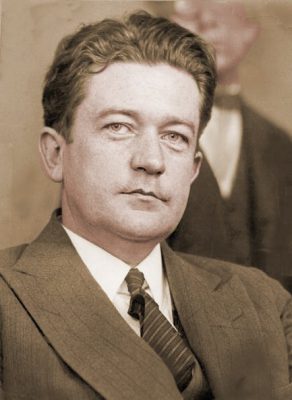
Bill Fallon (1886-1927) was a very successful New York criminal defense attorney, and a contemporary of Clarence Darrow. He was called “The Great Mouthpiece,” because he represented some of New York’s leading pimps, narcotics dealers, embezzlers, swindlers and gamblers.  One famous client was Arnold Roth, who was the architect of the 1919 Black Sox scandal, bribing eight Chicago White Sox stars to throw the World Series. Another was Nicky Arnstein, the gambler husband of Fanny Brice. That was Omar Shariff playing Nicky in “Funny Girl.”

Fallon often bribed his juries, and got away with it: the one time he was caught and indicted, a jury found him non guilty. He probably bribed that jury, too. Clarence Darrow was proud of the fact that he represented over a hundred men and women facing the death penalty and none were ever executed. Fallon could top that: he represented over 120 homicide defendants, all of them guilty as hell, and not one was convicted.

Dashiell Hammett referred to Fallon in his novel, “Red Harvest,”, when he wrote,

He’s the guy that the joke was wrote about: ‘Is he a criminal lawyer?’ “Yes, very.'”

Continue reading

Unethical Headline Of The Month: The Daily Caller

Dewey Truman

You can hardly publish a more inaccurate. misleading and dumb headline than this one, appearing on the right-wing news and opinion site, over a report by Kevin Daily about the American Bar Association passing a new addition to its Rule 8.4, the ethics rule that defines ethical misconduct, as follows:

It is professional misconduct for a lawyer to: . . . (g) knowingly harass or discriminate against persons, on the basis of race, sex, religion, national origin, ethnicity, disability, age, sexual orientation, gender identity, marital status or socioeconomic status, while engaged [in conduct related to] [in] the practice of law.

Now here is the headline:

Lawyer Lobby Will Now Disbar You For Making An Off Color Remark

And here is how unconscionably misleading and absurd it is:

“Lawyer Lobby”: The American Bar Association is a lawyer’s professional association, and sure, it does some lobbying. However, lobbying is a small, small proportion of its activities. [ Full disclosure: I usually do a couple of ethics seminars for the ABA every year.] Calling it  a lobby suggest that the ABA is primarily political, which it is not. The ABA publishes books, holds educational events, provides indispensable legal assistance to all branches of the profession, facilitates networking, issues critical legal ethics opinions, and many other useful and important services for lawyers.  One reason the ABA doesn’t lobby much is because it represents all kinds of lawyers, and being lawyers, they don’t agree on many issues.Prosecutors, judges and criminal defense attorneys have very different perspectives; so do plaintiffs lawyers and corporate attorneys. “Lawyer Lobby” is an inept and misleading description of the ABA.

“Will Now”: No. Not even close. The proper wording would be “NEVER has, can or will.” The ABA isn’t a bar, and can’t disbar anyone. Any lawyer can belong to the ABA, but the ABA doesn’t have any say in who practices law. The Robert DeNiro “Cape Fear” had an embarrassing line where a lawyer played by Gregory Peck, who should have known better, talks about making an ethics complaint to the ABA to get Nick Nolte’s character “disbarred.” Embarrassing. This part of the headline affirmatively makes Daily Caller readers stupid. Continue reading

Gene Autry Misinformation Update: Believe It Or Not, It Happened Again!

"Wild Bill" Donovan, who should have had nothing whatever to do with my ethics seminar today, but did anyway...

“Wild Bill” Donovan, who should have had nothing whatever to do with my ethics seminar today, but did anyway…

Yesterday I wrote about a lawyer in a legal ethics seminar interrupting me with a revelation about Gene Autry that was completely false.

Today I taught another legal ethics seminar, this time for a government agency. I was discussing was the various government ethics dilemmas in “Bridge of Spies,” the story of how lawyer Jim Donovan helped secure the release of downed U.S. flyer Francis Gary Powers in a famous incident during the Cold War. Many of the issues covered in my presentation were explored in this Ethics Alarms post.

As the film portrays it, Donovan, an insurance lawyer, does such a tenacious job defending an accused Soviet spy from U.S. government prosecution that the CIA recruits him to broker the trade of his now-former client, convicted and in prison, for Powers. In discussing the classic government lawyer dilemma of “who is the client?,”  I noted that the CIA agent who recruited Donovan told him that he would have no client. “Why did the CIA trust Donovan?” I asked socraticly. “Why did Donovan, an insurance lawyer, think he was qualified to engage in this kind of representation, it it was a representation?”

For the second time in nine days, an attendee piped up with an amazing piece of information.

“I suspect some of the answer to both questions is that James Donovan was the son of “Wild Bill” Donovan, who is considered the father of the Central Intelligence Agency,” he said. Continue reading