Teaching Racial Distrust in D.C.: “Trayvon Martin Day”

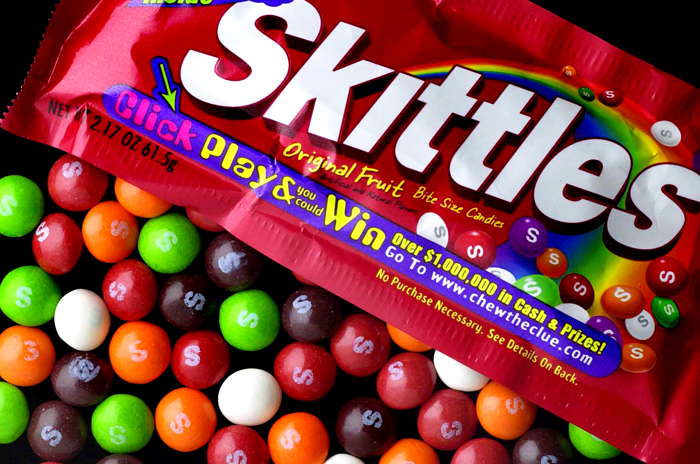
“Now children , what does the fact that Trayvon Martin was carrying Skittles prove? That’s right! It proves he was racially profiled!”

Combine one of the worst school systems in the country with race bias and ignorance, and you get “Trayvon Martin Day.”

In Washington, D.C, Malcolm X Elementary in Southeast D.C. declared this Friday “Trayvon Martin Day.”  The nearly all-black school is using the case of Martin’s shooting death in his confrontation with George Zimmerman as part of its “Let’s Keep Our Children Safe” seminar, “to better educate students and their parents about race relations and social injustice,” and to help reduce the needless violence and bullying in the community, according the Principal J. Harrison Coleman.

That’s interesting. And how, exactly, does the death of a Florida teen in which the circumstances are still unknown and the facts have been polluted by race-baiting demagogues, news media sensationalism and a Congressional lynch mob warrant inclusion in a seminar with those lofty goals? Continue reading

Is a Plagiarist a Trustworthy Attorney? Let’s Ask Mary Frances Prevost!

This is me, apparently.

San Diego criminal defense attorney Mary Frances Prevost has an interesting post on her blog about the ethics of George Zimmerman’s first set of attorneys.

MINE.

You wouldn’t know it was mine, of course, because blogger/attorney/ former Washington Post journalist Prevost has slapped her own name on it. There it is, right at the beginning: “by Mary Francis Prevost.” I think that’s interesting.

Her post, entitled “The Trayvon Martin Case Trainwreck: George Zimmerman’s Attorneys Need To Shut Up!”, was posted the same day as the Ethics Alarms post, “Next To Board The Trayvon Martin Ethics Train Wreck? Why, The Lawyers, Of Course!”, which began, coincidentally enough, by quoting John Steel’s post from the Legal Ethics Forum that read, “[S]hut up, guys. Shut the h*** up.”  It was two introductory paragraphs later, however, when “her” post got into the substance of “her” analysis of the ethical problems with the farewell press conference given by George Zimmerman’s attorneys shortly before the shooter of Trayvon Martin was charged, however, that I really began getting a serious dose of deja vu, also known as “Holy crap! This woman stole my article!” Continue reading

“The Good Wife” Ethics Addendum: Why Misrepresenting the Legal Profession’s Standards Does Real Harm

Sure, it was a comedy, but how many people believe that Jim Carrey's compulsively lying lawyer was not that far from the truth?

A comment from reader Penn on my post about “The Good Wife’s” recent misrepresentation of legal ethics standards got me thinking, and what it got me thinking was that I was too easy on the show.

Penn asked why I waste my time watching programs that raise my blood pressure, and there are two answers. The first is what I wrote back: it’s not a bad show; in the past it has been a very good one, even from the legal ethics perspective. I have used several scenarios from episodes in seminars.

The second answer, which I didn’t mention in my response to Penn, is the more important one, however. Good show or not, millions of Americans get their information about the legal profession from the portrayal of lawyers and law on TV and in movies. From these fictional sources, they think they know that most lawyers are liars, that they allow their clients to lie, that they put witnesses on the stand who they know will lie under oath. The public thinks that lawyers abuse the law, don’t earn their fees, don’t give a damn about their clients (unless they are sleeping with them), switch sides routinely and confuse juries to release serial killers on more victims. Continue reading

Climate Change Ethics: Prof. Muller’s Study and Media Incompetence

At  issue is not whether global warming is occurring, or even whether it is man-made. The issue is how incompetent, biased and astoundingly uncritical the media coverage of the issue has been and continues to be. Now major news publications and respected columnists are participating in yet another global warming ethics train wreck, which helps nobody and nothing.

Here’s is Prof. Richard Muller, a Berkeley physicist, toward the conclusion of his 2003 paper on global warming data:

“Let me be clear. My own reading of the literature and study of paleoclimate suggests strongly that carbon dioxide from burning of fossil fuels will prove to be the greatest pollutant of human history. It is likely to have severe and detrimental effects on global climate.”

Now here is the Washington Post’s Brad Plumer, on a recent Wall Street Journal op-ed by Muller announcing the results of his research:

“Back in 2010, Richard Muller, a Berkeley physicist and self-proclaimed climate skeptic, decided to launch the Berkeley Earth Surface Temperature (BEST) project to review the temperature data that underpinned global-warming claims. …So what are the end results? …As the team’s two-page summary flatly concludes, “Global warming is real.” Continue reading

Ethics Dunce: Gov. Rick Perry

GOP Presidential Candidate History: The Battle of Concord, fought in 16th Century New Hampshire

I’ve been down this road too many times with various Tea Party favorites, so I’ll make it brief:

  • If you are going to keep talking about the Founders, the Declaration, the Constitution and the Revolutionary War, get your facts right. Paul Revere was not warning the British (Sarah); the Shot Heard ‘Round the World was not fired in New Hampshire, no Founding Father  did  spend his life trying to get rid of slavery,  and John Quincy Adams wasn’t a Founding Father (Michele); and “life, liberty and the pursuit of happiness” isn’t from the Constitution (Herman).
  • Don’t make the public more cynical than it already is about the intelligence and competence of its elected leadership by sounding like an ignoramus.
  • Don’t make our already historically ignorant public even more ignorant by giving it  bad information, from a supposedly trustworthy source. Continue reading

The S.E.C.’s Betrayal and Why Regulation Can’t Cure Unethical Cultures

Your SEC at work....

I awoke this morning to read that a former U.S. Securities and Exchange Commission official has credibly claimed that the S.E.C. destroyed thousands upon thousands of records of enforcement cases in which it had decided not to file charges or to launch full-blown probes. The case records dumped included prominent Wall Street firms such as Goldman Sachs, Citigroup, Bank of America, Morgan Stanley and SAC Capital.

Here’s is how Rolling Stone concluded its excellent report on the scandal:

“Forget about what might have been if the SEC had followed up in earnest on all of those lost MUIs(“Matters Under Inquiry”). What if even a handful of them had turned into real cases? How many investors might have been saved from crushing losses if Lehman Brothers had been forced to reveal its shady accounting way back in 2002? Might the need for taxpayer bailouts have been lessened had fraud cases against Citigroup and Bank of America been pursued in 2005 and 2007? And would the U.S. government have doubled down on its bailout of AIG if it had known that some of the firm’s executives were suspected of insider trading in September 2008?” Continue reading

Web Ethics Complaint File: Rotten Etiquette in “Etiquette Hell”

The topic: rude behavior in public dining

There is nothing quite as exquisitely frustrating as having one’s commentary misrepresented elsewhere by a sloppy blogger, and then watching the nasty comments pile up by posters who never bother to read the original post. That is what is happening to Ethics Alarms, and thus me, over at an otherwise virtuous site called Etiquette Hell.

The site, or blog, or forum, or whatever the hell it is commented on the Starbucks post, with the inept headline: “Hogging all the tables in a crowded establishment.” That’s not what the post was about. That is a misrepresentation. The post was specifically about coffee shops that provide free wi-fi, and how customers abuse the privilege and benefit by camping out with their laptops for unreasonable amounts of time,  forcing patrons who need to use the tables for the primary purpose they exist to provide—allowing someone to eat and drink comfortably—to go elsewhere, or to stand. Continue reading

We Know Enough about Ethics Already

If Shakespeare understood ethics so well, why are we still pretending to be ignorant about it?

I awoke to read about a breathlessly announced new work on ethics, a book called “Blind Spots: Why We Fail to do What’s Right and What to do About it.” Business Professor  Ann Tenbrunsel and co-author Max Bazerman write that we are unaware of the “ethical blind spots” that keep us from recognizing how we engage in unethical actions. The book cites tests and new research showing behavior that the authors call “ethical fading” and “motivated blindness.” They examine such case studies as Enron and the Madoff scam to show how people “believe they will behave ethically in a given situation, but they don’t. Then they believe they behaved ethically when they didn’t. It’s no surprise, then, that most individuals erroneously believe they are more ethical than the majority of their peers.”

Stop the presses! Conflicts of interest make us ignore core values and act in our own best interests, and we rationalize our actions to avoid confronting the true nature of our conduct!

Oops! I just stated the entire thesis of the book. I’m sorry, Ann! Apologies, Max! Continue reading

Deadly Incompetence in Seattle….Luckily, It Was Just a Game

I know about the ADA, but still...hiring blind umpires who can't count just isn't working out...

It is rare that an ethics outrage repeats itself so closely that I could recycle a previous essay and just change the names. This occurred, however, in Seattle this past Saturday, in the baseball game between the Mariners and the San Diego Padres. San Diego’s Cameron Maybin walked on a 3-2 count (four balls are required by the rules) and eventually scored the only run of the game on Antonio Gonzalez’s fifth-inning single, allowing the Padres to defeat the Mariners 1-0 on Saturday night.

With one out in the fifth, Maybin walked when a pitch was called high by home plate umpire Phil Cuzzi. A video review of the at-bat by official scorer Dan Peterson confirmed the count should have been 3-2 when Maybin trotted to first base, meaning that his turn at the plate wasn’t completed. But Cuzzi, who like all umpires carries a pitch counter, saw that the stadium scoreboard showed a three-ball count before the pitch, and since 1) technology is always right 2) he wasn’t paying attention 3) he can’t count to “4” and 4) (or is it 3?) it isn’t like calling balls and strikes is his job or anything, he decided that the player had earned a base on balls. Continue reading

Sorrell v. IMS Health: Legal, Ethical, and Unjust

The case of Sorrell v. IMS Health, which the Supreme Court decided yesterday, sharply focuses the philosophical disagreement over the role of the courts in public policy. The legal question was rather straightforward; the ethical issues are complex. Is it the Court’s duty to make bad—but constitutional— laws work, or is its duty to follow the laws, and leave it to the legislature to fix their flaws?

This was a case about incompetent  lawmaking. Gladys Mensing and Julie Demahy had sued Pliva and other generic drug manufacturers in  Louisiana and Minnesota over the labels for metoclopramide, the generic version of Reglan. The drug, used to treat acid reflux, had caused them to develop a neurological movement disorder called tardive dyskinesia. None of the generic drug’s manufacturers and distributors included warnings on the labels about the danger of extended use of the medication, even though the risk was known to them. Neither did the manufacturers of the brand-name drug. The problem was that the state statutes required generic drug manufacturers to included warnings about dangerous side effects, while federal regulations required generic drugs to carry the exact same label information as their brand name equivalent.  Continue reading