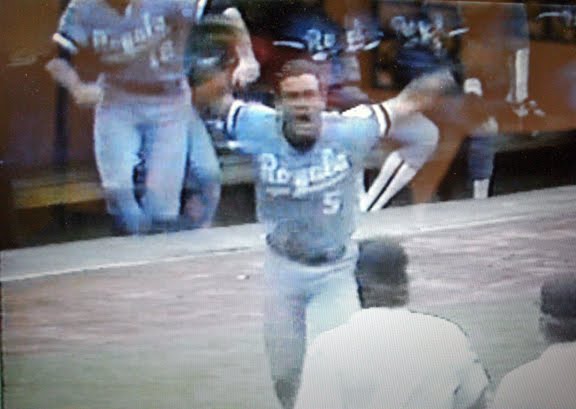
George Brett was a bit chagrined when his home run was disallowed…
It has happened again, as it has thousands of times since the great game of baseball was invented. A result that is permitted by the rules violates the sense of fairness of objective observers, who thereupon demand that the result be “fixed,” after the fact, by baseball’s powers that be. The most infamous recent example of this scenario was in 2010, when umpire Jim Joyce robbed a deserving pitcher of the perfect game he had pitched (27 batters, 27 outs) by calling the final batter safe at first on a close play, when the player was obviously (to all but Joyce, that is), out. The umpire quickly and openly admitted his error after the game, but there is no provision in the baseball rules for the League or Major League Baseball reversing an umpire’s judgment call after the fact, no matter how bad it was or how unjust the results. Baseball’s Commissioner Bud Selig, to his credit, refused to yield to the popular outcry to give the unfortunate Detroit Tigers pitcher, Armando Galarraga, the achievement and place in baseball history that should have been his. The rules say that unless umpires have actually misinterpreted the black letter rules of the game, there is no remedy. Umpire errors, like player errors, are part of the game.
Last night, what should have been a game-winning home run was called a double by umpires, and what was worse, they held to their mistaken call even after the mandated video review MLB now allows for disputed home run calls. The umpires viewed video that clearly shows the Oakland A’s Adam Rosales’ hit clearing the wall, but crew chief Angel Hernandez bizarrely claimed that the video wasn’t conclusive enough to justify a reversal. Since the A’s lost the game by one run, this altered the result, and there have been calls for an official reversal with the game being replayed. Continue reading
 Ethics Alarms