Ethics Dunce: Ty Cobb (No, This Is NOT A Baseball Post)

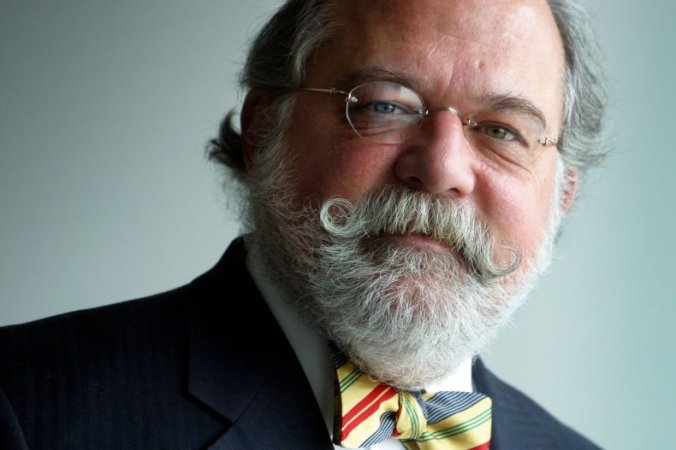
That stylish-looking gentleman above is Ty Cobb III, a descendant of the iconic baseball player, himself a rather infamous ethics dunce. I never quite figured out Ty III’s relationship to Ty the First, but that is neither here nor there. I wish I didn’t have to write this post: I know Ty a bit, for we were in the same class at Harvard (where he already was sporting that handlebar mustache), and I knew many of his friends a lot better than I knew him. He is a nice guy, a funny guy, and by all accounts a terrific lawyer. He may have been the best lawyer ever associated with Donald Trump: Ty joined the White House staff to manage legal matters surrounding the Mueller investigation—yes, the Russian collusion scam run by the Democrats, the FBI, and the news media. He reported directly to Trump, and he was extensively quoted during the media frenzy over that disgusting set-up.

On May 2, 2018, Cobb announced that he was retiring as White House special counsel, and later that year, said that he did not think the Mueller investigation was a “witch hunt,” later saying in an ABC News interview on March 5, 2019, that he thought Mueller was “an American hero.” I almost blew my ethics whistle then; I didn’t: I should have. As a lawyer the public identified with President Trump (though his client was the office, not the man), Ty’s apparent vouching for the investigation was bound to be taken by the public (and certainly the news media) as a hint that someone on the inside with legal expertise knew Trump was guilty. I know I looked at it that way.

Now he’s done it again. Cobb told the news media that the “feds are coming fast” for Trump, and predicted that the investigation into the his alleged mishandling of classified documents will land him in prison. Spewing his opinions like an oil gusher, Cobb said,

Continue reading

A Cautionary Legal Ethics Tale: The Paralegal’s Goof

There are a lot of ethics lessons in a recent lawsuit out of Connecticut.

William Cote, the lawyer for the seller in a real estate transaction, had $159,000 that he was supposed to wire to the Freedom Mortgage Corp. He had received a correct payoff statement with accurate wire instructions, but before he completed the payment, his paralegal received an email from the seller—it claimed— changing the wiring information. The new statement specified wire instructions for a different bank and account, and the paralegal passed in on to Cote, who then wired the money to the designated account—which had been set up by a scamster to snatch the money away.

Cote didn’t realize the gravamen of his error until more than a month later when the seller said he received a statement from the Freedom Mortgage Corp. reflecting a balance still owed on his loan. The buyer of the property is now suing both the seller and Cote because the title to the home she purchased is still encumbered by the seller’s mortgage.

Well…

  • Lawyers are responsible for the ethical conduct of their non-lawyer employees, including basic competence. Neglecting their training is an ethics violation.
  • The invasion of technology into every aspect of the legal profession requires vigilance and ongoing education. A firm or lawyer that does not have procedures and software in place to check the validity of emails is asking for a disaster. More than that, regular trainings of staff, including legal and non-legal, on technology advances and emerging perils are crucial. As with the non-lawyer trainings, they are too often skipped or made perfunctory.
  • Cope was probably busy with other matters when his paralegal passed along the phony change to the wiring instructions. Obviously, he should have asked some crucial questions, but instead just acted on trust. Trusting one’s staff is a good thing, but when so much money is involved, it is the lawyer’s duty to make sure a non-lawyer assistant hasn’t missed anything. Meanwhile, distracted law practice is as dangerous as distracted driving.

_____________________

Source: ABA Journal

Addendum To “An Ethics Conflict Conundrum: The Fraudulent Friend”

Apparently my choice of words confused some readers when I wrote that once “The Ethicist’s” inquirer in this post was made aware of a serious fraud (and an ongoing one) perpetrated by a close friend, she had become an accessory after the fact. That’s a legal term of art and I was careless to use it in nontechnical context. Almost no one is ever charged as an accessory for not blowing the metaphorical whistle, but the woman nonetheless shared responsibility for the harm done by the ongoing fraud by knowing about it, having the ability to stop it, and not doing so, thus letting it continue.

The duty she breached was an ethical one, not a legal one. As I said, I should have been clearer.

I am reminded of a personal experience that might clarify the issue further. I may have even related this story in another post; if so, I can’t find it, and it is worth repeating.

A lawyer friend contacted me for advice. He had been meeting with a client at the client’s home, and overheard, in the kitchen, a loud argument between his client and his wife culminating in what sounded like a hard punch in the face, the woman crying out in pain, and someone falling on the floor. My friend said he had said nothing, but was increasingly bothered by what he heard.

Continue reading

SCOTUS Punts An Important Legal Ethics Controversy

In the Supreme Court case In Re Grand Jury, the government had been trying to obtain  documents from an unnamed law firm specializing in international tax law. The documents were needed to investigate the law firm’s client. A judge held the law firm in contempt for failing to turn over disputed documents, and the 9th U.S. Circuit Court of Appeals at San Francisco affirmed in 2021. The issue was what test courts should apply when considering whether to protect “dual-purpose” documents that contain both legal and nonlegal advice.  The 9th Circuit ruled that courts should look to the “primary purpose” of a communication when it involves both legal and nonlegal analysis. Documents may be privileged when the primary purpose is to provide a client with legal advice. The firm argued that the entire document, along with any non-legal advice and material in it, should be considered privileged if legal advice was one of the “significant purposes” of the communication.

The legal ethics traditions argue for the more expansive standard. ABA Model Rule of Professional Conduct 2.1, “Advisor,states in part,

“In rendering advice, a lawyer may refer not only to law but to other considerations such as moral, economic, social and political factors, that may be relevant to the client’s situation….Advice couched in narrow legal terms may be of little value to a client, especially where practical considerations, such as cost or effects on other people, are predominant. Purely technical legal advice, therefore, can sometimes be inadequate. It is proper for a lawyer to refer to relevant moral and ethical considerations in giving advice. Although a lawyer is not a moral advisor as such, moral and ethical considerations impinge upon most legal questions and may decisively influence how the law will be applied.”

I agree with this approach. Requiring a client or an attorney to parse a letter or oral discussion to separate the legal, privileged content from the rest would chill effective lawyer client communication. Continue reading

Cultural Illiteracy Meets Judicial Ethics!

This was resolved in September 2022, but I missed it, and attention should be paid.

An Illinois lawyer was representing a client in an age discrimination lawsuit that arose out of an attempt to purchase property and, chagrined at the judge’s ruling at one point, uttered the Elizabethan era word, “gadzooks!” under his breath. The judge admonished the lawyer not to make comments “under your breath,” and the attorney replied, “I said, ‘gadzooks!'”  The judge shot back, “If you make one more comment that’s offensive to this court, I will hold you in contempt of court.”  The lawyer, apparently astonished, said: “Gadzooks is offensive to the court?”

The judge stated: “You are now in contempt of court. I’m fining you $1,000.” When the the lawyer replied, “May I ask the court.”  The judge stated: “You are now (at) $2,000!”

During the eventual disciplinary hearing—the episode tied up the lawyer for years—the judge testified that she did not know what “gadzooks” meant but found it offensive, and that she regarded the exclamation an attempt to impugn her ruling.  The lawyer testified that he did not consider “gadzooks” to be offensive, and also  testified that he did not yell or shout “gadzooks” as the judge claimed. When he did raise his voice during the trial, it was so his 83-year-old client could hear him, he said. Continue reading

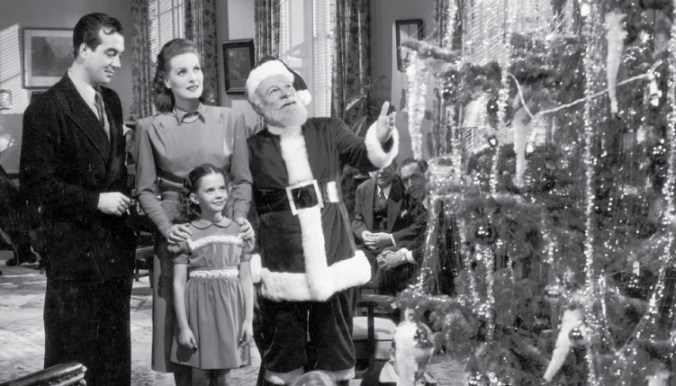
Merry Christmas! And Here’s The Ethics Alarms 2022 Companion To “Miracle On 34th Street” [Updated And Revised]

2022 Introduction

Our ethical standards and ethics alarms are affected by what we see, hear, like and respond to, and this is why even a wonderful holiday classic like “Miracle on 34th Street” has to be looked at critically. If popular holiday movies inject bad ethics habits and rationalizations into our character, especially at a young age, that is something we should at least be aware of by the tenth or eleventh time we watch one of them. Parents are wise to talk about films and the lessons contained in them with their children. I’m not sure what the right age is to show this movie to children: probably as soon after they express skepticism about Santa Claus as possible.

The production of “Miracle on 34th Street” itself epitomizes the ethical values of competence and integrity. Watch any of the attempts to remake the film over the years; some aren’t bad, but none equal the original, or even justify a remake that places the story in contemporary times.There have been four remakes starring, as Kris Kringle, Thomas Mitchell, Ed Wynn, Sebastian Cabot, and Richard Attenborough. That’s a distinguished crew, to be sure. Mitchell was one of the greatest character actors in Hollywood history. Wynn was nominated for an Academy Award (for “The Diary of Ann Frank”) and Attenborough won one, Best Supporting Actor Award in 1967 for “The Sand Pebbles.” Cabot wasn’t quite in their class, but he was a solid pro, and looked more like Santa Clause than Mitchell,  Wynn, or Richard Attenborough.

None of them, however, were as convincing as Edmund Gwenn. He made many movies—all without a white beard— and had a distinguished career in films and on stage, but even audience members who knew his work had a hard time reminding themselves that he wasn’t Kris Kringle while they watched the movie. I still have a hard time.

 The film is one more example of the special, unappreciated talent of Maureen O’Hara, who never seemed like a movie star, as lovely and strong an on-screen presence as she was. Her ability to anchor great movies while never dominating them is the epitome of the “collaborative art” they always blather about during the Oscars, but which is seldom truly honored.  O’Hara was the female lead in four genuine classics: “The Hunchback of Notre Dame,” “The Quiet Man,” “How Green Was My Valley,” and “Miracle on 34th Street.”

“Miracle on 34th Street” is an ethics movie in part because its artists committed to telling a magical story and charming audiences by working as an ensemble selflessly and  efficiently. John Payne, as the idealistic lawyer in love with Maureen, is never flashy, just completely convincing. One reason may have been that, as he told an interviewer once, the role of Fred Gaily perfectly matched his own ideals and beliefs.  This is the magic of performing talent: they make audiences suspend disbelief because they seem to believe in the story and characters too. The director,  George Seaton (who also directed “Airport,” which is NOT an ethics movie), also wrote the script that won him an Oscar. He cast his movie brilliantly, and also made the correct decision to stick with a matter-of-fact, realistic, unadorned style that keeps the story grounded. There are none of the corny features or inexplicable gaffes in this film that make other holiday-themed classics inherently unbelievable, like the cheesy battlefield sets in “White Christmas” or the heavenly dialogues in “It’s a Wonderful Life.”

I think this is the best Christmas holidays movie for 2022. It is about the importance of believing in good things, hopeful things, even impossible things. Today many of my friends, colleagues and associates are depressed and fearful of the future—their future, the future of the nation, even the future of the planet. (The planet will be fine…the rest? As Samuel L. Jackson says in “Jurassic Park, “Hold on to your butts.”) “Miracle on 34th Street” stands for the idealistic proposition that wonderful things can happen even when they seem impossible, and that life is better when we believe that every day of our lives.

After all, as the Fairy Godmother in the musical version of “Cinderella” sings, “Impossible things are happening every day.”

Chapter 1.

Meet Kris Kringle

The movie tells us right at the start that 1) the charming old man in the white beard can’t possibly be Santa Claus, and 2) that he’s nuts. He tells adults who are paying attention this as soon as he starts complaining to a New York City storekeeper that his window display has the reindeer mixed up: “You’ve got Cupid where Blitzen should be. And Dasher should be on my right-hand side. And another thing…Donner’s antlers have got four points instead of three!”

Let’s see:

  • No Christmas display has ever distinguished between Santa’s reindeer (except for Rudolph), because the individual reindeer have never had any identifying characteristics in reality or myth. Are we to assume that there are name-tags on the models? If so, why wouldn’t Kris be complaining about the features of all of them, not just “Donner’s” antlers?
  • The names of the reindeer, even if there are flying reindeer, were 100% the invention of the poem “A Visit from St. Nicholas,” or “The Night Before Christmas,” originally published in 1823.  No one has ever claimed that the author had some kind of special info on the actual names of the reindeer when he wrote,

    More rapid than eagles his coursers they came,
    And he whistled, and shouted, and called them by name;

    “Now, DASHER! now, DANCER! now, PRANCER and VIXEN!
    On, COMET! on CUPID! on, DUNDER and BLIXEN!

    …and anyway, if he did, those were their names 120 years before the movie takes place. Nobody has ever claimed the reindeer were immortal, either. I suppose Santa Claus, in a nod to the poem’s popularity (it has been called the most famous poem of all time), could have adopted the practice of always having the reindeer named after the poem’s versions, and when one Vixen dropped of old age, the young reindeer that took her place became the new Vixen.

I suppose.

  • A bigger problem is that the movie’s alleged “St. Nicholas” calls the seventh reindeer “Donner.” It gets confusing here. The original St. Nicholas was Greek, the Christian bishop of Myra, now Demre, in Lycia.  Nicholas gave gifts to the poor, in particular presenting three impoverished daughters of a pious Christian with dowries so that they would not have to become prostitutes.  THAT would be neat poem! Saint Nicholas is buried in Italy. He was later claimed as a patron saint of children (also archers, sailors,  pawnbrokers, and the cities of Amsterdam and Moscow). The name “Santa Claus” is derived from the Netherlands version of St. Nick called Sinterklaas,  or “the Christmas man,” de Kerstman in Dutch. This explains “Dunder and Blixen,” meaning thunder and lightning in Dutch, and the movie later confirms Kris’s Dutch origins. (But why does he speak in a British accent?)

Never mind that: why would he call Dunder “Donner”? The “real” Santa wouldn’t. Though the original version of the poem got the names right (we know it’s Blixen and not “Blitzen” because it rhymes with Vixen), various editors, transcribers and  the author himself kept changing the names in subsequent printings. Dunder became “Donder” and eventually “Donner,” which is a meaningless Anglicizing of “Dunder.”

Santa Clause, aka Sinterklaas,wouldn’t be confused: he named the beasts. He’s correcting the shop-keeper while passing along a misnomer?

Baloney.

Well, enough of that. The next scene shows Kris encountering the Macy’s Thanksgiving Day Parade Santa pre-parade. He instructs him in the use of his whip on the reindeer! In the German Santa mythology, the jolly old elf used the whip on naughty children, but nowadays, using a whip on either kids or reindeer is pretty much excised from Santa’s methods, and should have been in 1947. It’s an unethical image…
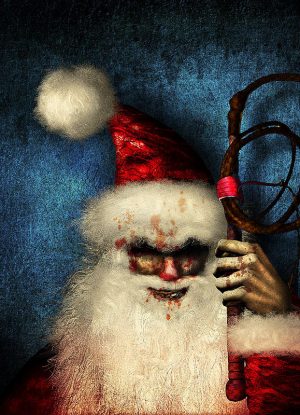
…even though artists have worked hard to confuse us….
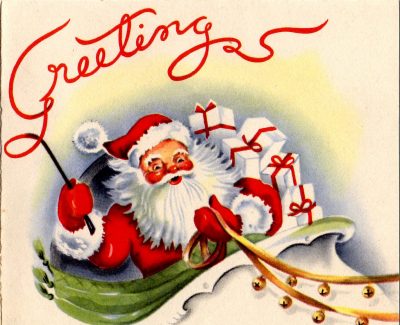
No, an ethical Santa Claus wouldn’t use a whip. He also wouldn’t put a poor old guy with a drinking problem out of work during the holidays, but that’s what Kris does next. He smells liquor on the costumed Santa, and shows no mercy:

“Don’t you realize there are thousands of children… lining the streets waiting to see you… children who have been dreaming of this moment for weeks? You’re a disgrace to the tradition of Christmas… and I refuse to have you malign me in this fashion. Disgusting!”

Then he tracks down Doris Walker, who is in charge of the parade, and gets the man fired. That’s just mean; there’s no way around it. I bet a lot of Macy Santas have had a few nips before and during the parade, and so what? How hard is it to say “Ho Ho Ho”?

Kris manages to get Drunk Santa’s job, having single-handedly gotten him sacked, no pun intended.

Why is Kris, if he’s the real Santa Claus, hanging around New York City and moonlighting in the Macy’s parade when the big night is just around the corner? This is no time for a vacation or boondoggles. If he’s really Santa, he’s goofing off, and he has the gall to tell a temporary parade Santa that he’s risking disappointing children!

Kris is not off to a good start. Continue reading

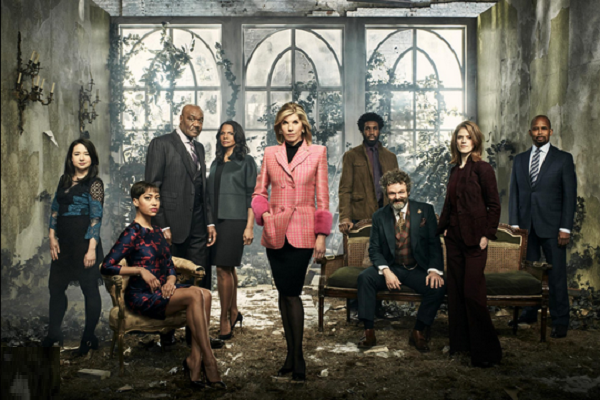
Best of Ethics Award 2022, Best Ethics TV Show: “The Good Fight”

Ethics TV shows, once, long ago, a major segment of popular television fare, are an endangered species. When I last gave out this award six years ago, the winner was the zombie apocalypse AMC hit “The Walking Dead.” Eventually TWD itself became a zombie; if I had named a winner of the award in recent years, based on what I saw, it probably would have been old standby and previous champion “Blue Bloods” on CBS, or as I call it, “The Conflict of Interest Family.” To the great credit of Tom Selleck and the writers, it’s still a strong ethics show in its 13th season; brave too (imagine: in 2022, a pro-police drama about a devout Catholic family that meets for Sunday dinner every week!). But I’ve found—finally–a better one.

And if I had been more alert, I would have found it six years ago. The show is “The Good Fight,” a spin-off of “The Good Wife” which Ethics Alarms discussed frequently during its run. I was a bit jaded after “The Good Wife,” because, as good legal series often do if they go on too long, it began resorting to outlandish plot devices as new ideas became harder to come by. Maybe that’s why I was so late checking in on “The Good Fight.” The series picks up the story of Christine Baranski’s character in “The Good Wife,” and streams on Paramount Plus, which I only recently subscribed to. This is the show’s final season, its sixth, but I’m starting from the beginning.

If the next five season raised no ethics issues at all—an impossibility with ethics-obsessed creator-writers Robert and Michelle King in charge—“The Good Fight” would still be the smartest and most sophisticated legal ethics drama since “The Defenders.” You can watch it here.

There are a lot of legal dramas on streaming services right now: “The Lincoln Lawyer,” “The Firm” (based on the John Grisham novel and film, with Grisham producing), “Partner Track,” “Extraordinary Attorney Woo,” the now-completed “Better Call Saul,” and the extremely entertaining if over-the-top drama “Goliath,” starring Bill Bob Thornton as an alcoholic, depressive, idealistic litigator. If I had to recommend one over the rest, “The Good Fight” would be my choice.

Continue reading

Good Father, Malpracticing Lawyer

Awwww. Lawyer Jerry L. Steering of California missed the deadline to file a response to a motion to dismiss the case that he had filed on behalf of a client. He had a good reason, he thought, having seen “Field of Dreams” a bunch of times. (OK, I’m guessing here.) U.S. District Judge Josephine L. Staton of the Central District of California, an appointee of former President Barack Obama, had already granted a deadline extension to Steering once, but he requested more time, he explained, because he was “presently in Chicago” to watch his son “play American professional baseball.”

What a good dad! What a bad lawyer! The judge didn’t grant the extension, and in an unpublished per curiam opinion that a three-judge panel of the U.S. Court of Appeals for the Ninth Circuit issued yesterday, her decision was upheld. The lawyer’s “excuse for not meeting a deadline that had already been extended 90 days at his request was frivolous: Counsel chose to attend a ballgame instead of timely filing his client’s response to the motion to dismiss,” the 9th Circuit said.

Frivolous? FRIVOLOUS??? Watching one’s son “have a catch” for money and supporting him from the stands is “frivolous”? Well yeah, it is. This is a flaming breach of to many legal ethics rules to list, but competence and diligence will do. I have to assume that Jerry is willing to accept the consequences for his choice, which will include a slam-dunk legal malpractice and maybe disciplinary action from his bar association as well.

When family obligations conflict with professional ones, it’s tough. Still, the professional standards leave a lot less wiggle room than family duties; I think Junior would have understood.

Even if Kevin Costner wouldn’t.


Suspend Sunny Hostin’s Law License

A mere Ethics Dunce designation for The View’s Sunny Hostin isn’t sufficient, because she’s a regular co-host on ABC’s daily cultural offal pile where all of the women are ethics dunces at best. Hostin’s one of the worst, which is quite an achievement, but she’s also a lawyer, making her admission yesterday especially despicable.

I’ve seen the video several times but can’t find a way on Word Press to embed it. Sorry: you can view the evidence on Twitter here. Babbling on about voting with the ladies, Sunny expressed suspicions regarding how absentee ballots were being handled, because, she explained, she had an odd experience while dropping off her son’s absentee ballot which she had filled out for him.

Hostin is a different kind of idiot than the other idiots on the panel: she’s an arrogant, cocky idiot who thinks her law degree means that her idiotic opinions aren’t idiotic. Thus she admitted committing a federal crime on national TV and didn’t even realize it. I’d guess the average first year law student could figure out that this is a serious violation of the Rules of Professional Conduct in every U.S. jurisdiction. Not Sunny, though.

It isn’t a technical violation either; it’s serious. Usually unethical conduct by lawyers when they aren’t practicing law are ignored by bar disciplinary committees, but Rule 8.4, Misconduct, holds that “It is professional misconduct for a lawyer to:

Continue reading

It Looks Like Donald Trump Was Betrayed By Another One Of His Lawyers, Someone Else…Or Himself

Just because Trump is paranoid doesn’t mean almost everyone around him isn’t trying to stab him in the back.

From the New York Times:

Shortly after turning over 15 boxes of government material to the National Archives in January, former President Donald J. Trump directed a lawyer working for him to tell the archives that he had returned all the documents he had taken from the White House at the end of his presidency, according to two people familiar with the discussion.

The lawyer, Alex Cannon, had become a point of contact for officials with the National Archives, who had tried for months to get Mr. Trump to return presidential records that he failed to turn over upon leaving office. Mr. Cannon declined to convey Mr. Trump’s message to the archives because he was not sure if it was true, the people said.

The story was leaked to, naturally, Maggie Haberman, the full-time Trump Fury on the Times staff. She’s currently peddling a book full of anti-Trump tales, gossip and embarrassments. A lot of her stories over the last six years have been about what the President supposedly said behind closed door, or suggested, or asked others to do, none of which actually came to anything but the point is to make Trump look bad, dangerous or stupid. Of course, ethical aides, associates and lawyer don’t tell hostile reporters (or anyone at all) about such conversations because they are in the positions they are because the President trusts them. Donald Trump has been betrayed by such people more times, I would estimate, than all of the last six Presidents combined. Continue reading