Ethics Dunce: Libertarian Andrew Cohen

The ethical virtue at issue is integrity.

On the other hand, some times you just have to say, "oh, the hell with it" and stomp on the damn snake...

Those who oppose abortion as the taking of innocent human life may not, consistent with integrity (forget about logic) also say that abortion is a personal choice. Those who oppose capital punishment as a matter of principle (rather than as a problem of fair application) may not, consistent with integrity, announce that of course they would make exceptions in the cases of Hitler, Bin Laden, and Ted Bundy. A pacifist who won’t explain why the U.S. shouldn’t have fought World War II isn’t a pacifist at all, but a poseur.

Now Andrew Cohen, a self-declared libertarian blogger, has written a defense of the state determining whether or not potential parents may have children.  He writes: Continue reading
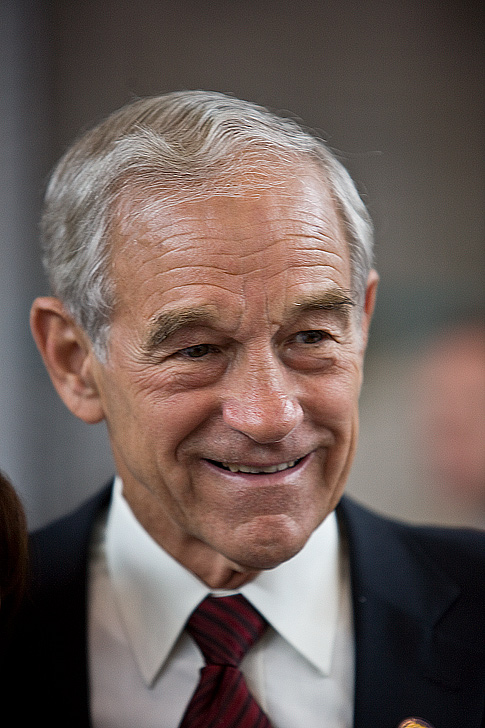
Ethics Hero: Rep. Ron Paul

One of the benefits of absolutist ethical systems is that they can force you to maintain your integrity when unethical positions are convenient or temporarily beneficial. So it was that libertarian Rep. Ron Paul (R-Tx) emerged from Monday’s New Hampshire debate among GOP Presidential hopefuls as the only candidate who rejected limiting the participation of gays in the military and the infamous “Don’t Ask Don’t Tell” policy. While Herman Cain, Michele Bachmann, Mitt Romney, Rick Santorum (naturally), Newt Gingrich and Tim Pawlenty all said, in various and convoluted ways, that they supported DADT, Paul cut precisely to what is ethically offensive about the policy.

“We have to remember, rights don’t come in groups,” Paul said. “We shouldn’t have gay rights. Rights come as individuals….it would be behavior that would count, not the person who belongs to which group.”

I am far, far from being a Ron Paul fan, for his libertarian principles lead him to as many irresponsible positions as ethical ones. And he is certainly emboldened to risk the displeasure of the Republican base as a candidate with about as much chance of getting the Republican nomination as I do (though more of a chance than Newt Gingrich).  But on a night when six of his rivals pandered to homophobia and embraced a policy that both violates core American values and endorses lying, Ron Paul alone had the courage and principle to correctly place “Don’t Ask” where it belongs, in conflict with the Declaration of Independence and the Constitution.

Ethics Quote of the Week: Washington Post Columnist Michael Gerson

“In determining who is a “major” candidate for president, let’s begin here. Those who support the legalization of heroin while mocking addicts are marginal. It is difficult to be a first-tier candidate while holding second-rate values.”

—-Washington Post columnist and former Bush advisor Michael Gerson, pronouncing presidential candidate Rep. Ron Paul’s Libertarian endorsement of drug legalization ethically unacceptable.

Gerson’s deconstruction of the all-too-common and increasingly ominous calls for legalizing addictive drugs nicely captures the trio of ethical flaws of the advocacy: it denies the crucial and legitimate government role defining responsible conduct for society, it embraces the myth that recreational drug use “does no harm,” and it is arrogant and selfish, condemning the poor and reckless to problems that their fragile resources cope with, in order to bestow a dubious “freedom” that the drug advocates do not need. Continue reading

Ethics and the CALM Critics

The Commercial Advertisement Loudness Mitigation, or CALM Act, is now on the way to President Obama’s desk. The law addresses a long-time irritation to TV viewers, who have been complaining about television commercials booming out at ear-splitting volume as soon as a moderately-loud program takes a break. The advertising trick, which has been around for a while, has become even more blatant in recent years with availability of new sound technology. Some televisions have been equipped with devices that supposedly even out sound variations, but they do not completely solve the problem. The new legislation directs the Federal Communications Commission to require advertisers, within a year, to adopt industry technology aimed at lowering the volume on televised sales pitches.

This is a classic example of law doing what law is supposed to do: step in when individuals or organizations refuse to respect ethical values and cultural norms in the pursuit of their own self-interest, and set penalties to inspire them to engage in fair conduct, since “doing the right thing” isn’t motivation enough. Continue reading

The Ethics of Legalized Gambling: A Debate

Over at “The Economist” website, two articulate and well-qualified opponents are debating the wisdom of state sanctioned gambling. The debate will be “settled” by a vote of the site’s readers.

The two advocates cover the topic thoroughly and well, and I will  link to the debate rather than attempt to supplement it in detail, except to say this: Continue reading

Ethics Dunce Deux: Rand Paul Whiffs on Accountability

G.O.P Kentucky Senate nominee Rand Paul has pulled off a record-worthy achievement: he has earned Ethics Dunce status twice in a week’s time, something no one else, even serial Ethics Dunces like Sen. John Kerry and Tom DeLay, were able to do in the nearly seven years the designation has been in existence. He did not earn it the old fashioned way, however, as the old Smith-Barney ads used to say. Most Ethics Dunces do something, but in both cases Paul has proven himself worthy by what he says he believes.  This makes him kind of a classic Ethics Dunce. He literally doesn’t understand basic ethical values, or if he does, can’t articulate them. Continue reading

Ethics Dunce: Rand Paul

The demise of the Tea Party movement may well come when it actually has to put individual candidates before the electorate and the media to carry its message. At least, that is what the ascendancy of Rand Paul, now the Republican nominee for the U.S. Senate in Kentucky after his primary victory this week, portends. Paul, before his first week as the nominee is up, has managed to expose himself as unacceptably challenged by the task of reconciling the deceptively simplistic philosophy of libertarians with real world ethics. Specifically, he has declared that he does not support the 1964 Civil Rights Act’s requirement that private businesses  serve all members of the public, irrespective of race, nationality, religion and sexual orientation. This position Rand haltingly clung to despite withering interviews on National Public Radio and MSNBC’s Rachel Maddow Show. You can see the latter, in two parts, here and here. Continue reading