Case Study In How Sports Encourages Consequentialism: The 1968 Detroit Tigers

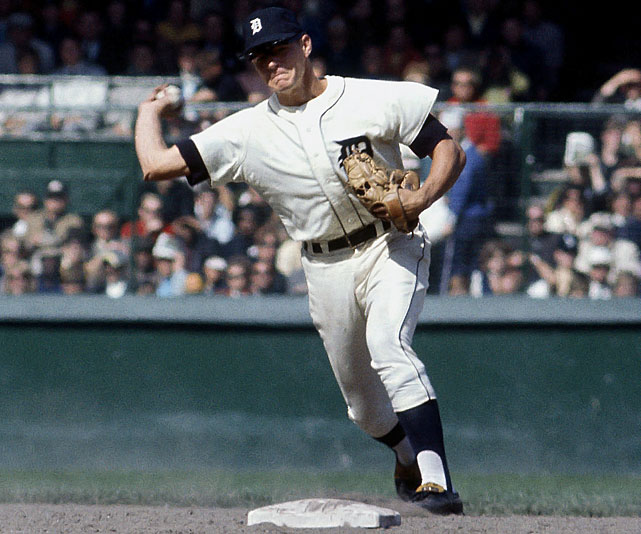
Mickey Stanley in 1968: learning a new position in the World Series, making us dumber...

Mickey Stanley in 1968: learning a new position in the World Series, making us dumber…

Frequent readers here know that I often inveigh against consequentialism in its various forms, from labeling sound decisions “mistakes” when they don’t pan out due to uncontrollable factors, to pronouncing unethical conduct as ethical because it chanced to have some beneficent results. This particular hydra seems to be a tough one to kill, and one of the reasons is, I realize, the pervasiveness of sports in our culture.

Reflecting on sporting contests, particularly those involving teams, routinely generates hindsight bias on the part of fans and sports commentators….for one thing, it’s fun to second guess managers and coaches from the safety of an armschair or from behind a computer screen. Unfortunately, the practice endorses consequentialism. Decisions that result in a win are seldom criticized, no matter how moronic or misguided they may have been; tactics that ended in defeat are always called “mistakes,” or worse.

The baseball post-season began yesterday. We won’t see a World Series game until October is almost over, but there was a time, children, long ago, before divisions and the designated hitter, before steroids and ESPN, when in major league baseball, the World Series was the post season. This was the case 45 years ago, in 1968, when the Detroit Tigers, who had clobbered the American League competition on the way to a 103-59 record, including the last 30 game-winning season by any pitcher, turned in by Denny McLain. They were about to face the reigning baseball champions from 1967, the NL’s St. Louis Cardinals, led by future Hall of Famers Lou Brock, Orlando Cepeda, and Bob Gibson. Both were veteran teams and well-balanced; there was every reason to believe that each had a good chance at victory. Certainly, neither was in need of any last-minute overhaul.

Nonetheless, Tigers manager Mayo Smith decided to take a gamble. Continue reading
Ethics Quote Of The Day: Lou Gehrig, July 4, 1939

“Fans, for the past two weeks you have been reading about the bad break I got. Yet today I consider myself the luckiest man on the face of this earth.”

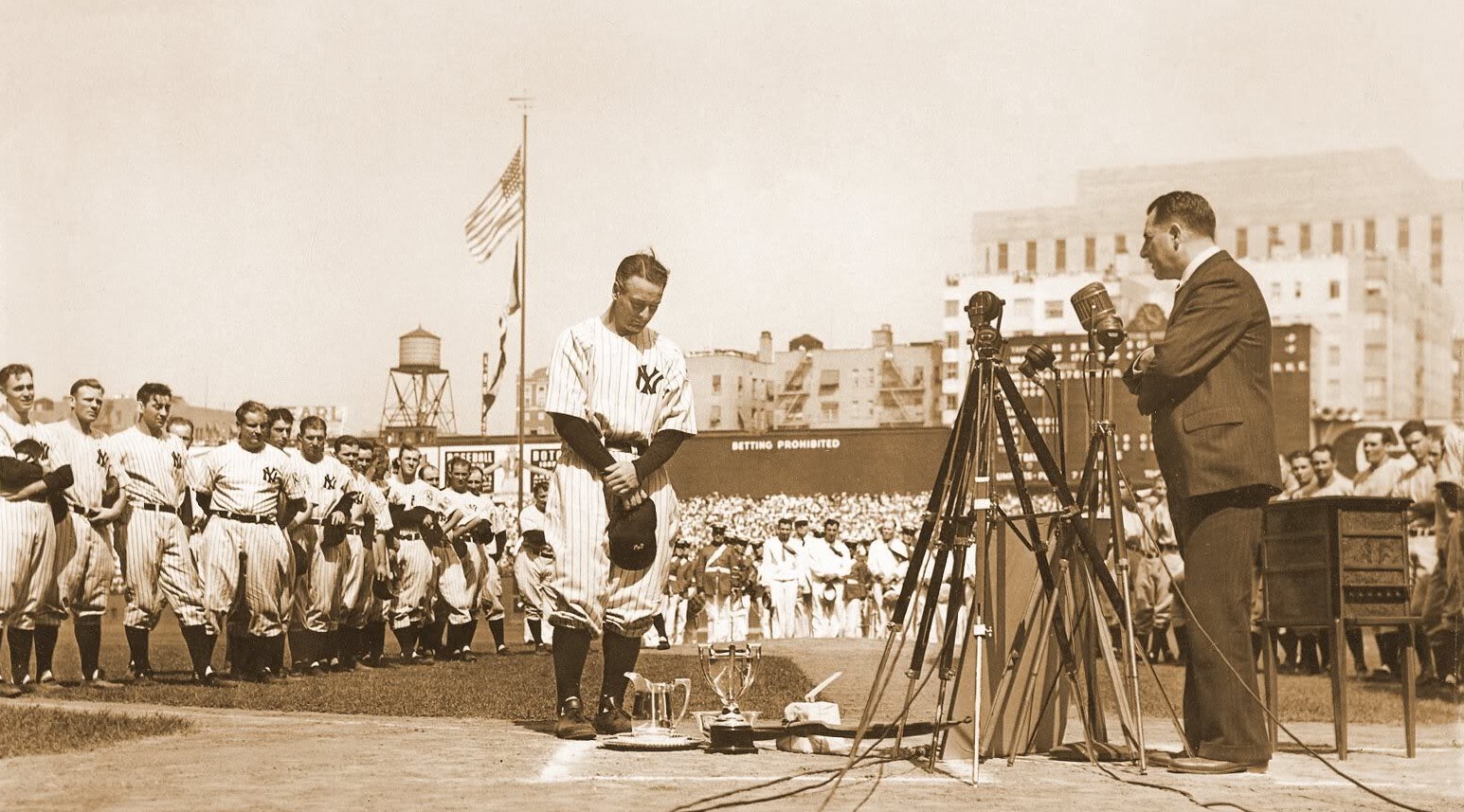
—-Baseball great Lou Gehrig, beginning his farewell speech to Yankee fans on July 4, 1939, as they filled Yankee stadium to say farewell to “the Iron Horse,” who was retiring from the game after being diagnosed with the incurable disease, amyotrophic lateral sclerosis (ALS), known forever after as “Lou Gehrig’s Disease.”

Lous Farewell

Lou Gehrig was only 36 years old when he learned that he was dying. ALS is a terrible wasting disease that has no cure, and in 1939 there was little treatment or assistance that could be offered to a victim as his body slowly ceased to function. It is an especially cruel disease for a professional athlete to face, and even more so one, like Gehrig, who was renowned for his endurance and seemingly indestructible body. When the progress of the illness, still then undiagnosed, caused Gehrig to remove himself from the New York Yankees line-up on May 1, 1939, it ended his amazing streak of 2,130 consecutive games, a baseball record that stood until broken by Cal Ripken, 56 years later.

Gehrig’s speech was from his heart. He was an educated and articulate man, but he had not planned on speaking at the moving ceremony to bid him farewell, as current former team mates, some of the greatest players ever to take the field, gathered to pay their respects. But the Yankee Stadium crowd of more than 60,000 began chanting his name, and after initially refusing, Gehrig moved to the microphone. Continue reading

“Luck,” Causation, and the Complex Computation of Mixed Motivations

Was it good luck, or bad luck?

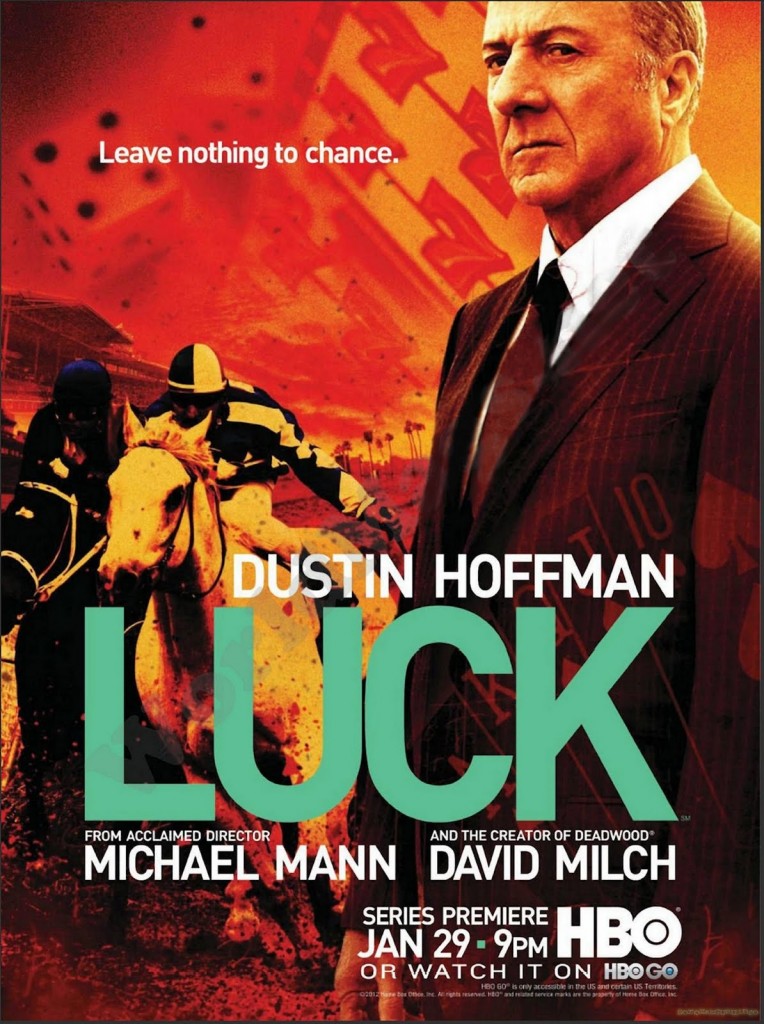
HBO has announced that it is cancelling “Luck,” its well-reviewed series about corruption in the sport of professional horse-racing. Why? Well, that’s an interesting question.

The immediate impetus for the decision was the death of a one of the horses used in the series. It was the third horse to die, so the announcement took the form of a sensitive and humane decision based on concerns for the animals. “While we maintained the highest safety standards possible, accidents unfortunately happen and it is impossible to guarantee they won’t in the future,” HBO’s statement said. “Accordingly, we have reached this difficult decision.”

I was initially impressed, but a couple of things about the move, which seemed uncharacteristically ethical by show business standards, bothered me. “Luck” was much-praised but low-rated, despite a cast headed by Dustin Hoffman and Nick Nolte and a production team headed by respected film director Michael Mann. Though it had been renewed for a second season, some felt that the renewal was dictated by a corporate decision not to embarrass its Hollywood royalty. Continue reading

Mother’s Day Reflections On A Wonderful Mother With Flawed Ethics

My mom and Ma Barker had some things in common.

I am spending this Mothers Day in mourning, as today is the first time I have had to experience the holiday without a mother. My mom died earlier this year, as I mentioned here at the time, and she has been buried for less than a month. My mother used to be a regular feature of my ethics seminars, as I would reference her whenever I talked about the so-called “Mom Test,” one of the three famous ethics tests that are useful to set off sluggish ethics alarms, the other two being the Gut Test (“Does this feel wrong?”) and the New York Times Test (“Would I be willing to see my conduct on the front page of the New York Times?”). The “Mom Test” is whether you could tell your mother about your ethically-dubious conduct without hesitation or shame, and I often told my classes that with some mothers, like my own, this test didn’t work very well. “My mother,” I would explain, “has the ethics of Ma Barker.” I was only partially kidding. Continue reading

Unethical Quote of the Week: New York Times Op-Ed Writer David Brooks

“Besides, the legitimacy of a war is not established by how it is organized but by what it achieves.”

—-David Brooks, writing in the Times about the messy United Nations coalition now intervening in the Libyan civil war.

This is blatant consequentialism, and Brooks is incredibly mistaken to write it. Would Lincoln’s war have been “illegitimate” if it had resulted in a defeated North and two nations, one still clinging to slavery? W.W.II “achieved” virtual slavery for million of Europeans whose freedom was conceded to the Soviet Union, the frying of two Japanese cities full of civilians, the opportunity for Mao to launch the worst genocide in human history, and 40 years with a very real risk of a nuclear war that might have exterminated humanity. Was that war legitimate?

The legitimacy of a war is measured by whether its cause is just, and its objectives are both vital and beyond accomplishing by any other means. What any war ultimately achieves is determined by events and factors impossible to know when the war is commenced, as well as pure, dumb luck..

Unethical Crime Victim of the Month: Kamofie & Co.

Next time, Lindsay, pick a classier store to rob.

Lindsay Lohan, in addition to having stunningly bad judgment, multiple addictions, lousy parents, sycophantic friends, and an army of paid enablers, also has rotten luck. When she walked out of a jewelry store wearing a $2,500 necklace, she picked an ethically dubious enterprise, Kamofie & Co., that may have  grossly over-priced the necklace, turning the shoplifting into grand theft. But that’s just the beginning.

Lohan, who is on probation and facing jail time for the incident, was caught on a surveillance tape in January as she strolled out of the store, with the unpurchased jewelry around her neck. Some establishments, recognizing the alleged thief as someone who is famous, troubled, and in need of some kindness, would have privately contacted the actress, accepted her (probably) false excuse that the act was inadvertent, and allowed her to return the item with involving the police.

Not Kamofie, however, which apparently saw the incident as an opportunity to make itself a household word. Continue reading

The University of Central Florida Cheating Scandal Irony: the YouTube Ethics Hero Is Really the Ethics Dunce

[Let me begin by apologizing to Ethics Alarms readers for coming so late to the party on this one. I recently read about the UCF business school cheating scandal and the viral video it spawned, and learned that they have been a major source of blog chatter and media attention for more than a week now. It was all news to me. When you spend your  days and nights searching for stories presenting ethics issues and manage to miss one that people who aren’t even looking find with ease, you’re doing something wrong. I’m embarrassed. Many of you send me ethics stories you come across; keep doing that, please, and if you know of a big story that I seem to be ignoring, drop me an e-mail about it if you have the time [jamproethics@verizon.net]. Usually I’m ignoring it because I think the ethics of the matter are obvious, but sometimes it is because I have missed the forest for the trees. I’ll be very grateful.]

Now that I’ve arrived at the party, however, I intend to be the official pooper. The lionized professor and Youtube sensation in the incident, Richard Quinn, was a worse ethics violator that the students that he declared “disgusted him.”

In case you also missed the story, here are facts: Continue reading

Tony C., Chaos, and the Ethics of Blame

“And then one night

The kid in right

Lies sprawling in the dirt.

The fastball struck him square—he’s down!

Is Tony badly hurt?”

Just about everyone who lived in Boston, Massachusetts in 1967 knows that bit of doggerel, an epic poem written to commemorate the Boston Red Sox miracle “Impossible Dream” pennant that year. Tony, “the kid in right,” was Tony Conigliaro, or Tony C. for short, the 22-year-old Italian stud from nearby Swampscott who was ticketed for the Hall of Fame. Tony had everything: looks, talent, an adoring hometown public and a flair for the dramatic—everything but luck. On August 19, 43 years ago today, an errant pitch from Angels starter Jack Hamilton struck him in the face, nearly killing him. The beaning began a series of events that turned “The Tony Conigliaro Story” from a feel-good romp to an epic tragedy. He was never quite the same after the beaning, though he bravely played three more seasons with a hole in his vision he never told anyone about. He quit, tried pitching, actually made a second comeback that was derailed by injuries, and quit again. He was about to become the Red Sox cable TV color man when he suffered an inexplicable heart attack that left him brain-damaged and an invalid until his death, at only 45, in 1990.

Since 1967, there has been a storyline connected with Tony C.’s beaning, and it resurfaces every year. Let’s have an enthusiastic Red Sox blogger tell the tale: Continue reading