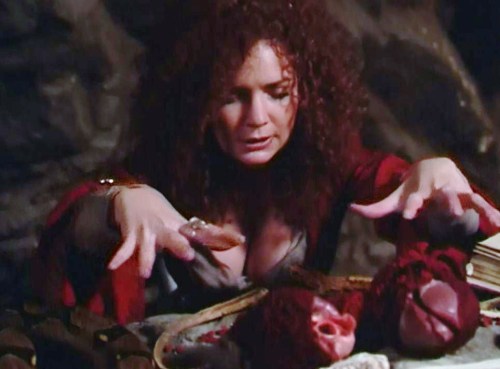
In a newly published memoir, Sally Quinn, the famous journalist who married iconic Washington Post editor Ben Bradlee and became a D.C. society matron, then a religion columnist, reveals a lief-long obsession with mysticism and the occult. Ouija boards, pentagrams, witchcraft, charms, spells, seances, messages from the dead (like Ben), voodoo, the whole thing: Quinn writes that she has had an “epiphany” revealing that “believing in magic is as legitimate as any religion or faith.”
I’ll buy that. I wouldn’t say that the next step is an application to Hogwarts, however.
So these are the people who presume to tell Americans what to think, eh? Good to know.
But I digress. In a recent Washingtonian Magazine profile contrived to puff the release of “Finding Magic,” Bradlee’s widow says that she not only believes in hexes, she’s used them. And they work!
She reveals that, in her less mellow days, she put hexes on three people who promptly wound up having their lives ruined, or ended.
The first, cast in 1969, was spurred by old-fashioned jealousy. Some exotic beauty at a Halloween party inspired lust in Quinn’s beau at the time—and then killed herself just days after Sally cast her spell.
Her second victim was Clay Felker, the longtime editor of New York magazine who oversaw a brutal profile of Quinn in 1973, just before her catastrophic debut on the CBS Morning News. Quinn hexed Felker not long after flaming out at CBS and returning to Washington. “Some time afterward, Rupert Murdoch bought New York magazine in a hostile takeover, and Felker was out,” she writes. “Clay never recovered professionally. Worse, he got cancer, which ultimately caused his death.”
Target number three: a shady psychic who, the autumn after Quinn Bradlee was born, ran afoul of Sally’s maternal instincts. The woman dropped dead before year’s end.
This raises a classic ethics question that I nearly posed today as an Ethics Quiz. I didn’t, because I know the answer and have no doubts about it. (If it’s an ethics quiz, I at least have doubts.) The question would have been:
Ethically rather than legally, is there any difference between Sally Quinn and a murderer?
The answer is no.
I’d say that the first two victims make her the ethical equivalent of someone who is guilty of manslaughter, and the last one, after her first two hexes led to her targets’ deaths, was, again ethically rather than legally, premeditated murder.
Sally says that after the psychic dropped dead, she swore off her Death Hex. That’s admirable. The fact remains, however, the while believing an instrumentality would lead to harm when employed against specific individuals, she employed it, got her desired results, and believed that she was the cause of their subsequent deaths. She also doesn’t express any remorse or regret. Continue reading →




 Ethics Alarms