
Good Morning, Philadelphia!
Now sober up and clean up the mess…
1 This has little to do with ethics, except that it proves I wasn’t watching the Super Bowl, but…Here’s my report on “The Darkest Hour,” which my family saw last night in an almost empty theater. Apparently most people would rather see young men risk future dementia than celebrate a great man who may have saved civilization.
[ Aside: On that question, this article in the Federalist says in part, “Super Bowl Sunday seems the appropriate day to bring you the cheerful news that football is doomed. The sport is dying and cannot be saved, at least not in America, its traditional home. The cause of death is science. Simply put, football is a sport in which the audience entertains itself by watching men violently turn each other’s brains to mush…What happens if football becomes a game where white middle-class people pay millions to watch poor and minority kids bang up each other’s brains? I don’t think that’s going to be tenable….That means it’s only a matter of time before participation rates drop off precipitously and it no longer seems like the cool thing to do.The science has turned against football, and it can’t last. So enjoy today’s game, while you still can.” ]
You can skip to the next item if you don’t like your ethics polluted by film reviews.
The film is very good; not “Best Picture” great, I think, but very good. It did a better job making clear what was going on and the stakes at Dunkirk than “Dunkirk,” for which I’m grateful; maybe thay should show the two movies as a double feature. The last fade-out shot was “The Natural”-style over-the-top, out of whack with the style of the rest of the film and it left a sour taste, I thought. Artistic integrity would be nice. It reminded me of ET’s spacecraft leaving a rainbow trail
I’ve now seen four Churchill portrayals recently: Albert Finney’s in the 2002 HBO film “The Gathering Storm,” Brian Cox in “Churchill,” Gary Oldman, and John Lithgow in “The Crown.” My ranking: would also be in that order: Finney, Cox, Oldman and Lithgow lagging far behind. I’m a big Lithgow fan, but he looks and sounds so little like Winston (and so much like himself) that he just can’t measure up to the other three..
Finney, Cox and Oldman were all excellent: it’s very close. Oldman has by far the best part of the story to work with (the chronological order is Finney, Oldman, Cox and Lithgow) and the best screenplay, though “The Gathering Storm” is also strong. Oldman’s scene in the “Tube” is the best scene in any of the productions. It probably didn’t happen, but Churchill was known to wander around London talking to Londoners during the Blitz, so it COULD have happened.
All of the top three Winstons had moments when I forgot the actor and really believed I was watching the historical figure, my test in biographical films. This was something Lithgow couldn’t pull off for a second. (Actors who could in other historical movies: Paul Scofield as Thomas More, Daniel Day Lewis as Lincoln.) Finney’s big advantage over Cox and Oldman, I think, is that he is a star as well as a great actor, and Churchill, as a Great Man, needs to radiate that presence and star quality too. Oldman feels small physically (though he’s actually taller than Churchill was, and no shorter than Finney), and his voice is light; there’s nothing he can do about that. I could make a strong argument that Brian Cox, who is one of the most under-rated actors around, was the best Winston, but the film itself was unforgivably careless and ahistorical.
If you haven’t seen Finney’s performance, which won him several awards, you should. It was probably his final great turn, since he’s in his 80s now and hasn’t made a movie since “Skyfall” in 2012.
Finney’s Clementine, Vanessa Redgrave, wins the award for that role, though her daughter, Miranda Richardson, was also fine in the same role with Cox. Apparently every actor who plays King George is great, but “Churchill”‘s King, James Purefoy, was wonderful (he’s another under-rated actor) and in a fair world, would be looking at an Academy Award nomination for Supporting Actor. The acting in that film is so excellent; it’s a shame its history is so messed up.
2. From the “When Ethics Fail, the Law Must Step In” file: Continue reading




 Ethics Alarms
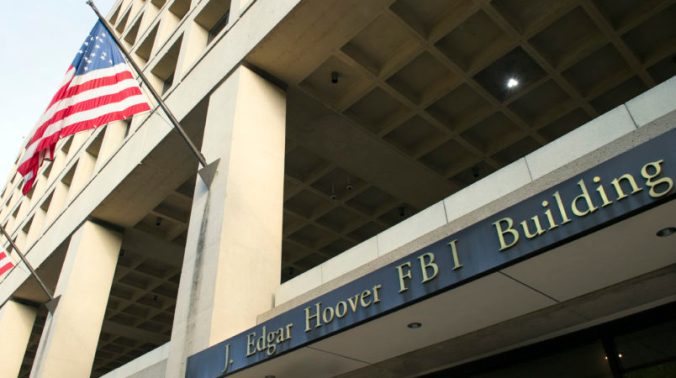
Conservative journalist David Greenstein made a provocative speech before a Tea Party group in which he posited a “civil war,” defined by him as when a political party rejects a lawful Presidential election and refuses to accept the legitimacy of any government it does not dominate. I admit that offering up such inflammatory analysis for comment is the pedagogical equivalent of tossing a hand grenade in a room, but there is method to my madness, beginning with my conviction, documented here since November 2016, that much of the Democratic Party is denying the legitimacy of the last Presidential election, and is actively working to find a way to remove President Trump without having to defeat him in the next one. I believe that this is among the most damaging and dangerous political developments, and ethics outrages, in U.S. history, and one that has been intentionally covered up by an unethical news media with the same agenda.
Greenstein’s speech placed the matter front and center, and I guessed, correctly, that it would get a lot of attention, though the speech has been largely ignored by progressive commentators, even as numerous Democrats, announced that they would boycott the State of the Union message, a traditional yearly symbol of a unified people. I also assumed that it would pose an interesting challenge for readers here, specifically the challenge of keeping bias out of their analysis, since, as we all know, bias makes you stupid.
Chris Marschner did an especially good job of this, and here is his excellent Comment of the Day on the post, Ethics Quote Of The Month, Terrifying Thoughts Division: Daniel Greenfield: