No, Craig, Barry Bonds Wasn’t A “Great” Baseball Player. Bernie Madoff Wasn’t A “Great” Investment Manager, Either

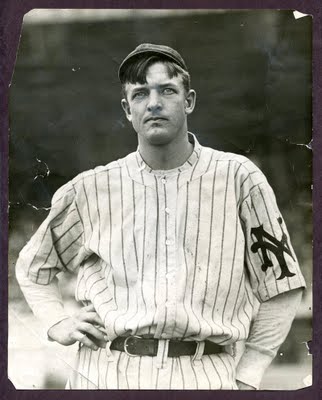
Christy Mathewson, a genuine hero. Barry Bonds would have made him want to throw up.

Christy Mathewson, a genuine hero. Barry Bonds would have made him want to throw up.

I like and admire Craig Calcaterra, who blogs entertainingly and perceptively about baseball on the NBC Sports website. I suppose I’m a bit jealous of him too: he’s a lawyer who now earns his living blogging about something he loves.

But Craig has always been a bit confused about how to regard baseball’s steroid cheats (they are cheats, which should answer any questions, but somehow doesn’t for a lot of people), and predictably, I suppose, he couldn’t resist reacting to the early results of Major League Baseball’s “Franchise Four” promotion, in which fans vote (until mid-May) for “the most impactful players who best represent each Major League franchise” as well as some other categories, including “Four Greatest Living Players.” The early results have Hank Aaron, Willie Mays, Sandy Koufax and Tom Seaver leading in the “Greatest Living Players” category, so Craig snarked that this is sad, because “it must mean Barry Bonds has died in a tragic cycling and/or Google Glass accident and no one thought to tell me.”

No, Craig, this is what someone failed to tell you: cheaters in any profession are not “great” by definition. Great baseball players, like great lawyers, writers, doctors, scientists and Presidents, bring honor on their profession, don’t corrupt everyone around them, don’t force people who admire them to embrace unethical conduct and turn them into aiders and abetters, and accomplish their great achievements while obeying the law, following the rules, and serving as role models for everyone who follows them. Barry Bonds was not a great baseball player. He had the ability to be one, but not the character.

Hank Aaron, Willie Mays, Sandy Koufax and Tom Seaver never once disgraced their game while they wore a uniform, and indeed made baseball stronger and better while they played. Good choices all.

The disgrace is that San Francisco fans voted Bonds as one of that team’s “Franchise Four,”  dishonoring great Giants of the past like Juan Marichal, as well as New York Giants greats like Christy Mathewson, Bill Terry, Carl Hubbell, and Mel Ott, Hall of Famers  and lifetime Giants who played with honesty and sportsmanship. But Giants fans warped values are among the casualties of Bonds’ career…and one more reason he can’t be rated anything but a great villain.

Ethics Dunce: Major League Baseball

RalphieI just learned, via TV ad, that the fantasy sports company DraftKings is endorsed by Major League Baseball.

MLB needs to rethink that. The commercial I watched just concluded with the promise that if you play fantasy baseball using DraftKings, “You could win a ship-load of money!”

Stay classy, MLB. Why in the world would any sport that is trying (not so successfully, I may add) to attract more kids as fans and encourage families to go to the ballpark ally itself with a company that advertises itself during major league baseball games with dumb, gratuitous potty-mouth crudeness like that? It’s not clever. It’s not witty. Anyone who thinks that it’s funny is 12, Adam Sandler, or a moron. It’s rude, that’s all.

Professional and trustworthy operations, including sports, choose partners that are professional too. This advertising equivalent of fart jokes reflects horribly on the sport, and the people who run it.

And, I may add, the advertising industry. The wit who thinks “a ship-load of money” is a real come-on is probably the same slob who gave us Verizon’s “half-fast” internet ads.  At least that one was original: this Noel Coward-worthy play on words is the same low-life effort that K-Mart embarrassed itself with in its“ship my pants” ads in 2013.

We all have to swim in this water we call a culture, and this is the equivalent of pissing in the pool. We should be able to expect better from baseball.


It Serves Me Right: I Don’t Watch The Super Bowl To Avoid Supporting The NFL As It Cripples Young Men, And Miss A Player Pretending To Poop A Football…

doug-baldwin

Did you and your kids miss the magic moment in the Super Bowl when Seattle’s Doug Baldwin celebrated a touchdown by miming the act of crapping out a football? You may have, because the broadcast’s director, undoubtedly primed for Seattle’s various crotch-grabbing antics—this is the biggest family TV event of the year, don’t you know—was on the alert for something ugly and snapped his cameras away.

But Baldwin still did it, and everyone in the stadium saw it. There was a penalty, and now Baldwin has been fined $11,000, the equivalent of a jay-walking ticket, the smallest fine for on-field misbehavior there is in the NFL. I tried to imagine, as a baseball fan, what would have happened in the World Series if, say, Pablo Sandoval had pretended to poop on home plate after scoring a key run. My guess is that he would have been thrown out of the game, suspended, fined, and instantly reduced his value as a free agent by 30% or more. Last season, Jonathan Papelbon, a moron, grabbed his crotch the way Seahawk Marshawn Lynch has been doing all season as he left a regular season game, was ejected, and suffered a wave of columns condemning him. How many columns have you read about Baldwin? See, the culture of football, and the standards of its fans, are so abysmal that a player embarrassing the league, the game, his team and the broadcast, not to mention parents watching the game with their children by pretending to poop out a football isn’t even a big deal now. After all, he didn’t cold-cock his girl-friend, beat a four-year old, murder someone, try to use doctored balls or deceive people into liquifying their brains: what’s the big deal? Continue reading

Crotch-Grabbing Ethics: A Pitcher And An Umpire Make A Dunce/Hero Pair, And Baseball Teaches The NFL About Values

Jonathan Papelbon

I don’t know about you, but I need a break, however brief, from the NBA’s political correctness self-immolation and the NFL proving that it really has no idea what’s right or wrong when its players are violent off the field. Fortunately, Major League Baseball has its own, rather less societally significant ethics scandal for this baseball fan to focus on.

Philadelphia closer Jonathan Papelbon has been very good this year, unlike the rest of his team., but he was lousy Sunday, blowing a big lead for the last place Phillies in front of a home town crowd over the weekend. The Philly fans, as they are famous for doing, booed him lustily as he left the field, so classy Papelbon grabbed his cup and gave it a heave, as he stared down the mob. Translation: “Boo THIS!”

At this point, home plate umpire Joe West, a crummy umpire from a technical viewpoint but notable as an outspoken arbiter of the conduct of players, threw Papelbon out of the game. This was unusual, because Papelbon was almost certainly through for the day anyway. The ejection under such circumstances  didn’t mean the umpire’s usual, “You are unprofessionally challenging my authority regarding a call that does not favor your team and delaying the game, so you can’t play today any more,” but the more succinct and far more rare, “You’re really an asshole.”

Papelbon then took offense, and furiously confronted the umpire. Now Major League Baseball has suspended Papelbon for seven days, and is enjoying it, telling sports fans and the media, “See? The NFL suspends its players for a game or two when they punch women in the face and beat their kids with a log. We kick out our players for seven games just for being rude.” Continue reading

Our Incompetent Media, Making America Ignorant, Case # 58755

Mike Ferrin, making up Constitutional law as he goes along...

Sirius-XM’s Mike Ferrin, making up Constitutional law as he goes along…

Driving along, minding my own business, on the way to picking up some cranberry juice and dishwasher detergent, I chanced to turn on channel 89 on Sirius-XM, where, by no special intent of mine, the baseball show “Power Alley,” with hosts Mike Ferrin and Jim Duquette (the latter a former and probably future big league general manager) was covering the A-Rod suspension story, currently the hottest scandal in sports.  Ferrin is a baseball commentator, and he was railing about the statement of a lawyer, quoted on the show, that it was Alex Rodriquez’s refusal to testify at his hearing before a union arbitrator that sealed his doom and resulted in his season long suspension by Major League Baseball being upheld.

“What about his Fifth Amendment rights?” Ferrin was saying. “I am very disturbed by this. Rodriguez doesn’t have to testify! He has every right to refuse! I find it very disturbing that we are being told that a man lost his livelihood because he asserted his rights as an American! It’s just wrong!”

At this point, my car is weaving all over the road as I try to find my cell phone to call the show (I had left it at home) and scream. The Fifth Amendment, which among other things protects citizens against compelled testimony against themselves under threat of government action, has nothing to do with Alex Rodriquez and his arbitration hearing—-Mike Ferrin, you incompetent, blathering fool. The Fifth Amendment does not apply to private proceedings, of which a labor grievance arbitration is one.  Continue reading

The Alex Rodriguez Suspension, Barry Bonds, And The Slippery Slope

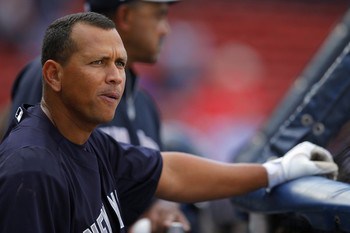
New York Yankees' Alex Rodriguez stretches before American League baseball game at Fenway Park in Boston

In a decision that further defines major league baseball’s cultural standards regarding performance enhancing drugs and the players who use them, New York Yankee Alex Rodriguez was suspended for the entire 2014 season and post-season by an arbitrator yesterday. Rodriguez, a long-time superstar who was once considered a lock to break baseball’s career home run record, and who is the highest paid player in the game, was suspended for illicit drug use without testing positive under the game’s union-negotiated testing system. He was, instead, suspended for a violation of the player’s Basic Agreement under baseball management’s right to police the game and do what is in its best interests.

The evidence that Rodriguez was a flagrant and long-time steroid abuser came from documents obtained from Biogenesis, a lab that developed drugs for athletes and others, as well as convincing testimony. Rodriguez had challenged the suspension in a grievance procedure after MLB handed down a 211 game suspension during the 2013 season. The arbitrator’s ruling, which is confidential, apparently concluded that the player not only cheated, but obstructed efforts to enforce baseball’s intensified anti-drug measures in the wake of the wide-spread use of PEDs in the 90’s and thereafter.

As expected, the result produced the usual complaints and rationalizations from the disturbingly large contingent of baseball fans and writers who remain obdurate regarding the offensiveness of steroid cheating, claiming that it was “a part of the game,” that the objections to it are inconsistent, and that baseball’s vilification of users is hypocritical. They had been practicing these and related arguments for months as they waited for the baseball Hall of Fame voting results announced last week, in which about 65% of the voters showed that they regarded steroid use as a disqualification for the honor, even when a player-user had excelled on the field. Rodriquez’s defeat deeply undermines the cause of the steroid defenders, and the likelihood that their argument will ever prevail. Continue reading

Ethics Dunce: ARod-Plunking Red Sox Pitcher Ryan Dempster

I’ll admit it: I came thiiiiis close to designating Red Sox pitcher Ryan Dempster an Ethics Hero. Right after he intentionally threw a fastball  into Alex Rodriguez’s ribs on what would have been ball four, I was ready to write the post. Good for Dempster, I thought, making a statement for all the players who deplore steroids and the cheats who use them and for all the fans who feel that sociopathic, lying, greedy players who have debased the greatest game on earth with their use of PEDs. I continued to think that even after the Red Sox lost last night’s game against the Yankees, in no small part because Dempster put the Yankee third baseman, who continues to play while he appeals Major League Baseball’s suspension of him for this season and next, on base.

I was not, however, thinking clearly or ethically at the time.

Now, I am. Continue reading

The Ethics of Cheering Alex Rodriguez

Poor Alex Rodriguez and his wife...

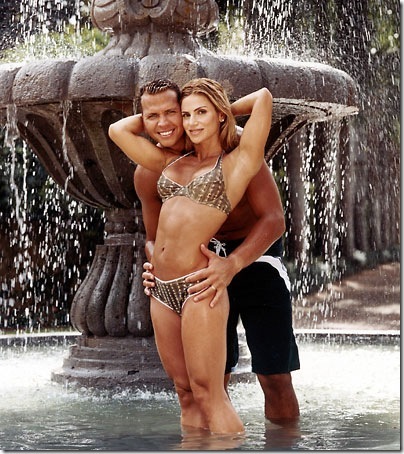
Poor, downtrodden, Alex Rodriguez and his wife…

Baseball’s most embarrassing super-star, the steroid cheat Alex Rodriguez, in playing for the New York Yankees while appealing his long suspension by Major League baseball. As he is unquestionably a repeat liar and a serial violator of the game’s rules against PED’s (performance enhancing drugs), as he signed a contract, in part generated by the results of his cheating, that will both enrich him by millions and handicap his team competitively while conferring few, if any benefits, as he would qualify, by most objective standards, as the antithesis of a sports hero, the fact that Arod, as he is called, still was cheered by a vocal minority in Yankee Stadium when he made his season debut this week is intriguing. What does this mean? Can it be ethical to cheer Rodriquez now?

These are deceptively complex and difficult questions. The threshold  issue is whether cheering or jeering any sports figure, or any public figure at all, is an act with ethical content rather than just a communication of an opinion. Is it conduct, or just “words”? I think, in the context of the Rodriquez situation, a sound argument can be made that it is conduct. Registering group approval or disapproval of prominent conduct by someone of status and influence is a crucial societal function in setting standards, registering disapproval, and prompting shame, regret, apology and reform—none of which, so far at least, seem to register with Arod.

That is pretty clearly what the boos convey, but what about the cheers? If the boos are ethical—they are if the disapproval is proportionate, rational, fair, and just—then are the cheers automatically unethical? Not necessarily. Here are some of the things those cheers could be expressing: Continue reading

Ethics Corrupter: Yankee Third Baseman Alex Rodriquez; Ethics Dunce: Yankee Manager Joe Girardi; Disgraced: The New York Yankees

Corrupted!

Corrupted!

Today, Major League Baseball announced that it was suspending Alex Rodriquez, the New York Yankees aging superstar, for the remainder of the 2013 season and the 2014 season for  using banned performance enhancing drugs, and impeding baseball’s investigation of his cheating. This was the climax (but not the end) of a long, drawn out, messy process and investigation involving a sleazy Miami drug lab, called Biogenesis, now closed down, which had records indicating that many professional baseball players had obtained banned substances.

Former National League MVP Ryan Braun (who I keep calling “Steve”) has already been banned for the rest of the year by the evidence obtained from Biogenesis records. The process has been marred by serial leaks from MLB  (unfair to the players involved, including Rodriquez) and ugly maneuvering between Rodriguez, who has been recovering from a serious hip issue, and the Yankees, who owe him approximately a gazillion dollars (thanks to an idiotic career contract signed in 2007 after he had already admitted to using steroids once), would like nothing more than for him to vanish in a puff of smoke and sulfur.

To explain the baroque ins and outs of baseball’s steroid wars, its player union relations, and the various intersecting agreements, special clauses and other things that have an impact on Rodriquez’s suspension would take too long here and would even bore the baseball fans. What you need to know now is this: Continue reading

The Ethics Incompleteness Dilemma and MLB’s Melky Cabrera “Solution”

Who cares what Melky wants?

[ When we last visited the messy Melky Cabrera situation, people were clamoring for baseball to rule Cabrera ineligible for the National League batting championship he seemed destined to win because the Giants outfielder had been suspended for the rest of the season for testing positive for steroids. The suspension froze his average, then as now leading the NL, and because he had already amassed sufficient at bats to qualify for the title, this meant that 1) he would benefit from what was supposed to be a punishment and 2) the most prestigious of all baseball season titles would be won by a proven cheater. I explained why taking the title away from Melky would be unethical as well as unwise:

“…There is a very good reason why the Constitution bans ex post facto laws—laws that make something illegal retroactively, so someone can become a criminal for something they did that was legal when they did it. Allowing such rules is an invitation to an abuse of power, culminating, in the worst case scenario, with the modern day equivalents of the Russian or French Revolutions, where people are executed for “crimes” that were not crimes at all. Even cheaters have rights, and one of them is to know what their risks are when they cheat. Cabrera knew that he risked suspension, a loss of millions in income, and permanent harm to his reputation and career. He did not know that he risked not winning a batting championship if he qualified for it, or being put in the stocks, being exiled to Portugal, or having his children subjected to human medical experiments. Should a player suspended for performing enhancing drug use after testing positive be disqualified from winning a batting championship that season? That seems fair and reasonable, but because Major League Baseball didn’t think of it when they were making the rules, it would be unfair for Cabrera to be subjected to such a penalty, which would embody the inherently unfair principle of an ex post facto law. Some people just can’t process this. People just shouldn’t get away with intentional bad conduct, they say. …Such people are unwittingly willing to dismember the bedrock principle of due process, which requires that we know by what rules and laws our conduct society will use to judge our conduct, and that we know what the penalties for violating them will be, or at least have a the opportunity to find these things out. No, of course it’s not fair for Melky Cabrera to win a batting championship by cheating, but a society that allows him to be penalized in ways he could not have anticipated using a rule imposed after the fact is an unfair society, and ethics is ultimately about building a more ethical society.”

Bud Selig, the Commissioner of Baseball who is always as likely to make a terrible decision as a good one, said that he would not take any action on the matter. But that was not the end of the story…]

Yesterday, Major League Baseball announced that Melky Cabrera would not be eligible for the batting title after all. Continue reading