Ethics Quiz: “The Penniless Girl” And The Yechhh! Competition

"Hey...I'm cute, without shame, ambitious, mean...I could be a reality TV star!"

“Hey…I’m cute, without shame, ambitious, mean…I could be a reality TV star!”

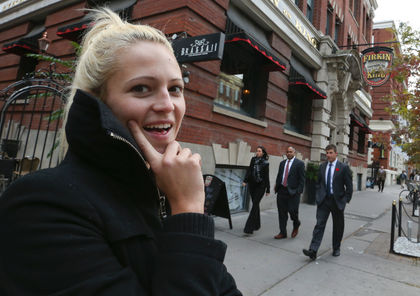
Actress Erin Wotherspoon, 24, lives in Toronto and has an unusual avocation. As she describes it on “A Penniless Girl, Bad Dates and Plenty of Oysters”,

“I’ve got a pretty face & a pretty extensive urban spoon wish list…We all know that getting what you want in life can be tough. Which is why I’ve decided to let someone else finance my dreams. My dream? To eat in pretty restaurants without costing me a penny. You had me at Elk Tartare, lost me at chin strap. Follow me to learn who I screw over, bang and love as I navigate Toronto’s diners, drive-ins & dives.”

Yes, as breezily chronicled on the Tumblr blog, Erin entices unenticing, lonely and hopeful men to feed her at Toronto’s best eateries, then dumps them unceremoniously once the bill has been paid. As her mission statement above demonstrates, she doesn’t see anything wrong with this, despite the fact that it is dishonest, cruel, manipulative and a straight-up violation of both Kantian ethics (don’t use people) and the Golden Rule, as well as a pure as crap example of an ends justifies the means life philosophy. Are some of Erin’s escorts using her as well, essentially buying faux affectionate companionship for the cost of some elk tartare? Oh, surely. Such individuals use their affluence to sully the dignity and integrity of others for a price. The fact that one is being unethical in his dealings with another who is also unethical—mutual users, mutual corrupters—is no justification.

Now, as someone—maybe even Erin—could have predicted, a U.S. reality show producer wants to make a star out of her, and it appears that we may soon be able to watch Ellen dupe wannabe sugar daddies into delicious and free meals weekly.Then she can give an interview to GQ and explain why gays are sinners.

Your Ethics Alarms Ethics Quiz as 2013 winds down to an ethically depressing finale:

Who is more unethical: “the Penniless Girl” or the TV executives who want to make her rich and famous?

For me, it’s an easy call: the reality show purveyors are much worse than Erin. Selfish, deceptive, exploitive conduct is wrong and more harmful to society the more of it we get. Reality shows and the other ways the United States and its media reward terrible conduct—CNN giving Eliot Spitzer his own show, MSNBC doing the same with Al Sharpton, Fox employing sleazy (but famously sleazy!) Dick Morris, and the radio shows for the likes of Ollie North and G. Gordon Liddy come to mind, and now I’m nauseous again—make being unethical (or drunk, or stupid, or pathetic) a ticket to stardom, and even a desirable career path. It isn’t only reality shows, of course. It’s Republicans cheering Phil Robertson as if what he said wasn’t offensive; it’s Joe Wilson getting boat-loads of contributions off of shouting “You Lie!” at the President of the United States; it’s Tom Delay and Kim Kardashian getting gigs on “Dancing With The Stars” for being indicted and making a sex tape, respectively; it’s Kanye West, Miley Cyrus and other pop “sensations” receiving dawn to dusk publicity and inflated recording sales by behaving badly. We stifle liberty and expression by organizing boycotts against those whose conduct is objectively or subjectively offensive, but to reward them for it is courting cultural suicide, and turning the usual process of establishing healthy societal standards upside-down and inside out.

________________________________

Pointer: Fark

Facts: Toronto Sun, Tumblr

Graphic: Toronto Sun

A Handbook For Manipulation and Deceit, Rationalizations Included

PreventingGunViolence

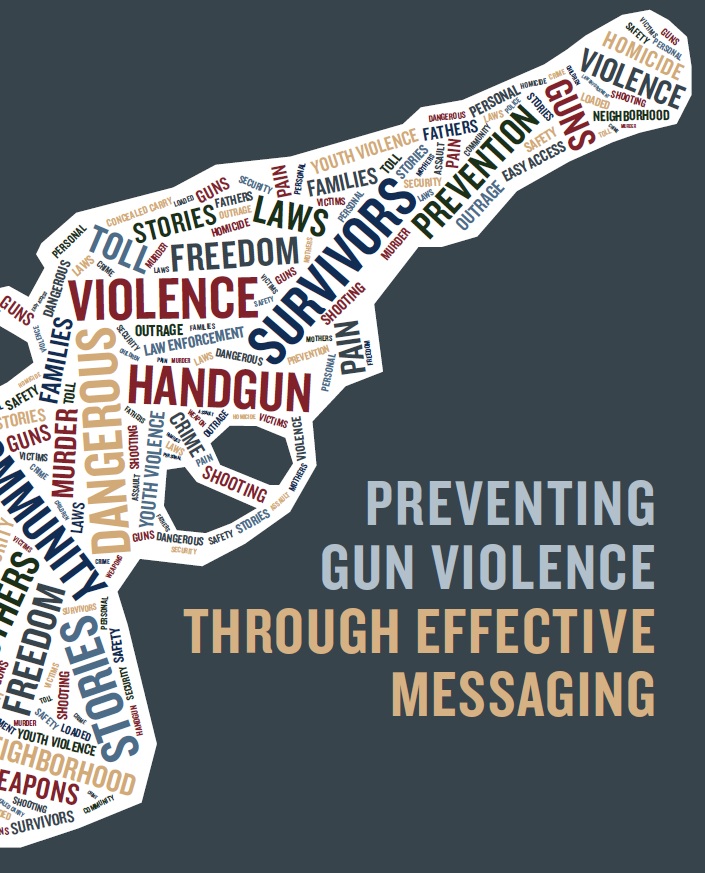
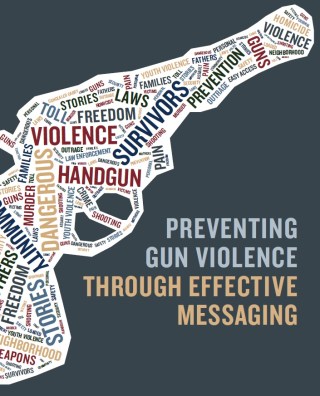
This wasn’t considered newsworthy by the mainstream media, and that alone is worthy of some pondering: a 70-plus page how-to guide titled “Preventing Gun Violence Through Effective Messaging” has surfaced, produced last year by the Washington, D.C.-based firm of Greenberg Quinlan Rosner.* The guide is a political strategy lesson for anti-gun advocacy, and its favored tactics involve emphasizing emotional hot-buttons over rational discourse and informative debate. The manual was produced, it appears, for the Seattle-based Washington Alliance for Gun Responsibility (WAGR) before the Sandy Hook tragedy, but its advice tracks in every way with the approach employed by Democrats, including President Obama, during the disgraceful rush to exploit public horror over the shooting in an effort to pass strong anti-gun measures in the states and nationally.

Of course this is newsworthy. The public is the target of manipulation, deception and persuasion tactics that are designed to provoke half-baked opinions and positions based on emotion rather than rational analysis. If the public recognizes such tactics as the cynical ploys they are, such tactics will not be as effective. Such tactics shouldn’t be effective, and should be employed by honest, ethical advocates on any side of any issue. The mainstream media chose not to publicize the manual because 1) most reporters agree with the manual’s objective, and 2) the mainstream media eagerly facilitated the unethical methods recommended, and will probably continue to do so.

“The debate over gun violence in America is periodically punctuated by high-profile gun violence incidents including Columbine, Virginia Tech, Tucson, the Trayvon Martin killing, Aurora, and Oak Creek,” the guide points out. “When an incident such as these attracts sustained media attention, it creates a unique climate for our communications efforts.”  Early on, the document it makes it clear that the “communication efforts” must always concentrate on stirring up emotions, not relying on facts or engaging in substantive debate. “A high-profile gun violence incident temporarily draws more people into the conversation about gun violence. We should rely on emotionally powerful language, feelings and images to bring home the terrible impact of gun violence.”

For example,  the guide addresses Stand Your Ground laws and advises substituting pejorative (and misleading) descriptions like  “Shoot First” and “Kill at Will,” asserting that these terms are “more accurate and persuasive.” At every turn, the guide cautions against getting bogged down in potentially nuanced statistics and facts, and urges anti-gun advocates to overwhelm any efforts at balancing or considering pros and cons with talking points based on  emotion salted with one-sided, group-tested statistics and generalities...”The core frame should be personal and emotional—centered on ‘people’ and not on facts, laws, or legislation.”  The top things to remember, cautions the guide,

#1: ALWAYS START WITH THE PAIN AND ANGUISH THAT GUN VIOLENCE BRINGS INTO PEOPLE’S LIVES

#2: USE STATISTICS TO REINFORCE AN EMOTIONAL ARGUMENT, NOT TO REPLACE IT.

Recommended phrases to use in forums and interviews include,

  • “It breaks my heart that every day in our country (state or city) children wake up worried and frightened about getting shot.”
  • “Just imagine the pain that a mother or father feels when their young child is gunned down.”
  • ” The real outrage – the thing that makes this violence so unforgivable – is that we know how to stop it and we’re not getting it done”

To the authors of the guide, effective persuasion “means emphasizing emotion over policy prescriptions, keeping our facts and our case simple and direct, and avoiding arguments that leave people thinking they don’t know enough about the topic to weigh in.”

That’s right, keep them ignorant and thinking that they aren’t. It’s the American way.

The guide is professional and well-thought out. It is certainly a useful document for any advocate to study before going on a talk show, or before drafting remarks at a rally, and it is obvious that this is exactly what such advocates do, if not with this document, then with similar ones. It is creepy to read line after line that is immediately recognizable as an endlessly repeated “talking point” during the Trayvon Martin uproar and the Sandy Hook aftermath. The manual also could grow cynicism on a rock. There is nothing honest or genuine about the political and policy-making process that the guide presupposes and attempts to control. There is nothing productive either. The objective is only to win—to get a desired policy initiative past the stage where public support is important and into the back rooms where the deals can be cut . You know that there was an equivalent document during the Affordable Health Care Act. These are blueprints for rushing policies into law, not for educating the public or fairly exploring complex issues before taking giant leaps of faith. They are, in short, instruction books on how to exploit the ignorance of the American people and distort the democratic process.

This is a bi-partisan practice, of course. The only difference between this guide and those produced by conservative consultants is that if one of those was found, the mainstream media would have reported it, Media Matters would have announced that it was a smoking gun document showing how evil Republicans corrupt America with their lies, and on MSNBC, Lawrence O’Donnell would have smirked over it for a week.

The number of rationalizations at the ready, therefore, begin powerfully with “Everybody does it” (#1 on the Rationalizations list). So is, as a direct result, #2, “They’re just as bad” and #7, “Tit for tat,” Such a document and the politics behind it also invokes #3, Consequentialism, and #4, Marion Barry’s favorite, “If it’s legal, it’s ethical.”  It employs # 11, the Dissonance Drag, since the reason it will be deemed acceptable by anti-gun types is because they happen to like the people using the strategy; if the same document outlined the NRA’s approach, they would sincerely and passionately feel it was despicable.

It is the very embodiment of The Saint’s Excuse (#12), otherwise known as “It’s for a good cause,” as well as #13, Self-Validating Virtue. #17,  Hamm’s Excuse or “It wasn’t my fault,” is one of the predictable responses to criticism: “Hey, this is how the game is played. We didn’t make these rules; this has been going on for decades. Don’t blame us!”  My least favorite rationalization of all, #22, Comparative Virtue,  “There are worse things,” is also in play; so is “We have no choice” (because the evil NRA keeps buying legislators and rational debate doesn’t work!), # 24#27, “These are not ordinary times!” is a natural, of course.  So is #30, The Troublesome Luxury, usually expressed as “Ethics is a luxury we can’t afford right now!”

Politics being politics, it’s perfect for #31, The Unethical Role Model, as in “Thomas Jefferson/Abe Lincoln/ Jack Kennedy would have done the same thing.” Heck…A new book suggests Jesus might have done the same thing!

Fourteen out of thirty-two possible rationalizations is an impressive arsenal, all right, but they are still rationalizations for what is a Machiavellian, “the ends justifies the means,” “by any means necessary,” unethical strategy that intentionally aims at the weaknesses of democracy and exploits them through the cynical use of psychology, manipulation, and deceit. Yeah, I know, it works, just as so many methods used by governments and interest groups to deceive the public and warp their perceptions have worked and work still.

That’s not really working, though, is it now? Causing a system designed to involve an informed and rational citizenry  to malfunction by exploiting laziness, ignorance and hysteria isn’t working, just because it succeeds. In fact, such tactics result in the kind of politics and government we have right now.

That is called, not working, but failing.

* According to the guide, Quinlan was part of “a team of communicators” with “decades of experience advising organizations on message development and strategic communications.” Other members of this team were Frank O’Brien, creative director and founder of OMP, another Washington, D.C.-based firm, and Jeff Neffinger and Matthew Kohut at KNP Communications, also headquartered in Washington, D.C. Among GQR’s clients are the Mayors Against Illegal Guns, the Joyce Foundation, several state education associations, Defenders of Wildlife, National Public Radio and the Sierra Club. Among OMP’s clients are Planned Parenthood of America and the Natural Resources Defense Council.

_______________________________________

Sources: WSJ, Washington Examiner, Examiner
Mind Control? My Alarm Is Ringing. Should It Be?

Kirk Mind

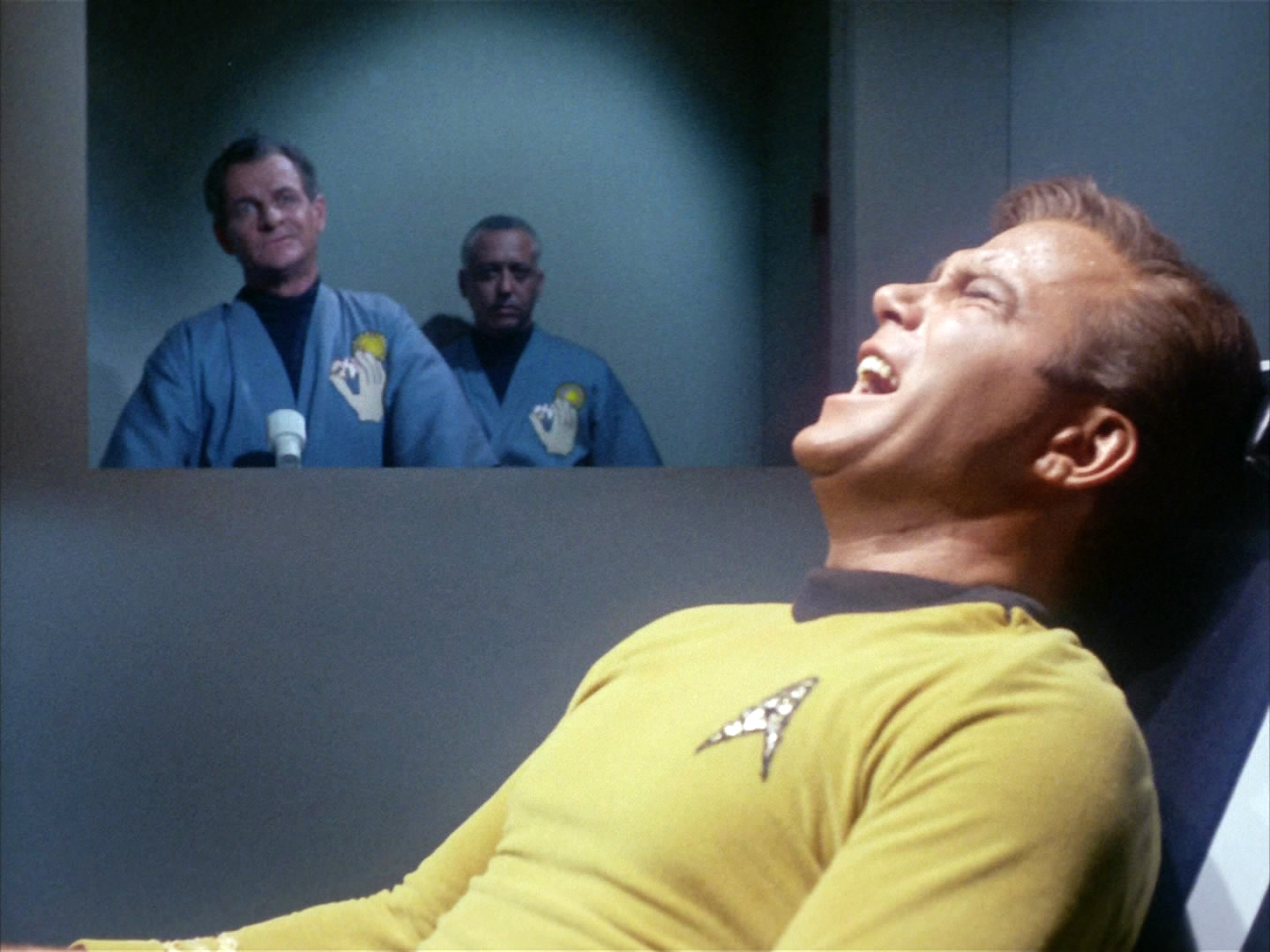
Harvard researchers are on the way to perfecting brain-to-brain interfaces, permitting a human to control the behavior and eventually instincts and emotions of other creatures with thought alone. Continue reading

Gabrielle Giffords:The Helpless Pawn On The Ethics Train Wreck

Pawn

Ex-Rep. Gabrielle Giffords


James Taranto, the witty conservative commentator on the Wall Street Journal’s “Best of the Web” blog, properly takes aim at the New York Times op-ed supposedly authored by former Congresswoman Gabrielle Giffords, and shoots it full of holes, quite accurately finding the piece guilty of almost every ethical violation that has characterized the shameless, and deservedly unsuccessful, effort to exploit the Sandy Hook massacre for gun reform. “Giffords’s 900-word jeremiad should be included in every textbook of logic and political rhetoric, so rife is it with examples of fallacious reasoning and demagogic appeals,’ he writes, noting that she is a “practitioner of incivility and unreason.”  Some of Taranto’s indictments:

  • “The argumentum ad passiones, or appeal to emotion. She leads with this one: “Senators say they fear the N.R.A. and the gun lobby. But I think that fear must be nothing compared to the fear the first graders in Sandy Hook Elementary School felt as their lives ended in a hail of bullets. The fear that those children who survived the massacre must feel every time they remember their teachers stacking them into closets and bathrooms, whispering that they loved them, so that love would be the last thing the students heard if the gunman found them.” Continue reading

Why The Gun Bill Deserved To Lose, and Why We Should All Be Glad It Did

A bad day for Machiavelli is a good day for America.

A bad day for Machiavelli is a good day for America.

Consequentialism rules supreme in Washington, D.C.; that is the tragedy of our political system. If unethical conduct is perceived as having a positive outcome, few in D.C. will continue to condemn the means whereby those beneficial and lauded were achieved. Worse, the results will be seen as validating the tactics, moving them from the category of ethically objectionable into standard practice, and for both political parties

Thus we should all reluctantly cheer the likely demise of the Senate’s gun control bill yesterday. The compromise background check provision that failed wasn’t perfect, but it would have been an improvement over the current system. Nevertheless, the post-Sandy Hook tactics of gun control advocates, including the President and most of the media, have been so misleading, cynical, manipulative and offensive that their tactics needed to be discouraged by the only thing that has real influence in the nation’s Capital: embarrassing failure.

The tainted enterprise begins with the fact that it should not have been a priority at this time at all. Newtown did not signal a crisis; it was one event, and that particular bloody horse had left the barn. The supposedly urgent need to “prevent more Sandy Hooks” was imaginary, but it apparently served the President’s purpose of distracting attention from more genuinely pressing matters, notably the stalled employment situation and the need to find common ground with Republican on deficit and debt reduction. Meanwhile, the conditions in Syria have been deteriorating and North Korea is threatening nuclear war: why, at this time, was the President of the United states acting as if gun control was at the top of his agenda? It was irresponsible, placing political grandstanding above governing. In this context, Obama’s angry words yesterday about the bill’s defeat being caused by “politics” were stunningly hypocritical. The whole effort by his party was about nothing other than politics. Continue reading

Unethical Quote of the Month: Alexandra Pelosi

“I don’t ask for permission. I think anytime you have to ask for permission your project is doomed.”

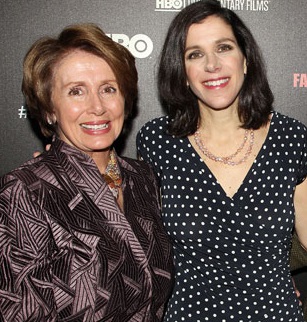
—-Alexandra Pelosi, political documentary film-maker (and daughter of you-know-who), speaking about her embrace of the unethical philosophy, “It’s easier to ask for forgiveness than to get permission,” or in her version, “It’s better to beg for forgiveness than to ask for permission.” Pelosi employed a bait-and switch ruse to made former New Jersey Governor Jim McGreavey the subject of her latest documentary.

Mother taught her well...

Mother taught her well…

If Pelosi is correct, then she is in an inherently unethical profession, and shameless about it. If Pelosi is correct, then all documentary film-makers are indistinguishable from other manipulative deceivers like Sasha Baron Cohen, James O’Keefe, Michael Moore, and her. She is not correct, however. There are many celebrated, honest, straightforward documentary makers who get proper permission from subjects before they put them on camera, respecting their autonomy and privacy and engaging with them fairly. The fact that Pelosi sees no need for this tells us all we need to know about her documentaries.  She believes that the ends justify the means, so she can’t be trusted. She will employ chicanery, deception, and lies in order to make a commercially viable film, which will be worth approximately as much, from a documentation standpoint, as her word: nothing.

The context of Pelosi’s smug endorsement of deception as her SOP was the description of how she filmed McGreavey in his new life since resigning as governor and announcing that he was gay. Pelosi persuaded McGreevey to let her follow him around, but not to make a documentary, which McGreevey’s partner, Mark O’Donnell, opposed. Pelosi told Politico, “I don’t think he thought I was making a movie. I think he thought I was just hanging around.” Then, after the documentary was completed, Pelosi says she told her unwitting and deceived star,  “You have a choice. You can support the bigger picture of what the movie is trying to say, which is about the theme of redemption and second acts, or you can not sign a release and this film will go to waste.” McGreevey should have said, of course, “Go to hell. You lied to me. You won’t have my release, and if you show it to anyone, I’ll sue you right back to living in your mother’s house.” Pelosi, however, as master con artist must, chose her victim well. Though “he was not happy,” McGreevey signed the release. Continue reading

Ethics Quote of the Week, Sandy Hook Ethics Train Wreck Division: WSJ Blogger James Taranto

“It’s like a proponent of laws against hate speech standing on a street corner shouting racial slurs in order to “demonstrate how easy it is” to say offensive things under the First Amendment. Of course it’s ‘easy’ to do something that is perfectly legal and protected by the Constitution. That doesn’t mean you ought to do it, especially if you claim to believe it is wrong.”

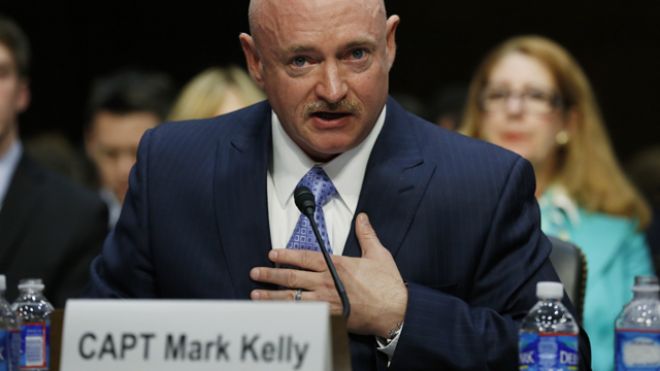
—–Wall Street Journal blogger, pundit and wit James Taranto, describing the “stupid stunt”perpetrated  by Mark Kelly, the husband of  former Rep. Gaby Giffords, in which he purchased the kind of weapon he and his wife have been lobbying Congress to ban, a so-called “assault weapon,” in order to “demonstrate how easy it is to obtain” one.

At least Kelly didn’t break the law, like David Gregory, to show how easy it was to get an illegal magazine in Washington, D.C.


If this is the best argument you have...be quiet.

If this is the best argument you have…be quiet.

Is this hypocrisy? No, it’s not hypocrisy. Kelly’s act is reminiscent, though not as certifiably cretinous, of stunt pulled by the foolish Ronald Miller, who walked into his child’s school and announced that he was going to start shooting people, just to show that he could. Kelly proved nothing. To someone who believes that a law-abiding citizen who believes he needs an assault weapon to protect his family against home invaders, Rodney King-style riots or the breakdown of civilization (never mind what Joe Biden or Andrew Cuomo think he needs), Kelly’s purchase proved only that the system works: a law-abiding citizen can buy a legal gun. The Horror. To anti-gun crusaders, Kelly proved that a gun they think should be made illegal is legal—but presumably they already knew that. Kelly was trying to demonstrate that legal conduct should be made illegal because people can currently do it?

Okaaaaay… Continue reading

Be Very Afraid: Why Fake Statistics Become “True”

"Those nachos were COLD!!!"

“Those nachos were COLD!!!”

Last week, I wrote about how fake statistics become “true,” after Gabriella Giffords’ husband Mark Kelly asserted as fact that “85% of all children killed by gunfire worldwide die in the U.S.” while ABC’s Diane Sawyer tut-tutted approvingly. Credible advocate, shocking statistic, passive, lazy and biased journalist, politically correct objective—all the elements were in place. We will hear this lie for decades now, probably in a future Presidential debate.

Now the perceptive and watchful James Taranto of the Wall Street Journal has found a smoky gun that tells us much about why we get so many bad statistics, and why the media supports them. A U.S. World and News Report article combined the recent passage of  the Violence Against Women Act with the upcoming Super Bowl, to get this:

“Urban myths rarely have a useful purpose other than to confound, outrage, and frighten people into passing them along. But there’s a silver lining to this one—the idea that Super Bowl Sunday is linked to the highest incidences of domestic abuse in the country. While experts in the field dismiss that theory, they value the increased attention paid to domestic violence on the occasion.

“‘The Super Bowl does not cause domestic violence, and it doesn’t increase domestic violence, but it does increase the public’s awareness of the issue, which will help victims learn about help and resources,” says Cindy Southworth, vice president of development and innovation at the National Network to End Domestic Violence.'”

Oh. Well then the lie is all right then! Continue reading

ARRGGH!! Beyonce..ARRRRGHH!!!

Misdirection

Just “Arrrrgh!”

First, Beyonce ducks a question (at pre-Super Bowl  press conference) about whether she really lip-synced the National Anthem at the Inauguration, as discussed extensively here , here, and here,

http://www.youtube.com/watch?v=nU9pDMv-1Qk

by using Clintonian parsing—no, she wasn’t lip-syncing ( because that means just moving one’s lips to a song, and technically she was singing. It’s just that the audience may have been hearing her recording and not her real voice.) Then she “answers”…by singing the song, brilliantly, without accompaniment. (Of course it was planned.) Then CNN’s awful morning anchor Carol Costello AND CNN’s headline writer state that Beyonce “answered her critics” by doing so.

For the love of…Arrrrgh!

That was NOT an answer! This was masterful, if screamingly obvious (to all but CNN) misdirection and manipulation.The question posed was not “Can you sing “The Star Spangled Banner?,” but “Did you lip-sync?”, which means, as she well knows, “Did you sing it live at the Inauguration, and was the live rendition what we heard?” Her rendition of the song at the press conference was no more responsive to the question than a sudden riff on “Trouble in River City” or “Turkey in the Straw.” Then pathetic CNN calls it an answer, as if singing the song two weeks after the event in question settles the issue. Our professional journalism establishment at work. (in the version I saw, Costello didn’t even mention that Beyonce gave a technical “no” to the “did you lip-sync?” query before bursting into song.

ARRRRGHHH!

 Beyonce could have cleared up the controversy weeks ago by either admitting that she lip-synced, or by denying it. Asked about the matter directly, in front of TV cameras, she avoided the question again. That was an answer, all right, but not the one CNN and the singer implied it was.

The answer was “Yes.”

____________________________________

Spark: CNN

Graphic: Soda Head

Embarassing Democracy: Gabrielle Giffords and Government by Fallacy

Giffords Notes

The estimable website Fallacy Files contains much wisdom and many tools, most aimed at helping human beings avoid stupidity and the poor decisions it generates. Among the logical fallacies it documents are the flawed appeals, arguments for a proposition based on the supposed authority of an argument of a person based on factors that should have no bearing on the debate at all. A familiar example is the appeal to ignorance, in which an advocate argues that there is no evidence that X is true, ergo X must be false.

Yesterday, gunshot victim and former Representative Gabriella Giffords made what was called “a surprise appearance” at the U.S. Senate (don’t get me started on how much of a “surprise” it was—just try showing up to testify before the U.S. Senate as a “surprise” and see how far you get.) and made what was widely called “powerful testimony” advocating gun control legislation. It wasn’t powerful testimony; it was pathetic testimony. It contributed neither information nor reasoning to the debate. Giffords said, carefully, in labored speech, “Speaking is difficult. I need to say something important. Violence is a big problem. Too many children are dying. Too many children. We must do something.  It will be hard, but the time is now. You must act. Be bold, be courageous, Americans are counting on you.” Despicably, some Left-wing blogs even managed to use her appearance to further the MSNBC lie that a Sandy Hook’s victim’s father had been “heckled” during his testimony before the Connecticut legislature. “You’ll notice that NOBODY dared to heckle Gabby as she was speaking,” commented one.

Giffords’ testimony wasn’t “powerful.” It was pathetic. It was, in fact, a classic example of another logical fallacy documented by the Fallacy File, the appeal to pity, where emotion is used as a substitute for facts, logic and argument. Continue reading