Happy Birthday, George Washington From Ethics Alarms, And Thank Your Dad For Us Too…

It’s George Washington’s birthday. Nine years ago I wrote, in one of my annual posts on perhaps our most important President (George Will calls him “the Indispensable Man) that something has gone seriously wrong when one’s blog has 287 posts on Donald Trump and only six about Washington. I don’t even want to think about what the count is now, but here is another one in George’s column.

George Washington’s father Augustine had at one time or another run across a list of 110 virtues that young men should adopt and practice in order to be become civil, respectful and honorable members of polite society. He made George, and presumably all his sons (he had six of them) copy them by hand to aid in memorizing the list. George, at least, dutifully committed to memory “110 Rules of Civility & Decent Behavior in Company and Conversation,”  which was  based on a document composed by French Jesuits in 1595; neither the author nor the English translator and adapter are known today. The elder Washington was following the theory of Aristotle, who held that principles and values began as being externally imposed by authority (morals) and eventually became internalized as character.

Those ethics alarms installed by his father stayed in working order throughout George’s remarkable life. It was said that Washington was known to quote the rules when appropriate, and never forgot them. They did not teach him to be the gifted leader he became, but they helped to make him a trustworthy one.

The list has been available on Ethics Alarms under Rule Book since its beginnings in 2009. By all means read the whole list; I have used it often in ethics seminars but haven’t referred to it here for too long. The 90 rules omitted in the list below contain some gems too, and many that raise curiosity about what exactly the author was thinking of. For example, I find #2. “When in company, put not your hands to any part of the body not usually discovered” and #3. “Show nothing to your friend that may affright him” intriguing.

Below are my 20 favorite entries from the list that helped make George George, therefore helped George make America America:

The Cast Of ABC’s “Modern Family” Attends A Promotional Screening Of The Show’s Season Finale: Discuss.

The actress is 19-year-old Ariel Winter, and suggested topics are standards, good taste, manners, modesty, decorum, respect, exhibitionism and narcissism.

Also showboating, and “when teens need a good talking-to by a responsible adult.”

I Forgot George Washington’s Birthday! In Penance…

portrait_of_george_washington

If there is any American whose birthday none of us should fail to note and celebrate, it is George Washington. In my case, he is in good company, since I have had difficulty my whole life remembering birthdays of close family members and friends, with the exception of my son’s, once the Boston Red Sox finally won their first World Series in 86 years on the same date, and my own, which I have been trying to forget ever since finding my dad dead in his chair on that date eight years ago. Nonetheless, my failure to salute the first and indispensable President is especially disgraceful for an ethics blog, and I apologize both to George and to all of you.

Time flies: I hadn’t issued a post specifically devoted to George’s remarkable character since 2011. (Something has gone seriously wrong when one has 287 posts on Donald Trump and only six about Washington.) In penance, allow me to atone with my favorite entry’s on the list of ethical habits some historians believe made him the remarkably trustworthy and ethical man he was, ultimately leading his fellow Founders to choose him, and not one the many  more brilliant, learned and accomplished among them, to take on the crucial challenge of creating the American Presidency.

Directed to do so by his father, young Washington had copied out by hand and committed to memory a list called “110 Rules of Civility & Decent Behavior in Company and Conversation”  It was  based on a document  composed by French Jesuits in 1595; neither the author nor the English translator and adapter are known today. The elder Washington was following the teachings of Aristotle, who held that principles and values began as being externally imposed by authority (morals) and eventually became internalized as character.

The theory certainly worked with George Washington. Those ethics alarms installed by his father stayed in working order throughout his life. It was said that Washington was known to quote the rules when appropriate, and never forgot them. They did not teach him to be a gifted leader, but they helped to make him a trustworthy one.

The list has been available at a link here (under Rule Book, to your left), almost from the beginning of Ethics Alarms. Would that readers would access it more often. Here are my 20 favorite highlights from the list that helped make George George, and also helped George make America America: Continue reading
“Ghosting” Is Unethical

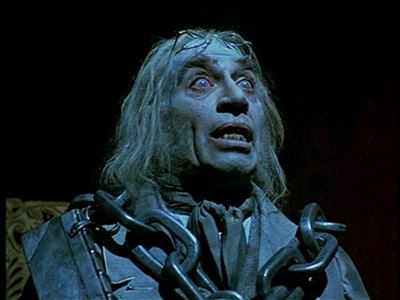
I don't care if you are dead, Marley; when you leave my party, say good-bye.

I don’t care if you are dead, Marley; when you leave my party, say good-bye.

Slate contributor Seth Stevenson has an interesting justification for being rude: good manners are too much trouble.

This is the way the world ends, as T.S. Elliot would say.

Stevenson argues that instead of saying goodbye and thank-you to one’s host at a party, the best way to exit is “the Irish good-bye,” or in its non-ethnic stereotype form (Irish guests are presumed too drunk to say good-bye, you see), “ghosting.” “Yes, I know,” he writes. “You’re going to tell me it’s rude to leave without saying goodbye. This moral judgment is implicit in the culturally derogatory nicknames ghosting has been burdened with over the centuries.” That sentence is signature significance for me: Stevenson is an unethical jerk. I get comments and e-mails all the time accusing Ethics Alarms of “moralizing” or being “sanctimonious” when I write that obviously unethical conduct is obviously unethical. That’s because unethical people who do unethical things feel much better about themselves if nobody calls them on it, so they can maintain, as one recent commenter did here who was, I’m proud to say, chased away by the rest of you (and me) with torches and pitchforks, that ethics is “100% subjective”—Translation: “If I want to do it, it’s ethical.”

That’s essentially Stevenson’s reasoning, too.  “Is it really so bad to bounce without fanfare?,” he asks. Continue reading

Now THIS Is Incivility!

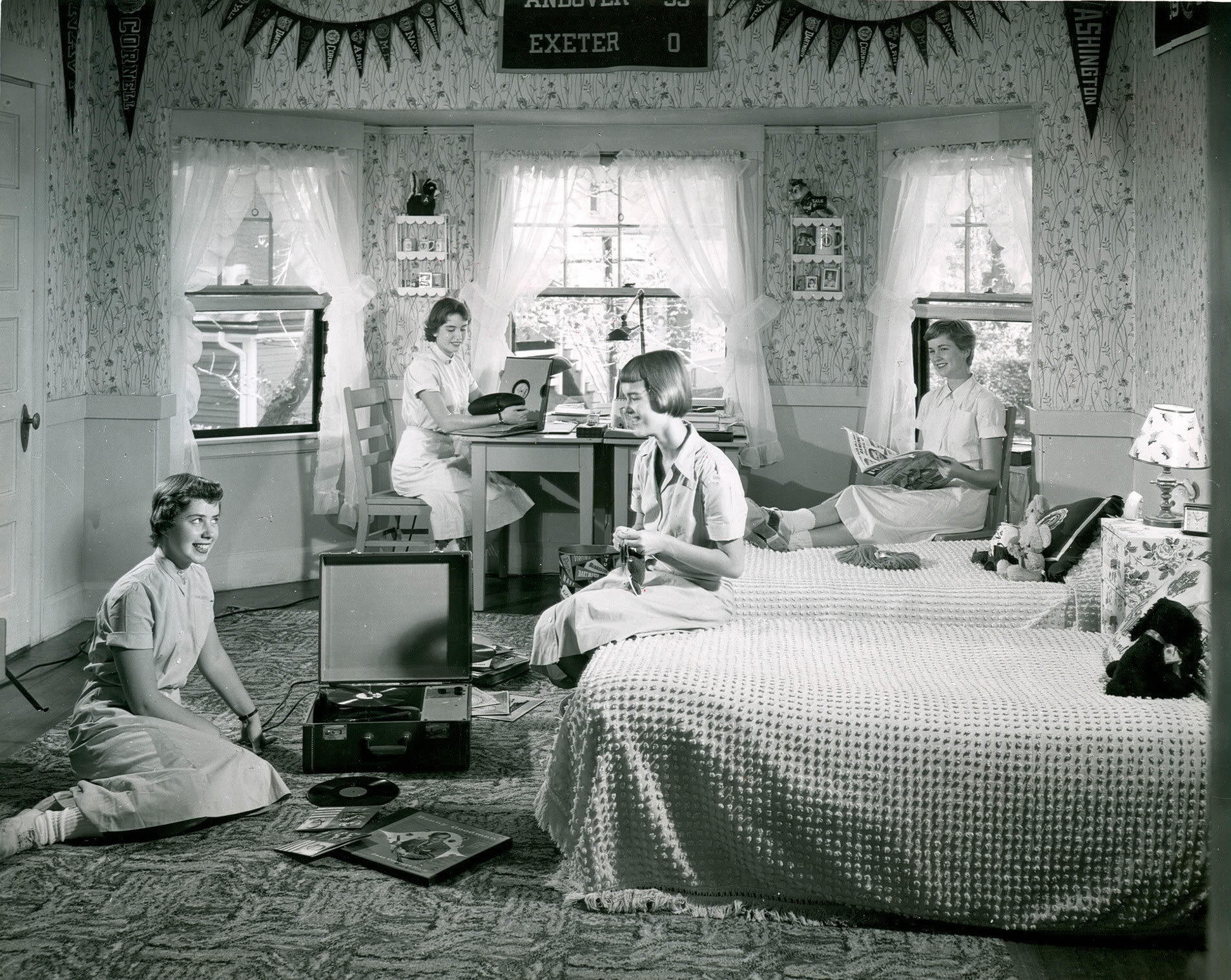
DormRoom1950sThe Delta Gamma sorority chapter at the University of Maryland has received some unwelcome publicity as a result of a leaked e-mail from one of the sorority’s executive board members, reprimanding the Gammas’ for not sufficiently participating in Greek Week activities with their “matchup” fraternity, Sigma Nu. The admonition was delivered in a vulgar, threatening and verbally violent rant containing, among its over 800 words, 4 stupids, 3 variations of ass–, as in “ass-wipe” and “ass-hat,” 5 shits, 2 cocks, 2 sucks, 3 goddamns, and no less than 42 variations of fuck. Gawker, which received the text of the rant, mercifully did not release the young woman’s name when it posted the thing, which is as it should be. No reason to destroy her reputation now. The odds are she’ll do it herself eventually.

I’ll post the whole message at the end, to spare your having to go to Gawker, but here are some brief observations: Continue reading

Comment of the Day: “And The Solution To This Phenomenon Is Simply Ethics. Why Is That So Hard?”

Sir Galahad

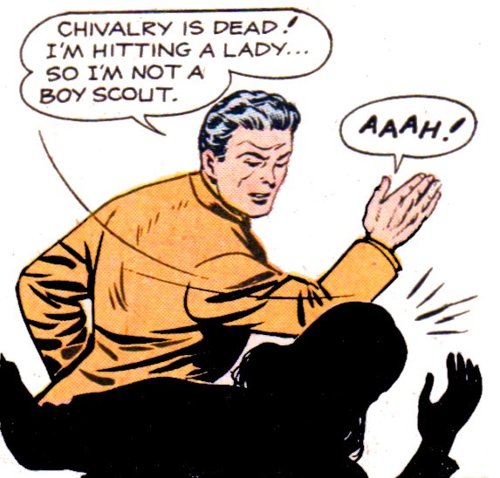
Sir Galahad

Reader Aaron Paschall was on a roll today, and his two-part comment on the thread regarding a woman’s lament about the sexual harassment she faces every day constitutes one of the best and most eloquent Comments of the Day Ethics Alarms has ever recognized with the honor. Here is Aaron’s perspective on the post “And The Solution To This Phenomenon Is Simply Ethics: Why Is That So Hard?”:

“Certainly it’s a sad state of affairs when a woman (or man) has to keep to the well-lit areas in order to avoid the dangers lurking in the dark. If Emily’s post is a lamentation that it would be wonderful if people needn’t fear the darkness, then I agree wholeheartedly. If Emily’s post is intended as a screed about how unfair it is that she can’t go walking down dark alleys as she would like because of all the nasty, brutish men lurking in the shadows, I can only laugh and say that I can’t walk down those alleys, either. Nor would I wish to, because I’m wiser than that. Continue reading

And The Solution To This Phenomenon Is Simply Ethics. Why Is That So Hard?

construction_workers_at_voi_bigWith her “Letter to the Guy Who Harassed Me Outside the Bar” , Emily Heist Moss makes me briefly wonder, not for the first time, why all men haven’t been murdered in their beds by an organized feminist vigilante posse. The conduct she describes is disgusting and infuriating just to read about, and I don’t even have to experience it.

The amazing thing is that this kind of ritual harassment would vanish with some slight behavioral additions to our culture, many of which once were the norm, habits of good conduct like etiquette,  manners, consideration, civility, fairness, kindness, respect, and the Golden Rule. They could become cultural norms again, and rather easily, I would think, with an increase in responsible parenting, a responsible popular culture, and the development of role models with integrity. Not featuring serial and unapologetic sexual harassers as stars of sitcoms (Charlie Sheen) and political conventions (William Jefferson Clinton) would help; so would a serious effort by Hollywood not to trivialize workplace harassment as cute or amusing, as in the long-running “Cheers,” or in current TV  dramas like “Criminal Minds” and “NCIS.”

Moss writes, Continue reading

Holiday Ethics Quiz: The Family Stuffing Dilemma

Families can fight about anything.

Further proof that families can fight about anything.

In the category of the kind of ethics controversy only families can devise comes this one, from an old friend from high school, who just e-mailed me for advice:

She is having her sister and her sister’s family, all adults, over for Christmas dinner. She is cooking all of it, turkey, stuffing, chestnuts roasting on a open fire, Andy Williams on a spit—the works. Today her sister tells her that her daughter will be bringing her own turkey stuffing, because she likes her recipe best. My friend said, “Fine,” and hung up. Now she is quietly fuming. She asks, “What kind of behavior is that? I’m inviting them to dinner. Who brings their own private courses because it’s their personal preference?” (She adds that nobody has ever complained about her stuffing. I can personally vouch for that: I’ve eaten it in past years, and it’s excellent.)

My friend thinks the whole idea is an insult and bad manners, and wants to call up her sister to say, oh, lots of possible things, like “You know Christmas Eve when we’re coming over to your house for dinner? Well, my daughter will be bringing hamburgers, because she thinks the food you serve is crap,” or, Tell Phyllis she’s welcome to make her own stuffing and get her ass over here at 6 AM to stuff it in our bird, or she can live with what I’m serving,” or “Why don’t you all just bring your favorite damn dishes and we can just have pot luck?”

So it’s a two-part Christmas Ethics Quiz for the Ethics Alarms faithful:

1. Is the daughter’s conduct inexcusably rude?

2. Should my friend say anything about it? Continue reading

Oh! THAT’S What Manners Were For!

A young woman posted a harrowing and depressing personal account on the web, describing the  gauntlet of daily sexual harassment attractive females must endure just going through life. “I decided it was important,” she writes, “because in my own way, I can (unfortunately) point out exactly what is wrong with men when they don’t realize how hard it is to be a woman.  How we do not have equal opportunities and freedoms in everyday life.  How most men, even good caring men, have no clue what we go through on a daily basis just trying to live our lives.”

What follows should make every man angry and every woman angrier, a sickening story of a subway ride that became a nightmare, simply because too many young men think of pretty women as quarry, rather than human beings.

She writes, Continue reading

Boooo!

When we can’t even figure out what ethical conduct is, it’s hopeless.

Mitt Romney’s appearance before the NAACP this week gives us a classic and depressing example of how the collision of confirmation bias, an unprofessional news media, impenetrable partisanship and political cynicism not only obscure the truth, but make it literally—and I mean literally literally, not as Joe Biden uses the term, which is to mean figuratively—impossible.

Consider:

  • The media, in almost every case, highlighted the fact that Mitt Romney was booed by the NAACP audience when he swore to abolish “Obamacare.” Did you know that at one point in his speech, when Romney mentioned defending traditional—as in same sex—marriage, the audience applauded, and some stood? If you do, you only found out by digging into so-called “conservative media sources.” Why isn’t this more of a story than the booing? Why wasn’t at least part of the story? Isn’t that useful information? Why does the media want to show nothing but enmity between African-Americans and the Republican nominee? Why wouldn’t the fact that the audience was listening to the substance of his remarks and responding positively in some cases be significant?
  • The NAACP has criticized prominent Republicans for not accepting it invitations to speak, maintaining the fiction that this wholly owned  subsidiary of the Democratic Party is “bi-partisan,” as its charter falsely claims. Then when one of them accepts such an invitation, these gracious hosts boos him. Booing is bad manners at a baseball game; in this circumstance, it is infinitely worse. If Romney had advocated a return to Jim Crow or used a racial epithet, then maybe booing would be justified. He did not. He merely stated a policy position, repealing the Affordable Care Act, that audience members did not like. They boo him, and this indignity becomes the story, thanks to the media’s tunnel vision. Why would any Republican accept such an invitation? The NAACP has proved itself to be an unethical and abusive host. Continue reading