Joe Biden, The Republicans, And The Lawn Chair Test

lawn chairs

I’m not exactly disappointed that Biden passed on challenging Clinton and Sanders for the Democratic nomination, in part because if I ended up having to vote for him next November, I might have gone directly from the voting booth to the bridge. Still, ol’ Lunchbucket Joe would have offered some hope that a presidential candidate would emerge in this election cycle that it wouldn’t be historically irresponsible to vote for.

Conservative pundits keep writing that Biden would be identical to Obama, his third term. In our history, do you know how often that assumption has proven accurate.? Never. Van Buren was supposed to be Andy Jackson’s third term; Taft was Teddy’s, Bush was Reagan’s. The only difference now, and it is significant, is that in those three instances, the previous POTUS was strong and effective. Obama, on the other hand, has been weak, ineffective, destructive and incompetent. It is difficult to imagine how Biden could be worse.

Forget about Obama, though: why would Biden have been preferable to the Democrats who are serious candidates? Chafee and O’Malley aren’t worth discussing; they aren’t going to be on the ballot. As for the rest… Continue reading

The Marco Rubio Traffic Ticket Story: Is The NY Times’ Anti-GOP Bias Finally Undeniable…and Unmanageable??

The New York Times thinks you need to know about this woman's driving record. Really?

The New York Times thinks you need to know about this woman’s driving record. Really?

The New York Times matters, even as newspapers continue their march to oblivion. Centuries of outstanding journalism tend to carry weight, so despite the fact that the paper has befouled itself with hypocrisy, dubious reporting, partisan bias and an inexcusable imbalance among its pundits, it nonetheless still functions as a news media role model and icon. The infuriating debate over whether the news media is overwhelmingly biased in its news coverage (that would be biased in favor of Democrats, progressives, and liberal policy objectives in case you haven’t picked up on it) has special importance now, as again we head into a Presidential election and most Americans—I hope?—would like to see the public’s opinions on the matter prevail, not the biases of journalists, operating through selective or slanted reporting

Last week’s Times investigative scoop that Marco Rubio and his wife had a combined 17 traffic citations since 1997 thus is important, not regarding Sen. Rubio, who is running for President.  Though the Times still defends it—and that’s significant too—pretty much everyone else, Left, Right, and  anywhere, has condemned the Rubio hit. The story told us nothing newsworthy about Rubio,  but told us a lot about the Times, and perhaps whether the U.S. news media plans on placing its heavy thumb on our campaign scales…again. Continue reading

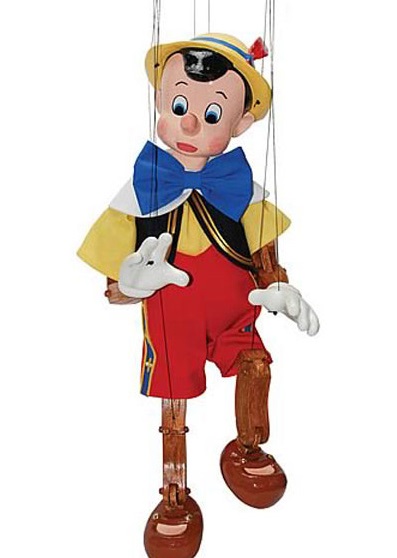
FactChecker Ethics: I Know This Is A Bit Late, But If Glenn Kessler Is Going To Give Out “Pinocchios,” He Needs To Learn What a Lie Is

Time to revisit the classics, Glenn...

Time to revisit the classics, Glenn…

Newspaper “fact-checking” is a mostly unethical and misleading exercise in which media partisans use the format to call positions they differ with ideologically and politically “lies.”  PolitiFact is well established as the worst and most biased of these features; Annenberg’s Factcheck.org is easily the best (but still shows its leftward bias), and somewhere in between is Glenn Kessler, the Washington Post’s “Factchecker.” Today’s installment of his periodic column shows that after many years at his job, he still doesn’t know what a lie is. Amazing.

This is not, or should not be, necessarily for a factchecker, as long as he sticks to checking facts, and not characterizing why the facts don’t jibe with a particular public figure’s public statements. PolitiFact’s specialty is making questionable interpretations of statistics and events, declaring them the revealed truth, and attacking anyone,  usually a Republican, who has come to a different conclusion. To his credit, Kessler doesn’t do that very often. He is typically fair and objective in his research and presentation of facts. But the Post’s Factchecker uses the device of one to four little Pinocchio heads to indicate the seriousness of a factual misstatement, and as he should know, Pinocchio’s nose grew long when he lied. Even one Pinocchio indicates that Kessler believes he has proven that someone lied.

It seems a little late for Kessler to be mistaking opinions that he disagrees with, analyses of facts that reach different conclusions than he would, and obvious mistakes as lies. Kessler, who is should be in the business of checking facts but has chosen a gimmick that makes him conclude by accusing others of lying, is ethically obligated to know what a lie is: an intentional misstatement of fact that is designed and intended to deceive. He either doesn’t know that, which means he’s incompetent, or he does and misrepresents mistakes and opinions as lies, which means that he’s the liar. Whichever it is, this is ethically unacceptable for a “factchecker.” Continue reading

Note To The News Media: Stop Encouraging Consequentialism!

Marco Rubio gallantly stood up to Fox’s Chris Wallace as the news anchor repeatedly asked him whether “knowing what we know now,” it was a mistake to invade Iraq in 2001. The previous version of the question that inexplicably tripped up Jeb Bush was self-answering: knowing how badly it would work out, no sane leader would make that decision, but since nobody can see into the future, it is like asking if we should have recruited Superman to help out U.S. troops if, you know, he was real. Wallace’s question, if possible, is worse. It validates the ethics rotting principle of consequentialism, in which we judge an action by its unpredictable results.

An decision is only a mistake if it was badly reasoned based on the information the decision-maker had at the time the decision was made. It does not become a mistake based on subsequent, unknowable events. Similarly, an action doesn’t become ethical just because it worked out well, or unethical because it didn’t. This misconception is rampant among the public, and leads to bad policy, bad decision-making, bad leadership, bad lots of things. It is bad.

Hectored by Wallace, Sen. Rubio, who does understand that “mistake” doesn’t mean what Wallace was implying it does, kept saying, “No, it was not a mistake, because it was the right decision based on what we knew at the time.” Now, you can argue that the decision was the wrong one based on that information, but that’s not what Wallace was asking…and asking, and asking. He obviously thinks “mistake” is defined as a decision that doesn’t work out the way the decision-maker hoped. Wrong.

Chris Wallace was making his audience dumber and less ethically astute. We judge actions and decisions based on the quality of the choice when it is made, which includes a rational, well-reasoned analysis of its likely results. By Wallace’s logic, driving home from the Christmas party smashed is only a mistake if you crash, kill someone, or get arrested.  The sober party goer who gets killed by a drunk driver as he drives home, in Wallace’s reasoning, made a mistake going to the party at all. The lesson, apparently, is that its a mistake to go to parties.

This is how incompetent and arrogant journalists made us dumber, and our leaders so risk averse that they are incompetent.

By the way, on CNN this morning, the gang is making fun of Rubio, like he’s the idiot. Of course. After all, he’s a Republican.


Schemes, Slander and Deception: The Most Unethical Maneuvers of Campaign 2010

Well, I have to admit they were creative. And despicable.

2010’s most unethical maneuvers ran the gamut from lying to zombie exploitation, from false identity to extortion. Unfortunately, most of the worst stunts were pulled by or on behalf of Democrats; I say unfortunately because I try awfully hard to keep these kinds of lists in partisan balance. But the Democrats and their progressive fans were especially slimy this time around, and it it figures. When the going gets tough, the tough get unethical, and it is the Democrats who are facing ballot box carnage. They have been pushing the envelope, to say the least, in their campaign tactics, and I think it probably made their situation more dire rather than less.

Here, in reverse order of ethical outrageousness, are the Ten Most Unethical Maneuvers of Campaign 2010: Continue reading

Marco Rubio Trips an Ethics Alarm

Florida Republicans have a wonderful opportunity to demonstrate the proper response to a bracing ethics alarm. They can vote against Marco Rubio, the Tea Party-backed opponent of Governor Charley Crist in the Republican primary for the U.S. Senate.

Whatever Rubio’s virtues, ideological or otherwise, he set off the alarm with this: according to a carefully researched story in the Miami Herald, Rubio used his party credit card—his business credit card, issued to him by the GOP to use for party-related expenses only—to pay for things like: Continue reading