Ethics Quiz: The Marilyn Monroe Statue

MM statue

Alternate title: “At Last A Statue Everyone Can Get Behind!”

At least this statue ethics controversy has nothing to do with the Civil War.

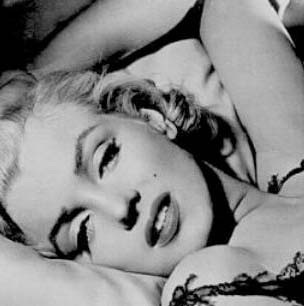
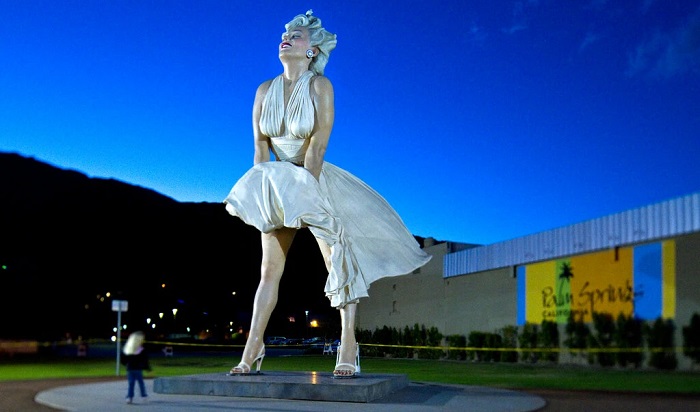
Palm Springs, California’s City Council voted last month to place a giant sculpture of Marilyn Monroe, her white skirt blown up above her waist and her mouth poised in the semi-erotic smile everyone remembers from the classic movie moment, in the middle of the city. For three years, 2012 to 2014, the sculpture by Seward Johnson enlivened downtown Palm Springs, and now it will be coming back with financing from a local hotel consortium. The 26-foot high “Forever Marilyn,” turned up as a short-term tourist attraction in other cities in the intervening years (many visitors enjoyed posing for photographs between MM’s feet, looking up) but now Palm Springs is offering it—her?— a permanent home.

Ah, but all statues are controversial now. Marilyn will stand across from the entrance to the Palm Springs Art Museum, and its executive director Louis Grachos objects. “You come out of the museum and the first thing you’re going to see is a 26-foot-tall Marilyn Monroe with her entire backside and underwear exposed,” Grachos pointed out to the council. “We serve over 100,000 school-age children that come to our museum every single year. What message does that send to our young people, our visitors and community to present a statue that objectifies women, is sexually charged and disrespectful?” The museum’s previous three directors, Elizabeth Armstrong, Steve Nash and Janice Lyle, designer Trina Turk and others issued a joint op-ed in The Desert Sun condemning the statue as “blatantly sexist.”

Your Ethics Alarms Ethics Quiz of the Day is...
Is Johnson’s statue of Norma Jean unethical public art?

Continue reading

My Mickey Rooney (1920-2014) Post: “Ethics, Stereotypes, and Holly Golightly”

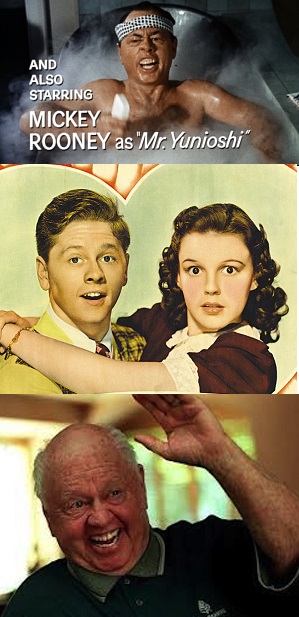
Some of the many faces of Mickey Rooney...

Some of the many faces of Mickey Rooney…

Ethics Alarms has almost 15,000 tags, which means that a lot of diverse topics hard been discussed here in connection with ethics issues. Saddened as I was to learn of the passing of the great Mickey Rooney, truly one of the most talented and versatile individuals in entertainment history and the last of MGM musical stars from the Golden Age of Hollywood, I can’t justify honoring his ethics; by all accounts, Mickey was not as admirable a human being as he was a performer. Still, Ethics Alarms has a Mickey Rooney post, from 2011, and when I read it over just now, I still liked it. Thus I will honor Mickey by reposting my defense  of perhaps his most criticized performance. For one of his best, watch this. Yes, Judy’s in it too. (TCM has made everyone take down their Mickey clips, but so far, this Russian pirate site still has it. I know, I know—but Mickey would approve. This ethical breach is for you, Mick…) Continue reading

Ethics, Stereotypes, and Holly Golightly

"Andy Hardy, the Asian Years"

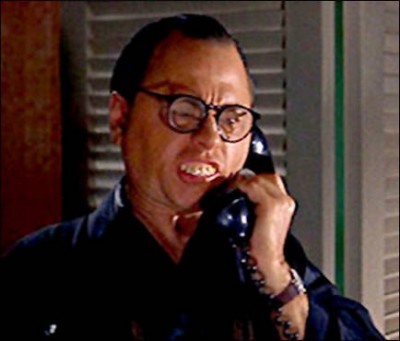
A Bronx woman, Ursula Liang, has started a petition against Brooklyn Bridge Park’s “Movies With A View” series showing “Breakfast at Tiffany’s,” the 1961 Audrey Hepburn classic that gave us “Moon River” and one of actress Hepburn’s most endearing performances. Why? Well, the movie, which has long been popular for summer screenings in New York City and elsewhere, also contains a pre-political correctness performance by Mickey Rooney as Holly Golightly’s comic Japanese neighbor, “Mr. Yunioshi.”

Rooney’s performance, in my opinion, was cringe-worthy even in 1961, one of director Blake Edwards’ not uncommon excesses in vaudeville humor, placed in a context where it didn’t belong. It is a scar on an otherwise marvelous film, but there is nothing inherently wrong with comic stereotypes. Stereotypes are a staple of comedy, and have been forever; the question is whether a particular stereotype is cruel, gratuitous, harmful, or funny. Some stereotypes are cruel and funny. Continue reading

Breaking Promises to the Dying and the Dead

"Bye, Marilyn...it was nice lying over you."

My Dad detested wakes and viewings, and used to say that after he died, he wanted to be exhibited sitting up, eyes open, with a tape recording that would be triggered every time anyone stood in front of him. The recording would be of my father saying, “Hello! Thanks for coming! Hope to see you at my funeral!” Luckily, Dad didn’t make me promise to do anything that bizarre, although it would not have been out of character for him to do so. His recent death caused me to wonder: what if he had? Would I be obligated to keep my promise? Would I be justified in making such a promise, if I knew it wouldn’t be kept? Continue reading