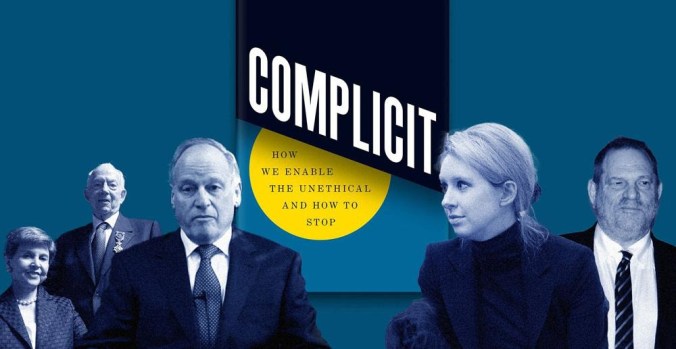
I’ve just ordered “Complicit: How We Enable the Unethical and How to Stop”by Harvard business school professor Max Bazerman. Having read about the book, I’m curious to see if any of his strategies have not already been discussed on Ethics Alarms extensively. I suspect not.
On his website, Bazerman writes in part,
[A]lmost all of us have been complicit in the unethical behavior of others. “Complicit” tells compelling stories of those who enabled the Theranos and WeWork scandals, the opioid crisis, the sexual abuse that led to the #MeToo movement, and the January 6th U.S. Capitol attack. The book describes seven different behavioral profiles that can lead to complicity in wrongdoing…and offers concrete and detailed solutions, describing how individuals, leaders, and organizations can more effectively prevent complicity. By challenging the notion that a few bad apples are responsible for society’s ills, “Complicit” implicates us all—and offers a path for creating a more ethical world.
The Harvard connection is one red flag; another is Bazerman’s inclusion of “systemic privilege, including white privilege” among his markers of complicity in unethical conduct and corruption. He is clearly a reliably woke member of the progressive academic mob, but that doesn’t necessarily mean that he has nothing to contribute to the topic.

 Ethics Alarms