Here’s Something The News Media Hasn’t Explained Regarding The Weinstein Scandal: Those Victim Confidentiality Agreements Are Unethical, And Maybe Illegal

Rose McGowan, the new Sexual Harassment Fury on social media, says she was raped by Weinstein and had to accept a $100,000 settlement with a confidentiality agreement as a condition of the deal. That means that if she subsequently told her story and accused Weinstein, she would be liable for damages, and would have to return the money. Right?

Not exactly. Most of the accounts in this sordid series of events make it seem like confidentiality agreements are iron clad and enforceable. Often they are neither. McGowan’s almost certainly wasn’t.

Debra Katz, an attorney specializing in sexual harassment law suits, recently explained that if employees or former employees came forward with information about Weinstein participating in criminal misconduct, their non-disclosure agreements or confidentiality agreements would probably be unenforceable, saying,

“These kind of very broad NDAs or confidentiality agreements typically violate public policy. Employees have to have the legal ability to discuss any concerns about unlawful behavior in the workplace … These broad provisions that would effectively silo people, make them feel like they can’t speak about this, are simply an instrument to put fear in people.”

My position has always been that lawyers who construct such agreements, knowing that they are unenforceable, are committing sanctionable ethical misconduct. The lawyer for the employee being silenced, moreover, has an obligation to let the client know that the requirement is unconscionable. Of course, it’s the client’s decision whether she wants to take the money.  It is also unethical to make an agreement you have no intention of honoring. Continue reading

My Breakfast Confrontation At McDonald’s

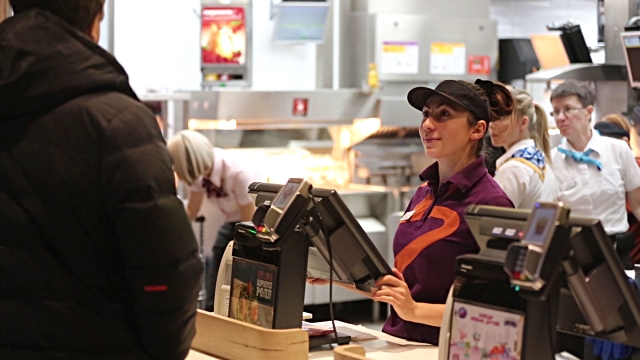
mcd-checkout

I’ve been mulling this experience for a while, and since it still ticks me off, and since today seems like an especially provocative time to raise it, here it comes.

I was accompanying my wife as she went to a clinic for some early morning outpatient surgery, and as she waited in the one-chair-short reception room, I went next door to a McDonald’s to order breakfast. As usual, my wallet had moths flying out of it, so I knew it was going to be a debit card purchase. My apparently mute clerk took my order —remember when Ray Kroc insisted that every employee say “Hello!” and “Thank-you”? Now you are lucky to get eye contact and a grunt—the modest amount appeared,  and I swiped my card. The machine told me that the card was rejected. I swiped again. Rejected again.

“OK, now what am I supposed to do?” I asked. : This is a good card, and there is plenty on money in the bank.”

My clerk  said only, “Pay!”

“I can’t pay, because of your stupid machines. I want to buy my breakfast. This is my only means of payment. The card readers is  malfunctioning!”

She said again, louder and with irritation, “PAY! PAY!”

“Don’t tell me pay pay, because I just told you, I tried to pay pay, and  your equipment won’t let me pay pay! Find a way for me to pay!” I replied, with the delightful intensity for which I am well-known.

Now she started angrily shaking the receipt at me, shouting PAY three times and nothing else, apparently having reached the zenith of her language skills.

“LOOK!” I said. “This is your store. All I want to do is pay a lousy 7 bucks for a sausage biscuit and a coffee, and this machine is stopping me. I can’t pay if your lousy equipment isn’t maintained. FIND A WAY FOR ME TO PAY! That’s your job!”

You’ll never guess her response.

No, go ahead, guess. Continue reading

McDonald’s And The Blind Man: Why Law Is A Lousy Substitute For Ethics

mcdonalds drive-thru

Thirty-five-year-old Scott Magee is blind, and he resents the fact that McDonald’s has a policy denying walk-up customers at the  drive-through window at his local Louisiana Mickey D’s, as well as everywhere else.  The policy, let us stipulate, is objectively reasonable. McDonald’s has a right to designate a window for drive-through customers and to choose not to offer a walk-up service like Dairy Queens. (Come to think of it, I don’t know that DQ has that any more. Does it?)  It also has a right not to subject itself and its drive-though customers to liability for inadvertently hitting stoned fools who stumble over to the window late at night seeking munchies.

Magee and his Jackie Chiles-emulating New Orleans lawyer, however, are suing the burger chain, arguing that its refusal to accommodate non-drivers who are blind is a violation of the Americans with Disabilities Act.

Now a class-action lawsuit, filed last week  in Chicago’s federal court, alleges that McDonald’s has no “concern whatsoever for the accessibility of the late-night drive-thrus to the disabled.”

Oh, thank-you, George H.W Bush!* The ADA has always been an overly broad and mischievous law that endorses and enables the tyranny of the minority. I have often wondered how often all those wheelchair lifts the law forced financially strapped public transportation departments to install in their buses have been used, and what the cost per use is. I am certain it would have been far cheaper for the cities to just pay for cabs to drive the handicapped commuters door to door, but that would have stigmatized them.

Bush caved to the lobbying for  cultural acceptance of the very debatable concept that citizens have a right to force others, including the government, to solve all of their individual problems, and the cost to the rest of society just doesn’t matter. That idea, a really bad one and a slippery slope to boot, has taken hold with a vengeance, the most prominent recent example being the theory that because less than 1% of the humanity faces a dilemma when choosing which bathroom to use, the rest of the public must forego the comforting privacy of gender-segregated bathrooms and dressing rooms. All girls should learn to be comfortable looking at male genitalia, that’s all, says the Charlotte Observer. How did we reach teh absurd point where that proposition can be seen as more reasonable, equitable and  fair than asking transgender Americans  to endure the occasional discomfort of using the “wrong” bathroom so his or her fellow citizens are comfortable? Why is it preferable to launch a divisive and nasty cultural and legal battle over the issue?

Unless Magee’s case gets thrown out of court, and don’t bet on it, all fast food restaurants will be forced to set up and staff walk-up windows, eliminate drive-up windows, or close down their drive-through service when inside service is shut down for the night. (If Scott can’t have that convenience, no one should.) Either over-head will rise for all fast food chains, causing job losses and higher prices, or everybody will lose the convenience of after-hours drive-up service because there is no safe, reasonable, affordable policy that will satisfy Mr. Scott Magee ‘s late night cravings for McNuggets.

Yes, it would have been nice, and ethical, if the owner of the McDonald’s in question played a little ethics chess and worked out a quiet, compassionate way to make Scott feel loved and catered to. It would have been worth it to agree to just deliver Scott whatever he wanted when the munchies struck, even giving him a special number to call. It would also have been ethical–responsible, considerate, fair, proportional—if Scott just planned ahead and got his Big Mac before the place closed it’s doors. A little mutual consideration and flexibility, some sacrifice and concern for others, a willingness to see things from the other side’s perspective, and this could have been avoided. Instead, jobs may be lost, a convenient service may be sacrificed, prices will rise, business will be lost, and all because one blind man feels that the whole world should adapt to his needs, and not the other way around.

Yes, thanks Papa Bush!

Thanks, McDonalds!

And a special thanks to Scott Magee.

I sure hope he enjoys his burger.

It’s going to cost enough.

*In a moment of momentary amnesia and stupidity, I wrongly blamed the ADA on President Carter. I apologize to Jimmy, though I’m certain he was a supporter.  It’s still an overly broad, ethically muddled, pandering law.

Ethics Alarms SPECIAL REPORT! Oxymoron Ethics: The Super Bowl Ads

super bowl ads

All Super Bowl commercials are unethical by definition: they aid, abet, reward and perpetuate the gruesome and deadly culture of pro football. I’ve written about that enough lately, however, so when I woke up with a leg cramp this morning at 4:46 AM, I decided to go online and watch the Super Bowl ads. Here is what I discovered:

1. Most Ethical Ad: Pampers

http://www.youtube.com/watch?v=3HWxiDsGenk

Yet another pro-birth ad during the Super Bowl! This one is especially well done, and for once babies aren’t used as mere adorable props to sell a product unrelated to babies. The spot shows a sonogram of a baby giving her first “hello” with a heartbeat playing in the background, and progresses to show the family’s “firsts” together, from ” first tears of joy” to “first first word.” The ad was especially welcome as a rebuttal to last week’s jaw-droppingly callous and absurd characterization of the abortion issue by MSNBC’s resident radical. Melissa Harris-Perry. She asked a guest,

“Are you at all distressed in the ways that I am about the idea that there is a separate interest between an individual and something that is happening in her body that cannot at that moment exist outside of her body? So, the idea, for example, that I would need a court’s permission for cancer treatment or the court’s permission for a surgery that would remove my hand. Like, if it’s my body, I guess I can’t understand why the state would have to give me permission.”

“Something that is happening” that “cannot exist outside her body”?  This is called “desperately stretching for a deceptive euphemism that avoids the central issue.” The Pampers ad focuses on that issue: more than one human life is involved here. Last year, Harris-Perry said,

“When does life begin? I submit the answer depends an awful lot on the feeling of the parents. A powerful feeling — but not science.”

That’s right: it’s a life if the parents think it is, otherwise it’s just like a tumor or a hand. I suspect that future generations will look back on such bizarre and intellectually dishonest arguments by the pro-abortion groups the way we regard the claims of slavery defenders who claimed that black’s weren’t really human. They will wonder how they managed to prevail in public opinion and policy so long using such obvious and vile nonsense.

One way they managed to prevail is that journalists went out of their way to avoid publicizing the aspect of the controversy that make abortion advocates squirm. For example, I reviewed six online ratings of the Super Bowl ads, and not one of them mentioned the Pampers spot, though commentary, ratings and videos of almost all the others were covered. Fascinating. Continue reading

Déjà Vu: In D.C., It’s The Brooklyn EMTs All Over Again. How Can This Happen Even Once?

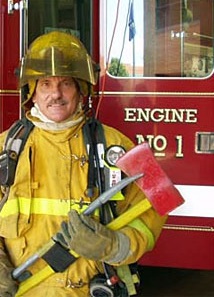
"Hey, I'm ready! Just go through the proper channels, and I'm On it! You can count on me!"

“Hey, I’m ready! Just go through the proper channels, and I’m On it! You can count on me!”

I guess it’s a sign of longevity that some ethics stories are recurring so exactly that I can handle them with previous posts. I never wanted to see this one repeat, however.

In 2004, two EMT’s let a pregnant woman die in front of them without offering aid, because they were on a break and wouldn’t abandon their coffee and bagels to save a mother and her unborn child. (They were suspended and yet kept their jobs.) Over the weekend, in Washington, D.C., a 77-year-old man, Medric Cecil Mills, collapsed across the street from a fire station. The man’s daughter ran across the street to seek help, and the firefighter she spoke to explained that he couldn’t respond until being dispatched and instructed her to call 911. The man died.

[A black humor note: when 911 was called and a rescue vehicle dispatched, it went to the wrong address.] Continue reading

Your Incompetent, Biased, Lazy, Untrustworthy News Media At Work: A Case Study

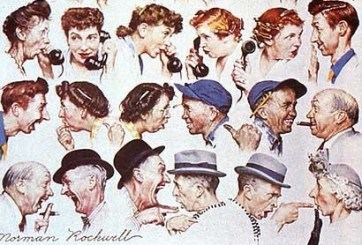
Remarkably, Norman Rockwell accurately predicted how news would be reported in 2013!

Remarkably, Norman Rockwell accurately predicted how news would be reported in 2013!

Last week, the Huffington Post breathlessly reported that McDonald’s could double its workers wages, thus giving them a “living wage,” by raising the price of a Big Mac by a mere 68 cents. This obviously had appeal to the HuffPo’s liberal sensibilities, more proof of how a big corporation was needlessly lining its pockets while exploiting the lowest rungs of the workforce. The “proof” was in a study that had been represented as a being run by a “University of Kansas researcher.” The study results looked so good that the fine progressives at the site just knew it had to be right—after all, it perfectly confirmed their own beliefs. This, I’m sure you have guessed by now, is confirmation bias in its purest form.

The Huffington post writer and editors didn’t check the source, and didn’t check the study. And as some non-biased, at least in the same direction, reviewers quickly found out when they did, neither held up. The “researcher” was an undergraduate (Arnobio Morelix, whose wonderful name alone would have made me want to check him out) , and the “study” might have been a term paper. The paper’s assumptions, conclusions and math didn’t hold up, as is fairly common for undergraduate papers. The Huffington Post had to retract its story, five days later.

Alas, too late! Continue reading

McDonalds, Germs, and the Zealot

Be afraid. Be very afraid.

Erin Carr-Jordan went to a McDonald’s with her children this summer, and was horrified by the condition of the restaurant’s play area. The professor of child development then set out to shame the McDonald’s into cleaning up, posting a video she made showing her findings and the lab results of samples she took, showing a space teeming with pathogens and bacteria.

McDonald’s corporate finally got into the act, agreeing with the mother and explaining to the Los Angeles Times that the conditions were “unacceptable, completely unacceptable … but not reflective of our business and our restaurants” and that the company had “immediate corrective action to thoroughly sanitize the PlayPlace.” That might have qualified as a victory for most moms, but not Prof. Carr-Jordan. She began a full-fledged crusade, investigating McDonald’s and other fast food restaurants in 11 different states in recent months to test them for cleanliness. These were her family vacations: “Kids, forget about Walt Disney World. We’re going to spend the next three weeks going to  filthy fast food joints!”  What fun. She swabbed  at each location and sent the samples off to a microbiology professor who analyzed the samples and usually stated his results as “OH—MY—GOD!!!!” Continue reading

Flashback: “Ethics Test at McDonald’s”

Background: The McDonald’s beating and video story reminded me of another ethics essay arising out of a McDonald’s incident, one that I was personally involved in. This post first appeared on The Ethics Scoreboard in 2006, and reading it again, I realized it was one of the first times that I used the ethics alarms imagery that became the basis for this blog. The incident that inspired the essay still troubles me. I wish I could blame McDonald’s for the callousness that my 2006 experience and last week’s incident in Maryland exposed, but unfortunately, our problem relates to the Golden Rule, not the Golden Arches. Here is “Ethics Test at McDonald’s”:

Life gives ethics tests like pop quizzes. You often get no warning, and if you’re thinking about something else, you might not even realize the test is going on. Continue reading

The MacDonald’s Beating Video, Another Dead Canary in The Ethics Mine

Vernon Hacket: videographer, violence afficianado, shameless bystander

Last week, In the early hours of  April 18,two teenaged patrons at a Rosedale, Maryland MacDonald’s brutally beat Chrissy Lee Polis, 22, into a seizure. The attack was captured on a video recorded by Vernon Hackett, one of the MacDonald’s workers, on a cellphone camera. Other employees can be heard laughing on the video, and Hackett apparently is heard warning the attackers that the police are coming. He has been fired by the restaurant’s proprietor.  (More on this here.)

His firing was well-deserved, but it doesn’t begin to address the disturbing implications of the incident. Continue reading

Anatomy of an Unethical Class Action Lawsuit, Badly Reported, Exposed by a Blogger

Here is how the Washington Post begins its story about the most recent assault on McDonald’s by the people who want to control your eating and parenting habits:

“The D.C.-based nutrition watchdog group Center for Science in the Public Interest has helped a California mother file a class-action suit against McDonald’s, demanding that the burger chain stop marketing toys to children. The woman, Monet Parham of Sacramento, claims that the marketing of Happy Meal toys has interfered with her ability as a parent to provide her two children with a healthful diet. Here’s a quote:

“I am concerned about the health of my children and feel that McDonald’s should be a very limited part of their diet and their childhood experience,” Parham said. “But as other busy, working moms and dads know, we have to say ‘no’ to our young children so many times, and McDonald’s makes it that so much harder to do. I object to the fact that McDonald’s is getting into my kids’ heads without my permission and actually changing what my kids want to eat.”

This is fairly typical of the hundreds of news stories on the web about the lawsuit. Over at Popehat, Patrick, the wittiest of the site’s witty staff, performs a crushing dissection of the lawsuit, the story, and the media’s incompetent reporting of it. You see, he writes..

“…Monet Parham is really Monet Parham-Lee.  Monet Parham-Lee is the name that Monet Parham uses professionally.  Monet Parham-Lee is represented in the suit by attorneys affiliated with the Center for Science in the Public Interest.  Meaning Ralph Nader.  Monet Parham-Lee is an employee of the California Department of Public Health. Monet Parham-Lee works in the “Cancer Prevention and Nutrition Section” of the California Department of Public Health. Meaning that Monet Parham-Lee is tasked, professionally, by the State of California with ensuring that Californians eat their vegetables.  The power that the State of California grants Monet Parham-Lee evidently is not enough.  Monet Parham-Lee is taking the law into her own hands, to ensure that not only her own children eat their vegetables, but that everyone else is forced to make their children eat vegetables.” Continue reading