medical ethics
Observations On Britain’s Charlie Gard Ethics Fiasco
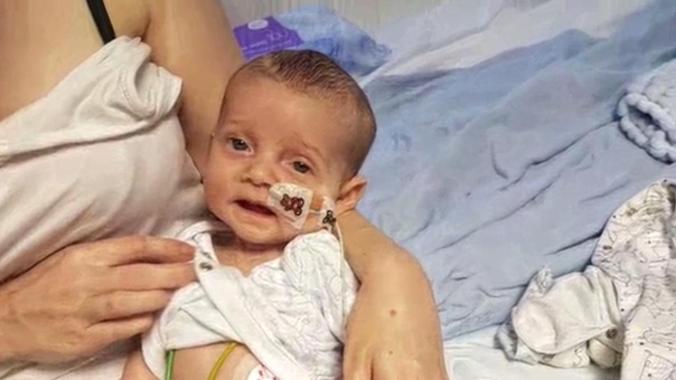
A recipient of Great Britain’s national health care, infant Charlie Gard was born with a rare genetic condition resulting in what is probably irreversable brain damage. He cannot move his arms or legs, eat or even breathe without a ventilator.
After 10 months of being kept alive, Charlie’s caretakers, the Great Ormond Street Hospital for Children in London, announced that it was time for Charlie to die. Chris Gard and Connie Yates, Charlie’s parents, wanted to take him to the United States to try an experimental treatment available here. The doctors at the hospital refused to allow them to take the child, and vetoed their decision, even though the parents had received sufficient funds from donations to pay for the effort. In the resulting lawsuit, British courts sided with the hospital. The parents then brought the case to the European Court of Human Rights, which declined to hear the case last week. The previous court rulings that it was in Charlie’s best interest to withdraw life support and that the state, not the parents, got to make this life and death decision stood.
The parents, Chris Gard and Connie Yates, appeared on a video this week,, sobbing and saying their son would be removed from life support at the hospital. “He’d fight to the very end, but we’re not allowed to fight for him anymore,” Gard said in the video statement. “We can’t even take our own son home to die.”
Initially, the hospital would not delay the fatal disconnection of the child from life support so family members could gather and say goodbye. It has since relented.
Observations: Continue reading
Remember That Old 1963 Song By The Angels, “My Boyfriend’s Dead And I Want To Have His Baby (Hey-la, Hey-la, My Boyfriend’s Dead)”?
Neither do I.
This goes in the “How in the world does someone get the idea that this is ethical?” file.
Coloradan Kate Criswell’s boyfriend Tom Alexander died over the weekend after having heart problems while the two of them were hiking. Then she had a great idea: why not have the hospital harvest his sperm, so she could be artificially inseminated and have his baby! Unfortunately, sperm viability only lasts 24-48 hours after death, the hospital didn’t have the equipment necessary to extract and preserve Alexander’s sperm, nor was there any legal documentation of his consent for such a procedure.
Criswell doesn’t understand why taking his sperm should be such a big deal. After all, she says, he’s an organ donor. Isn’t that the same thing as being a “give my sperm to any woman who asks for it” donor?
“Tom was amazing,” says his ex-girl friend. “He was always so generous and loved me so much and always made sure that I knew that. He took such good care of me.”
Yes, I would imagine that she needs a lot of taking care of, since she is an idiot. Criswell said she will take up the fight with state lawmakers, so this doesn’t happen to anyone else, “this” meaning ” a couple doesn’t get married, he dies, and the law stops her from unilaterally using his sperm to have his baby without his consent, thus gaining claim to his estate, and maybe even part of his family’s estate.” And what if he had more girl friends? What empowers her to be the only one to with a claim to his genetic material? How many of his babies can she have? Does she want the legislature to declare any dead man’s sperm to be a public resource? What constitutes being a “girl friend”? If he had wanted to have a baby with Kate, why didn’t Tom get her pregnant before he died? Since he didn’t, isn’t there a rebuttable presumption that he didn’t want to start a family with her? If you wanted a baby so much, Kate, why didn’t you two love birds get married? Or are you thinking of Tom’s baby as more of a souvenir?
Based on the fact that this woman thinks “organ donor” applies to sperm, there may also be a public policy argument against this pregnancy based on eugenics.
____________________
Pointer: Tim Levier
A Banner Day For Unfairness, Pettiness, Dishonesty, And Hypocrisy, Raising The Ethics Query: How Low Can Democrats And The News Media Go?

Actually, mudslinging would be an improvement…
…as well as the related queries..
1. How low do they think they can go without alienating every American with a conscience and a brain?
2. Does any leader with integrity, courage and influence exist in either journalism or the political left to call out this escalating madness?
Yesterday was a stinking garbage scow of unfiltered anti-Trump hate and public deception.
The Prayer Breakfast Freak-Out: I wondered if the Washington Post, which has made very clear its own attitude regarding prayer (and religion generally), would have the gall to criticize the President for not being sufficiently pious during yesterday’s Prayer Breakfast. Just two weeks ago, the Post mocked the Secretary of Agriculture nominee for once “praying for rain.” (The mocking headline has been scrubbed now) Sure enough, the Post did have such gall; so did MSNBC and other media outlets that regularly display contempt for the genuinely religious, a significant majority of whom are conservative and Republican.
The critics of the President’s comments care nothing about prayer, basically like me, but unlike Ethics Alarms they are willing to plow new ground in hypocrisy by using this superfluous event to launch more gratuitous outrage. The Prayer Breakfast has the same origins as the addition of God to the Pledge of Allegiance. It was an anti-Godless Communism grandstanding stunt by Fifties era Republicans at the height of their Red-Baiting mode. Now the same anti-religion liberals who routinely condescend to the faithful, and lobby for taking all references to “God” out of official documents, the same anti-religious zealots who have condemned Betsy DeVos for her support of Catholic schools, are deeply, deeply offended that the President joked about “The Apprentice” at a Prayer Breakfast.
The Frederick Douglas freakout: The President spoke of Douglas in the present tense in his random remarks about Black History Month on February first, prompting multiple cheap shots and despicable contrived insults. The Post wrote yesterday, Continue reading
Health And Survival Rationing Ethics

Beginning in 2012, Dr. Lee Daugherty Biddison, a critical care physician at Johns Hopkins and some colleagues have held public forums around Maryland to solicit the public’s opinions about how life-saving medical assistance should be distributed when there are too many desperately ill patients and not enough resources. The exercise was part of the preparation for Biddenson’s participation in preparing official recommendations for state agencies that might end up as national guidelines regarding when doctors should remove one patient from a ventilator to save another who might have a better chance of surviving, or whether the young should have priority over the old.
Ethically, this is pure ends justifying the means stuff. The Golden Rule is useless—How would you like to be treated? I’d want to be left on the ventilator, of course!–and Kantian ethics break down, since Immanuel forbade using human life to achieve even the best objectives…like saving a human life. Such trade-offs of life for life (or lives) is the realm of utilitarianism, and an especially brutal variety….so brutal that I doubt that it is ethics at all.
When Dr. Biddenson justifies his public forums by saying that he wants to include current societal values in his life-for-a-life calculations, she is really seeking current biases, because that’s all they are. On the Titanic, it was women and children first, not because it made societal sense to allow some of the most productive and vibrant minds alive to drown simply because they had a Y chromosome, but because that’s just the way it was. Old women and sick children got on lifeboats; young men, like emerging mystery writer Jacque Futrelle (and brilliant young artist Leonardo DiCaprio), went down with the ship. That’s not utilitarianism. That’s sentimentalism.
The New York Times article mostly demonstrates that human beings are incapable of making ethical guidelines, because Kant was right: when you start trading one life for another, it’s inherently unethical, even if you have no choice but to do it. Does it make societal sense to take away Stephen Hawking’s ventilator to help a drug-addicted, habitual criminal survive? Well, should violating drug laws sentence a kid to death? TILT! There are no ethical answers, just biased decisions. Continue reading
Ethics Quiz: Therapist Biases And Ethics Confusion
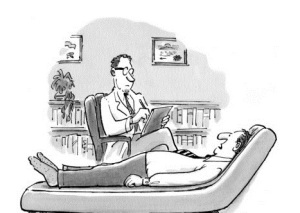
(Boy, does this freak disgust me or what...)
The Tennessee Senate’s Senate Health and Welfare Committee members have overwhelmingly approved a proposed bill that seeks to protect therapists from 2014 changes in the American Counseling Association’s Code of Ethics. The Code decrees that “counselors refrain from referring prospective and current clients based solely on the counselor’s personally held values, attitudes, beliefs and behaviors.” The bill, however, will allow practitioners to refuse to accept a patient without legal or professional penalties as long as they refer the individual to another qualified professional.
The Tennessee Association for Marriage and Family Therapists opposes the legislation, saying “This bill is in direct opposition to the ethical code of the American Association of Marriage and Family Therapy and potentially harmful to clients,” the group said in a statement. “Our mandate to do no harm to the consumer, we believe, would be violated.” A therapist who testified before the committee opined that “they can keep their belief system and still offer good counseling but not based on their religious beliefs.” Others have objected to a legislative body dictating professional ethics.
Your Ethics Alarms Ethics Quiz today is…
Is the proposed bill reasonable and ethical, or just a way to allow bigoted counselors to discriminate?
“Code Black” Glosses Over A Medical Ethics Imperative
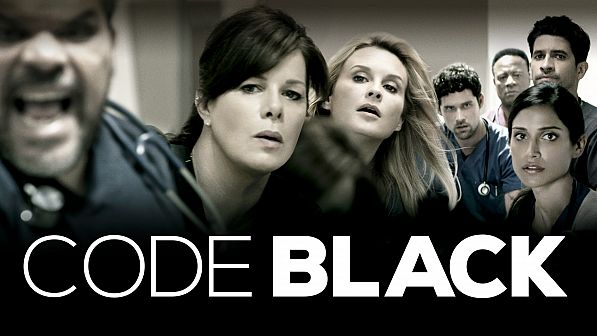
In TV’s medical drama “Code Black‘s” episode “Diagnosis of Exclusion,” we were plunged, as is too often the case in such shows, into a freak situation that might not occur in any U.S. hospital for a century, but that somehow happens on TV routinely.
A lunatic stalker named Gordon (Jesse Bradford) tried to rape doctor Malaya Pineda (Melanie Chandra) in the hospital garage, after stabbing a hospital administrator, perhaps fatally. Dr. Pineda fought back, the stalker stabbed her in the stomach, and then mild-mannered Dr. Angus Leighton (Harry Ford) arrived in time to pull the stalker off of his wounded friend and save her life. In the struggle that ensued, crazy Gordon was stabbed in the neck with his own knife.
This was presented in flashback, in the form of an official inquiry where Dr. Leighton explained that he told the stalker not to pull out his knife, but he did anyway, causing uncontrollable bleeding. “Maybe I could have done more but, I was out of my mind,” Angus explains. Leighton says he tried to stop the bleeding as he screamed for help. By the time the paramedics got the murderous patient into the ER, he was beyond saving.
Ahhh, but that’s not exactly what happened, we learn! First we saw Angus’s older brother, also a doctor, tell him that he did the right thing, that Gordon tried to kill two women that day and would have gone on to kill more if Angus hadn’t acted as he did.
Wait, what? Continue reading
Jessica Rabbit Ethics

From Left: Jessica, Pixie Before, Pixie After
Who could have predicted, when “Who Framed Roger Rabbit?” opened in theaters, that one of its greatest legacies would be a continuing obsession of young women to emulate her exaggerated, uh, features? Yet here is another example—and there have been quite a few—of a woman mutilating herself in pursuit of looking like the sexy Toon. Model Pixee Fox—I’m sure that’s her real name—wore a waist-training corset for 24 hours a day and spent $120,000 on various cosmetic procedures including a recent operation to have six of her ribs removed in order to achieve Jessica’s apparent 48-14-40 figure.
“I’ve always been inspired by cartoons and Disney movies, all the curves and tiny waists,” Fox told reporters. “People often, they come up to me and say, ‘Don’t take this the wrong way, but you look like a cartoon.’ For me that’s a compliment. My inspiration started with Tinkerbell, but with my transformation, I’ve been starting to look like Jessica Rabbit.”
If you say so, Pixee! Pixee is ill, it’s fair to say, so the ethical issues fall on the shoulders of Dr. Barry Eppley, the Indiana surgeon who admits handling Fox’s surgery and also defends it.
I covered this the last time Ethics Alarms covered a wannabe Mrs. Rabbit (Jessica is a human Toon married to a member Leporidae Family). In that case, the happy aspiring Toon looked like this when all was done…

What Lawyers Can Teach Doctors About Ethics

So THAT’S why they wear masks!
Sandeep Jauhar is a cardiologist, the author of “Doctored: The Disillusionment of an American Physician” and “Intern: A Doctor’s Initiation.”and a contributing op-ed writer for the New York Times. He recently penned a column for the paper that raised concerns about threats to doctor-patient confidentiality, specifically from the case, in Washington state, of Volk v. DeMeerleer.
Howard Ashby, a psychiatrist, was sued after his patient, Jan DeMeerleer, shot and killed an ex-girlfriend and her 9-year-old son before shooting himself. The estate of the victims, Rebecca and Phillip Schiering sued Dr. Ashby, alleging that he breached a duty to warn DeMeerleer’s victims even though the killer had made no specific threats toward the Schierings during his treatment. Last year, however, that judgment was reversed by an appeals court, which held that doctors could be required to warn “all foreseeable victims” of their potentially dangerous patients in their care.
It’s a terrible decision, and Jauhar does a good job explaining why. Unfortunately, he also writes this..
“I once took care of a business executive in the emergency room who had hired call girls during a weekend drug binge. When he saw a police officer outside his room, he quietly handed me an envelope containing a large amount of white powder. I wasn’t sure what to do with it, so I discarded it. For the next several hours the patient eyed me suspiciously, probably wondering whether I had ratted him out. But it never occurred to me to do so.”
Well, it should have. Confidentiality is one thing, assisting in a crime is another. The Hippocratic Oath says“What I may see or hear in the course of treatment, I will keep to myself.” That only means, however, that doctors who learn about criminal activity a patient may be involved in is bound not to report it (lawyers have the same obligation). Jauhar did more than not report criminal activity; he participated in it. He crossed the line by disposing of contraband. Continue reading
Ethics Quiz: “Fixing” “Elf Ears”

6-year-old Gage Berger was being bullied by his first grade classmates because he had protruding ears, and was often derided as “Elf Ears.” His Salt Lake City parents decided to address the problem here and now, before, they say, his self-esteem (I almost wrote elf-esteem…) was permanently damaged, so they had his ears de-elfed to look like everyone else’s.
Now he’s bullying other funny-looking kids.
Kidding.
I hope.
But seriously, folks, the story has aroused a controversy over societal and medical ethics. Did the parents choose plastic surgery too early and for the wrong reasons? Is that how we want society to be, where bullies and critics can pressure individuals to conform to a narrow standard of acceptible appearance? Doesn’t this give them power? Does it not encourage bullying? Is a first-grader old enough to meaningfully weigh these issues? Isn’t this a choice he should make, when he’s old enough to make it?
Your Ethics Alarms Ethics Quiz for today is…
 Ethics Alarms
I thought that the Charlie Gard story would stimulate some excellent thoughts on ethics and public policy from readers, and for once I was right. This is the first of two superb Comments of the Day it generated, and there were several others as well.
Here is Ryan Harkins’ Comment Of The Day on the post, “Observations On Britain’s Charlie Gard Ethics Fiasco.”