Three Breasted Ethics

Three_breasted_woman

UPDATE: Snopes, the urban legend and hoax website, now thinks that this is a scam. As I noted in the post, that would not be a surprise and in fact would be a relief. In such cases, I suggest that the post be read as a hypothetical, since the ethics issues raised by the three-breasted woman remain interesting, even if the story itself turns out to be fiction.

A 21-year-old woman being identified with the alias Jasmine Tridevil ( don’t over-think it) says she paid $20,000 to a plastic surgeon to  give her a realistic third breast. She wants to  become a TV reality show star. Jasmine has hired a camera crew to follow her around Tampa, Florida, documenting the challenges she faces as a three-breasted woman.

I know what you are thinking.

I HOPE this is a hoax.

“Jasmine” was rejected by more than 50 doctors who believed they would be violating professional ethical codes. Scot Glasberg, president-elect of the American Society of Plastic Surgeons, condemned the surgery as ‘worse than unethical’ and ‘harmful to society’. ‘This violates every ethical principle not just in surgery but in medicine as well. We look to enhance the norm. This is not the norm. Nothing speaks louder than the fact that the surgeon required the patient to sign a non-disclosure form.” Continue reading

Comment of the Day: “‘The Ethicist’ and the Doctor”

"Your secret is safe with me, but I have to ask...what that stolen Renoir doing up there?"

“Your secret is safe with me, but I have to ask…what that stolen Renoir doing up there?”

Jeff Long scores his first Comment of the Day with a welcome excursion into the thickets of medical confidentiality. As I expected, many readers were troubled by my support of strict patient-doctor confidentiality as dictates by AMA medical standards. Jeff does an excellent job elaborating on why I (and the professions like law, medicine and the clergy) take the position they do. In professional relationships, trust is essential, and you can trust professions that approve of breaching confidentiality when a damaging secret is involved.

Here is Jeff’s comment, on the post “The Ethicist and the Doctor.”

“First, with regard to Matthew’s example of the cheating spouse who contracts an STD, I think it would probably be difficult to come up with a better example of “the system working as intended.” In the world where doctors respect confidentiality, at least one person gets treated. In the world where the doctor blabs to the world (or at least, to the spouse), there’s a good chance that nobody does. In fact, if the cheater forgoes treatment out of fear of exposure, s/he is putting the spouse at even GREATER risk than in the former scenario, since the STD goes untreated and has a larger window in which to infect the spouse. Certainly, the ideal world is the one where the cheater gets treated AND confesses to the spouse, but the onus for that lies with the cheater. It’s not the doctor’s place. Continue reading

“The Ethicist” and the Doctor

It's all Greek to "The Ethicist"!

It’s all Greek to “The Ethicist”!

The third New York Times writer to take over the mantle of “The Ethicist” column, Chuck Klosterman, may be the most reliable yet, but he ended up wandering into the ethical weeds in his recent advice to an ethically-perplexed doctor, and engaging in advice column malpractice.

A physician asked him what was his ethical course when a patient divulged to him that his persistent headaches may have arisen from the stress of keeping a secret: he was responsible for a crime that had been pinned on an innocent man. Before the consultation, the doctor had promised his patient that “whatever he told me would not leave the room.”  Now the physician was having second doubts, and wondered if he was right to keep the confidence to his patient at the expense of an innocent man’s freedom and reputation.

Klosterman’s answer:

“I would advise the following: Call the patient back into your office. Urge him to confess what happened to the authorities and tell him you will assist him in any way possible (helping him find a lawyer before going to the police, etc.). If he balks, you will have to go a step further; you will have to tell him that you were wrong to promise him confidentiality and that your desire for social justice is greater than your personal integrity as a professional confidant.”

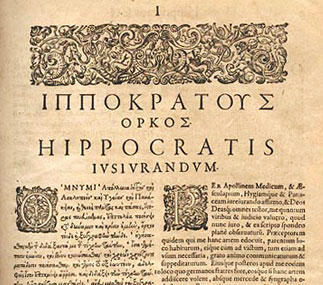
First of all, I don’t understand why a doctor is asking this question to a newspaper ethicist unless he doesn’t like what professional and medical ethicists are telling him. Klosterman, in reaching his reasonable-sounding but flat-out wrong reply, simply discards the concept of professionalism, beginning with the Hippocratic Oath…. Continue reading

Unethical Trio: An Ambush, An Incompetent Diagnosis, and Partisan Journalist Hackery

Doctors and Kurtz

There were three notable unethical performances last week from professionals who should know better:

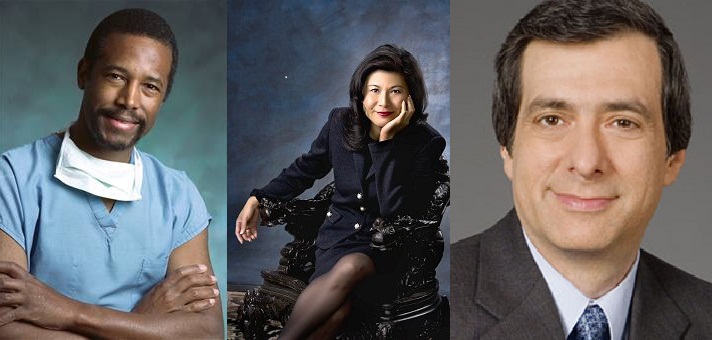
I. Dr. Benjamin Carson, neurosurgeon. Carson was invited to give the keynote speech at the National Prayer Breakfast (don’t get me started about why there even is a National Prayer Breakfast, and why the President should feel obligated to attend it) last week and turned what is traditionally understood to be a non-partisan, non-political speech into a direct attack, without explicitly designating it as such, on President Obama’s policies. Yes, it was a well-written, well-reasoned and well-delivered speech, but it was an ambush. Many conservatives were pleased to have President Obama  subjected to an articulate complaint that “spoke truth to power,” yet the objectives and specific content of the speech doesn’t matter: that wasn’t what Carson was invited to do, and it wasn’t what he should have done. Dr. Carson has subsequently justified his actions in self-congratulatory terms as an act of courage, but in reality it was an instance of a citizen seizing an opportunity to grab national attention and a prominent soapbox that weren’t his to grab. His actions made the President of the United States a captive audience to his amateur analysis of national affairs. It was disrespectful, and because it was given under false pretenses, dishonest. Continue reading

Consequentialism, Bias, Moral Luck and Malpractice on PBS’s “Downton Abbey”

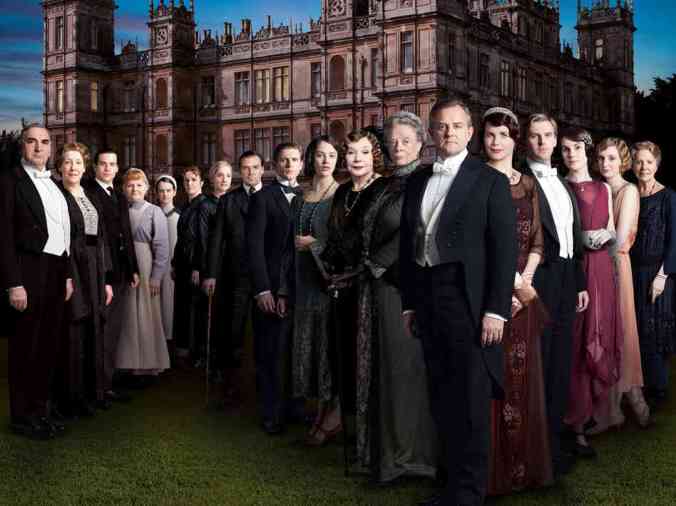
downton_abbey

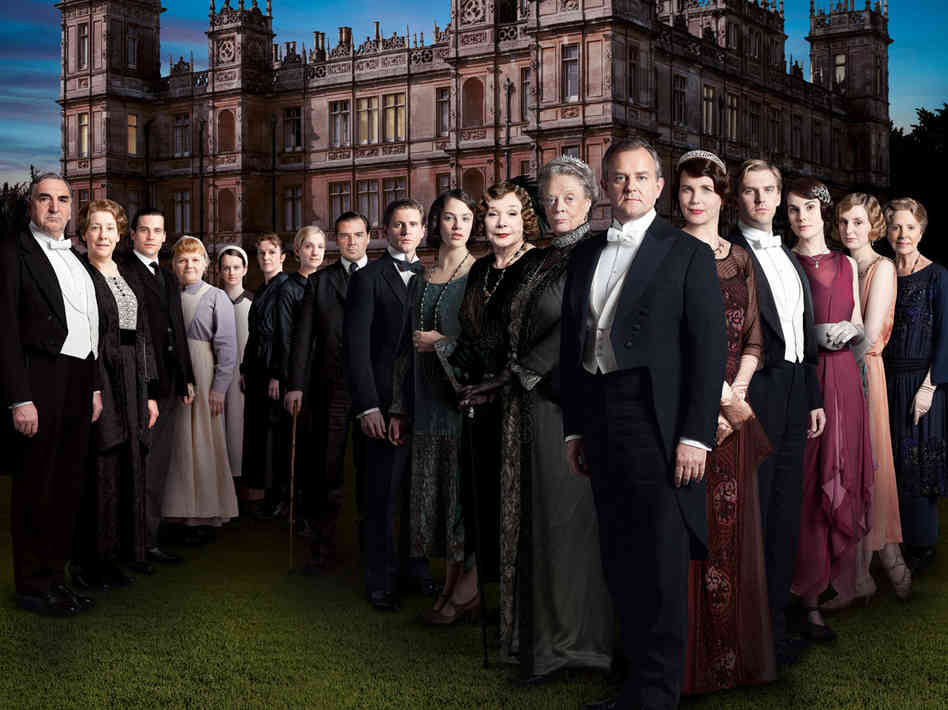
The fourth episode of the PBS sensation “Downton Abbey” provided a clinical examination of how bias of all kinds can rule the most important decisions in our lives, and how moral luck so frequently determines our conclusions about whether those decisions were right, wrong, or really, really wrong. It also shed some light on the  current policy conundrum of how best to consider medical malpractice suits—as a fair and necessary means of rewarding the victims of professional errors, or as a decidedly unfair device that distorts the practice of medicine and inflates its costs without improving treatment.

For those who have not caught the trans-Atlantic mania of following the saga of the Earl of Grantham and his extended family as they try to maintain their life of luxury as members of the landed aristocracy post-World War I, here are the relevant plot points of the most recent episode (in the U.S.; Great Britain is a season ahead of us):

Sybil, the much loved but rebellious daughter of the Earl is staying at the family estate (all right, castle) as she prepares for childbirth. (She and her Irish revolutionary husband Tom are on the lam from British authorities, but never mind that). The Earl naturally wants the best medical care for his daughter, and rejects the long-time family physician, Dr. Clarkson, for the task, because he has made some faulty diagnoses of late that led to all kinds of sorrow in last season’s drama. So the Earl calls in a renowned surgeon to the upper crust who is upper crust himself, Sir Philip Tapsell. (He appears to be an arrogant, pompous jerk, but the show’s writers show him giving sage and well-worded advice to the Earl’s non-Irish revolutionary son-in-law on the delicate matter of his sperm count, so we know he’s not a fraud as well.)

The Earl’s American but far too deferential wife Cora (in case you wondered whatever happened to the cute Elizabeth McGovern from “Ordinary People,” the answer is, “This!”) seeks to rescue Dr. Clarkson from a stinging snub by insisting that he come to Downton Abbey and be present for the childbirth as what we would call a consulting physician to Sir Philip, who doesn’t want one. Two head-strong doctors and hostile doctors looking after the same patient—yes, this will work out well.

Sure enough, Sybil’s pregnancy takes an ominous turn. Her ankles are swollen (“Perhaps she has thick ankles!” huffs Sir Philip, pooh-poohing the symptom. “She does not!” replies loyal Dr. Clarkson), her mental state is confused, and there is protein in her blood. Clarkson concludes that Sybil is toxemic and believes she could suffer eclampsia if she isn’t taken to the hospital immediately for a Caesarian section. Sir Philip dismisses him as a hysteric hack, and insists that Sybil’s pregnancy is normal and fine. Since Caesarians were risky in the 1920’s, often resulting in the deaths of the mother, the baby, or both, he believes Dr. Clarkson is giving irresponsible advice. As critical minutes tick away, Lord Grantham asks Clarkson if he can guarantee that Sybil will survive the ordeal of a Caesarian. “There are no guarantees,” he replies, correctly. Not hearing what he wanted to hear, the worried father turns to Sir Phillip and asks how certain the blue-blood doc is that the operation is unnecessary. “Completely certain,” is the ridiculous reply.

Announcing that certainty is a better bet than equivocation, Lord Grantham decrees that Sybil will remain at the castle to have her child, which she promptly does. All seems to be well, too, with a healthy baby, a beaming mother, a relieved family, and a smugly gloating Sir Phillip. But then Sybil goes into the violent seizures characteristic of eclampsia, and it is too late to save her. She dies. Dr. Clarkson’s diagnosis was correct. The family is devastated; Sir Philip is stunned, Cora is furious at both him and her husband, and the Earl of Grantham is feeling guilty.

Got that?

Cora’s anger, the Earl’s guilt and the vindication of Dr. Clarkson are all the result of a bad-tasting recipe of hindsight bias and moral luck. Sybil might have not gone into convulsions. She might not have survived the Caesarian, in which case Dr. Clarkson would be the one looking incompetent, Sir Phillip would say “I told you so,” and Cora would be furious at a different doctor but the same decision-maker, her husband, who would still be sleeping in the guest room. Continue reading

Ethics Quiz: Let’s Play “Icky… or Unethical?” !

Hi everybody! It’s time to play everyone’s favorite play-at-home ethics quiz show, 

“Icky or Unethical?”

…where you, the audience, have to decide whether our guest’s conduct is truly unethical, or just so disgusting, strange or creepy that it just seems like it!

Ready to play? Great! Let’s all welcome our special guest, Dr. Michael Niccole, founder of the CosmetiCare Plastic Surgery Center in Newport Beach, California! Thanks for being here, doctor! Now let’s show our studio audience and those playing at home what you have done to bring you to the show! Here it comes:

“Dr. Niccole gave his daughter Brittani breast implants when she was just 18. He also gave her a nose job. Dr. Niccole performed surgery on his other daughter, Charm,* to turn her “outtie” belly button into an “innie ”when she was 10. Now that both daughters are 23, he regularly gives them Botox injections to prevent wrinkles as well as performing other cosmetic procedures on them!”

All right, there you have it!

Show that picture of Brittani, Don Pardo!

What a lovely young woman! You sure did right by her, Doc!  Hubba-hubba!  And now, it’s time to answer:

Is Dr. Niccole’s work on his daughters just icky, or is it unethical? Continue reading

Comment of the Day: “The Legal Profession’s Muddled Standard For ‘Fitness To Practice’”

...and that's why they wear masks!

Interested Blogger, or “IB,” makes some interesting observations about professional ethics enforcement generally and medical ethics in particular in the Comment of the Day, responding to the post, The Legal Profession’s Muddled Standard For “Fitness To Practice.” Her insight regarding the reasons why professionals are so reluctant to pull the licenses of misbehaving colleagues is astute, I think.  Lawyers and doctors are hesitant to punish individuals for doing something they could imagine themselves doing, though the Golden Rule is  being misapplied. It’s a disturbing thought, but an illuminating one: perhaps John Edwards keeps his law license because other male lawyers think, “Boy, that could happen to me: get smitten by some hot babe in the office, we fool around, she sandbags me on birth control…heck, I might panic. I might try a crazy scheme to cover it up, especially if it was all going to be played up in the tabloids. Poor guy! How can we disbar him?”

Here is IB’s “Comment of the Day”: Continue reading

Post-Thanksgiving Ethics Quiz: Is This Ethical? (Giant Lips Edition)

Jessica also apparently has only one eye…

Look at the bright side: at least she didn’t have octuplets.

Kristina Rei, 22, of St. Petersburg, Russia, wants to look like Jessica Rabbit, so naturally she opted to get herself a pair of hugelips.She has undergone over 100 silicon-injection procedures, and considers it just the initial step in her quest to look like Roger Rabbit’s

Kristin’s hickies are deadly.

Toon wife from “Who Framed Roger Rabbit?”. “When I can afford it I want to enlarge my breasts from a C-cup to a DD, change the shape of my nose and I want to make my ears pointed like an elf,” she told reporters. “It’s good to be different.”

Well, she’s different, all right.

Your Post-Thanksgiving Ethics Quiz: Was it ethical for a plastic surgeon to give her the lips she wanted?

Plastic surgeons are subject to the Hippocratic Oath like other doctors, but in  cases of elective surgery the standards of what constitutes doing substantive harm to a patient are extremely elastic. None of the Codes of Ethics for plastic surgeons would clearly prohibit giving a patient lips that look like they belong on a Macy’s helium balloon, or similar exaggerated features. These lips make Kristina happy. Is she mentally ill? A doctor who suspected so would be wrong to submit to her wishes if they were based on clinically defective judgment, but the fact that a doctor thinks a patient will look like a freak if he does what she wants isn’t ethically dispositive. Continue reading

The Worst Humanitarian Award Winner of the Year

Michael Brown---wife-beater, humanitarian.

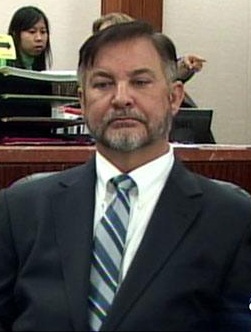
Michael Brown founded Houston’s Brown Hand Center, which specializes in the treatment of carpal tunnel syndrome. He is now on trial for assault, after being arrested last year for attacking his his wife, twisting her arm behind her back and, among other things, hurling his 2010 Joanne King Herring Humanitarian Award at her.

I have often thought that those who give out humanitarian awards for specific instances of good conduct have an ethical obligation to make sure that recipients conform to the definition of “humanitarian” in their overall conduct. One of the definitions of humanitarian is “ethical.” Official pronouncements that an individual is ethical can be very effective false advertising for the character of someone who is anything but. Mr. Brown illustrates my concerns.

By 2010, when Brown received his award, he had already pleaded no-contest in 2002 to aggravated assault for beating then-pregnant wife, Darlina Brown, with a bed post. Call me a stickler, but I think there should be an automatic “Beating a pregnant woman with bedpost” disqualification provision for humanitarian awards. Then, in 2006, Dr. Brown’s medical license was revoked after he tested positive for cocaine use. So to summarize, at the time he was deemed worthy of the honor of being the 2010 humanitarian of the year, Brown was already an admitted wife-beater and an ex-doctor found unfit for the continued practice of medicine.

What a guy!

How about a rule that if you try to kill someone with your humanitarian award, it is automatically revoked?

Too strict?


Unethical Plaintiffs in the Case Of the Shortened Penis

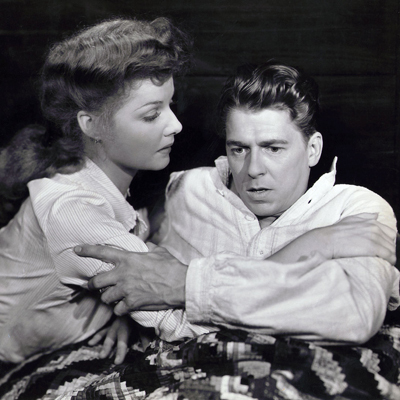
Ronnie had it easy in "King's Row"---he just woke up missing his legs.

A Kentucky truck-driver, 64-year-old Phillip Seaton, went into surgery to remove his inflamed foreskin in what began as a simple circumcision.  Dr. John Patterson, the surgeon, began the procedure and saw that Seaton’s penis was riddled with cancer. He amputated more than just the foreskin, and Seaton awoke one full inch shorter than when he arrived. And Extenz wasn’t going to help.

He and his short-changed wife sued Patterson for malpractice, arguing that he had been mutilated and unmanned without his consent, and that Patterson should have performed only the circumcision, sewn him up, and consulted with the truck-driver and his wife regarding their options.

Clever law suit. We can’t blame the lawyer who took it on: a sawed-off penis is a good bet to get jury sympathy. All that is required for a lawsuit to be ethical from a lawyer’s perspective is for there to be a good-faith and reasonable belief that the suit could prevail under the law. This one could have. Generally it’s a good idea, and only polite, to ask before cutting off a piece of someone’s penis. I know it’s the rule in our house. Continue reading