
“Grow Your Own Marrow Donor” Ethics and Consequentialism: The Ayala Family Saga

Anissa Ayala and her custom-made bone marrow donor

Once again, the fans of that ethically corrosive twin of  “the ends justifies the means,” consequentialism, were holding court in the mass media, as the “Today Show” revisited a two-decade old ethical outrage to declare that it was all perfectly fine after all…because it worked.

Thus does television, itself dominated by ethically-dim writers, producers and stars, corrupt the public. So here we go again:

Does the fact (if it indeed is a fact) that Osama bin Laden capture and execution was facilitated by torture make torture less ethically wrong?

No.

Do the fortuitous results of any action that was unethical from its inception change the nature of that conduct from unethical to ethical.

Again, no.

Is conceiving a child solely to provide donor bone marrow to her cancer-stricken older sister ethically acceptable as long as the sister’s cancer is cured?

Absolutely not!  But to listen to the “Today Show,” and revoltingly, the “Today Show’s” resident medical correspondent Dr. Nancy Snyderman, it is not only ethically acceptable but laudable. Because it worked.

Twenty years ago, Abe and Mary Ayala were desperate because Anissa, their 16-year-old daughter, had been diagnosed with leukemia. Chemotheraphy proved ineffective, and neither the Ayalas nor their son was a compatible bone marrow donor. The Ayalas had long before decided that two children were enough; Abe had a vasectomy. But then Mary came up with the idea of having another child in the hopes that it would be a bone marrow donor who could save Anissa’s life. Continue reading

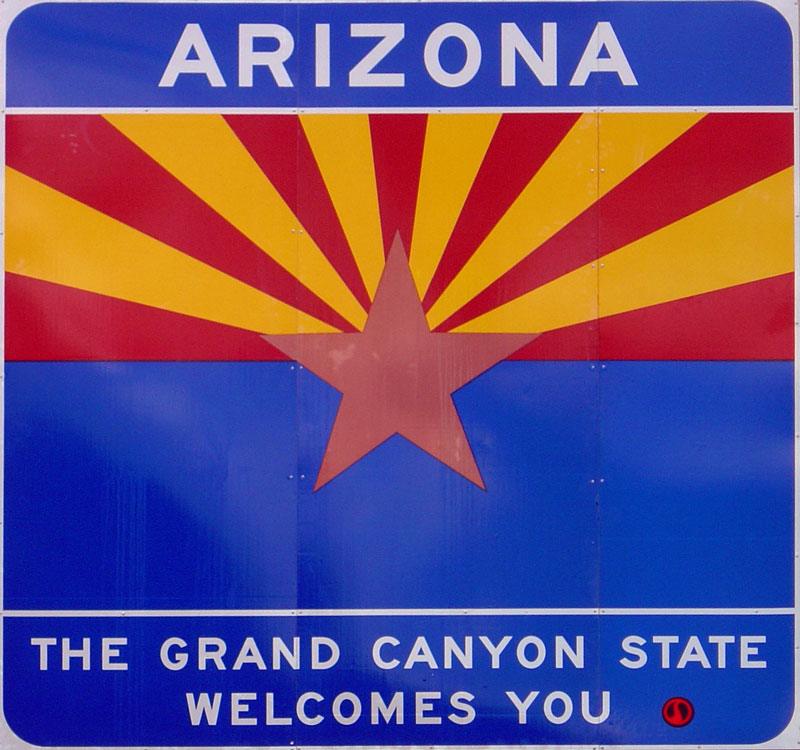
Ethics Hero: Arizona Governor Jan Brewer

There is hope for Arizona yet...

Earlier, I wrote about a bill passed by the Arizona legislature that would broadly allow religious practices and beliefs to trump professional obligations, ethics codes and discipline. The bill, SB 1288, directed in part:

A. Government shall not deny, suspend or revoke a professional or occupational license, certificate or registration based on a person’s exercise of religion.

B. Government shall not deny, suspend or revoke a professional or occupational license, certificate or registration based on a person’s refusal to affirm a statement that is contrary to the person’s sincerely held moral or religious beliefs, regardless of whether those beliefs are specifically espoused by a recognized church or religious body…

C. A person’s exercise of religion is not unprofessional conduct.

It was widely assumed, including by me, that Republican governor Jan Brewer would sign this stunningly awful bill into a law which would allow any practice that could be called “religious” to be immune from community, cultural and professional norms of right and wrong unless they were explicitly illegal. She did not. She vetoed it, an act of responsible leadership and political courage.

You can read her veto letter here.

Arizona’s Anti-Ethical Free Exercise of Religion Bill

While I was worrying about the unethical nature of so-called “conscience clauses,” which allow certain professionals, like pharmacists, withhold their services when they clash with the professional’s religious convictions, the Arizona legislature was cooking up something unimaginably worse. Last week the Arizona House of Representatives passed and sent to the Governor Brewer to sign into law SB 1288, a mind-blowing bill prohibiting the denial of occupational licenses or positions on public bodies because of an individual’s exercise of religion.

The soon-to-be-law states:

A. Government shall not deny, suspend or revoke a professional or occupational license, certificate or registration based on a person’s exercise of religion.

B. Government shall not deny, suspend or revoke a professional or occupational license, certificate or registration based on a person’s refusal to affirm a statement that is contrary to the person’s sincerely held moral or religious beliefs, regardless of whether those beliefs are specifically espoused by a recognized church or religious body… Continue reading

The Ethics of Singing For Muammar

Sing, Nelly---and charge him through the nose.

Singer Nelly Furtado has been attacked recently for accepting a million dollars in 2007 to entertain Muammar Gaddafi and his family. The idea seems to be that, as ringingly put by screenwriter Mark Tapper,

“It is quite simply willful blindness to claim that there is no moral dimension in the choice to perform privately for a monster like Gaddafi, and in being paid exorbitantly from funds no doubt stolen from his own people, or misappropriated from foreign aid or dirty deals.”

Furtado isn’t the only one who crooned for the Libyan dictator, apparently. Mariah Carey, Usher, Lionel Richie, Beyoncé and other performers also accepted big bucks to give Muammar and his family a good time.Furtado is donating her fee to charity in the wake of criticism like Tapper’s and Beyoncé has also donated the million that she received to charity, apologizing profusely. Mariah Carey is begging for forgiveness.

I’m glad that the stars are giving their money to worthy causes, and no doubt it is a good public relations move in a society where half-baked ethical notions become conventional wisdom before much thought has been applied to them. Nevertheless, Furtado and the rest did nothing wrong by entertaining Gaddafi. Continue reading

Gov. Haley Barbour Shows How To Make Mercy Unethical

Mississippi Governor Haley Barbour has managed to make a reasonable commutation decision look thoroughly corrupt….which it very well might be. Continue reading

When TV’s Ethics Matter, and When They Don’t

As one who has argued that certain TV commercials, notably the infamous “green shirt” Tide commercial, the Twix commercial  and Direct TV’s disturbing (but often funny) series showing football fans hurting rival team supporters, I know I’m asking for trouble by declaring, as I officially do here, that for compliance firm Global Ethics to criticize TV shows like “The Office” and “30 Rock” for supposed workplace ethics violations is absurd. But it is absurd. And criticizing the commercials in question is not.

Hear me out. Continue reading

GlaxonSmithKline Inspires a Fun Game For Your Holiday Party: “Forcast That Ethics Scandal!”

Almost all ethics scandals and examples of outrageous unethical conduct are thoroughly predictable, whether they involve individual, organizations or institutions. The most obvious proof of this is in politics. Once we consider past patterns, current conditions, institutional habits and what we know about human nature, the question when a new political party takes over isn’t whether there will be instances of bribery, influence peddling, self-enrichment, and conflict of interest, but only which elected leaders will be caught at it. Sometimes even that part is easy: everyone should have been able to guess, long before they occurred, that Tom DeLay’s ethics-free philosophy of politics as warfare would lead him to commit serious misdeeds, just as the odds against former Florida Rep. Alan Grayson running a fair or civil campaign for re-election were prohibitively high. Similarly, sports scandals can usually be seen coming a long way off. Once New England Patriots coach Bill Belichik was caught making surreptitious videos of his team’s opponents’ practices, it was easy to guess that he wasn’t the only one, and that since both he and his team were so successful, it would be only a matter of time before a similar incident came to light. And it did, last week.

As I look through various Ethics Alarms posts, it is striking how many of them could have been written in advance, in fill-in-the-blank format. All you need to do is identify an industry with a history of ethics problems, a weak ethics culture, a trusting, under-informed audience, the potential for increased profit, power or influence, and a large population of corruptible, lazy, incompetent, venal, ambitious or cowardly allies. I’m sure a computer program could be developed, but for this holiday season, why not forecast next year’s ethics scandals as a party game? Challenge your guests: Which TV reality show will be shown to have completely manipulated “reality”? Which revered sports figure will be disgraced in a sex or drug scandal? Which Wall Street firm will be caught violating the “sacred principles” posted on its website? Which school will suspend or expel a student for violating the letter of an overly broad and horribly-written rule without actually doing anything wrong? Which universally accepted scientific research will turn out to be the result of manipulated data? Which embarrassments of the Obama Administration will only be reported by Fox News, and which outrages committed by Republicans will the same network ignore?

And, of course, where will TSA employees put their hands next?

This occurred to me as I read about the recent Big Pharma-manipulating-medical-practice scandal, involving drug giant GlaxonSmithKline, while slapping my forehead and shouting, “Of course! This was the logical next step!” Continue reading

Sheyla Hershey’s Mega-Breasts and the Ethics of Assisted Self-Destruction

The current bicycle ordeal commenced by the Vogel family was sold to the family’s twin boys as a chance to get into the Guinness Book of Records. That publications has been used to justify more self-destructive conduct than the complete works of Ernest Hemingway, and here’s another example: Sheyla Hershey, owner of the world’s largest breast implants (size M, supposedly) according to Guinness, just had to have them removed because of serious infections. They were also “uncomfortable,” she has told reporters.

Gee, who could have seen that coming? Continue reading

Ethics and the Killer’s Liver

Johnny Concepcion, a 42-year-old man accused of stabbing his wife to death,  received a liver transplant at New York-Presbyterian/Columbia University Medical Center in New York, raising the natural question, “WHAT?!!”

Or to be more precise: Wouldn’t it be more ethical to withhold a life-saving liver transplant from such a man, and give the liver instead to someone who isn’t a blight on society and likely to spend the rest of his life in prison?

No.

Continue reading

Doctors and the Deadly Anti-Snitch Reflex

Everybody, or almost everybody, hates to report friends and colleagues for misconduct. This is the anti-snitch reflex, a strongly programmed response from childhood. Telling authorities about the misconduct of others sets off internal alarms that have been installed by parents and peer groups, ensuring that we feel terrible if we “tattletale.” This is betrayal, a violation of loyalty, and most of all, a breach of the Golden Rule: we’d never want anyone to snitch on us.

For professionals, however, this reflex is false, mistaken and even deadly. The duty to report dishonest public employees, crooked cops, unethical lawyers, conflicted accountants, self-dealing business executives, fraudulent researchers and others in the workplace—even if they are colleagues and friends—trumps childhood codes, personal loyalty and general discomfort. There is nothing noble or admirable about allowing innocent people to entrust their life and livelihood with untrustworthy professionals. Nevertheless, a disturbing large proportion of all professionals can’t bring themselves to do the right thing when it comes to the core ethical duty of stopping workplace dishonesty, incompetence or corruption when it involves a colleague.

A recent survey of doctors is not comforting, but it confirms the problem. Continue reading