Ethics Observations On the Sale of Babe Ruth’s “Called Shot” Jersey for $24 Million

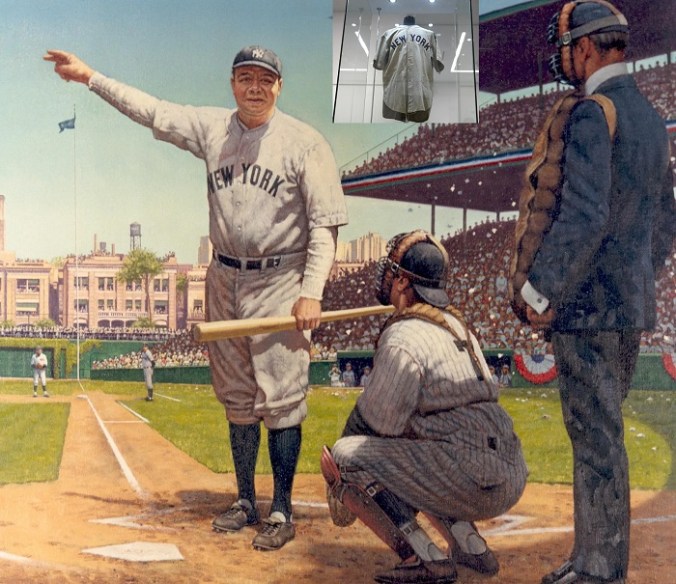
The jersey worn by baseball legend Babe Ruth when he “called his shot” in Game 3 of the 1932 World Series sold over the weekend for $24.12 million, setting the auction record for most expensive sports collectible. The previous record price for any sports collectible was the $12.6 million that a rare mint condition Topps 1952 Mickey Mantle card fetched in 2022. Babe’s jersey far eclipsed the $10.1 million a Michael Jordan Chicago Bulls jersey from Game 1 of the 1998 NBA Finals achived at auction that same year, the record for athletic attire until Babe broke it, like he shattered so many records when he was alive.

The sale raises many ethics issues, but the main one is that the exorbitant price is almost certainly based on a fabrication, a lie. It is similar to paying millions for the axe little George Washington used to cut down his father’s cherry tree.

Continue reading

Nazi Memorabilia Ethics?

“ARRRGHHH!!!!”

I haven’t checked in on The Ethicist column in the New York Time Magazine in a while: the current resident, Kwame Anthony Appiah, is the real McCoy, unlike all of his predecessors, and his analysis of various queries from readers is usually valid and properly reasoned. This week’s featured issue is a strange one, however.

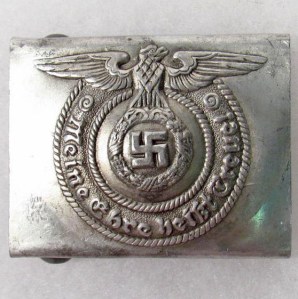
A Peter Hulit of Los Angeles wrote to ask what was the “ethical way” to deal with  a belt buckle from a Nazi uniform that was stored in his late father’s box of World War II memorabilia, collected during his service overseas. Hulit explained,

“I have kept it stashed in my desk. I’m now in my 60s and really don’t want it in my house..I have checked resale sites, and it does have some monetary value, but I do not want it to fall into hands that may use it symbolically for what my father fought against.”

I rate this question as more evidence of Nazi hysteria, one of the side-effect of the 2016 post election Ethics Train Wreck that includes the effort by the Left to slander opposition to Democrats, Clinton and Obama as nascent fascism. It is also a continuation of the historical air-brushing that Orwellian progressives seem to think will magically eliminate all evils from modern society.

World War II artifacts are history and are tools of acquiring knowledge. Knowledge is what those seeing German Nazi motivations in President Trump and his supporters sorely lack. There is no such thing as dangerous history. What is dangerous is to forget history, or to try to pretend that what happened did not.

Nor are objects cursed, or evil. People are evil, and history leaves evidence of evil deeds.  “I don’t want it in my house” smacks of superstition. It’s a belt buckle.

Hulit’s question seems to suck The Ethicist down some unethical holes that he should avoid, and usually does. For example, he writes, Continue reading

Mom Ethics and Kobe Bryant’s Plight

Ah, how many of you must identify with Kobe Bryant today!

Did Mom throw them out?

Did Mom throw them out?

He is enmeshed in an ugly family dispute, suing his own mother in response to an unethical wound that mothers have casually inflicted on their children for centuries.

The superstar Los Angeles Lakers guard’s lawyers argued in a court filing that Bryant never gave his mother permission to sell his memorabilia from his high school days and early professional basketball career, in an attempt to block the auctioning off of jerseys, balls, trophies, championship rings and more for his mother’s profit. His mother, Pamela Bryant, says that she has the right to sell the stuff, because the NBA star told her the memorabilia was hers. She has already received a received a $450,000 advance to have Berlin, N.J.-based Goldin Auctions sell it all for top dollar. Continue reading

Ethics Hero: New York Met Jason Bay

Sometimes all it takes to be an Ethics Hero is being nice, especially if it’s in a way that most people like you have abandoned.

New Mets left fielder Jason Bay has moved to Larchmont, New York, where his presence is causing something of a buzz among the residents, especially the younger baseball fans. Gabriel Tugendstein, who is 11, was especially excited, and here we defer to his mother, writing in the New York Times… Continue reading