“The Ethicist” Had A Long Answer To This Question. I Have A Short One…

, the New York Time’s advice column ethicist who really is an ethicist, was atsked with this query from “Name Withheld”:

I am a Black woman and I signed up as a mentor for a law-student-mentoring program at my alma mater. I made a request for a Black mentee, but I was paired with a white woman. Now I’m second-guessing participating in the program. Black attorneys make up less than 5 percent of all attorneys and continue to face horrific experiences in law school and in the legal community.

This is whom I envisioned myself supporting when I registered for the program as a recent graduate. I imagined deep conversations about law professors and law-firm culture, and sharing how I’ve learned to navigate them as a Black woman. Not only will these conversations not apply to my mentee the same way, but I can’t help wondering if assisting them will ultimately contribute to my own oppression.

There are so many factors in her favor that I don’t really want to help give her even more of a leg up in my free time. On the other hand, I don’t have anything against her, and law school is universally scary during the first year. Should I be thinking about this differently? Is it wrong to bow out?
Continue reading

Ethics Hero Emeritus: Eugene M. Lang

A kind, courageous Ethics Hero died last week. To my shame, I had never heard of him. In 1996, President Clinton awarded him the Presidential Medal of Freedom, but that award has been so degraded and politicized that I no longer pay much attention to it. My mistake: in this case, the award was well-earned.

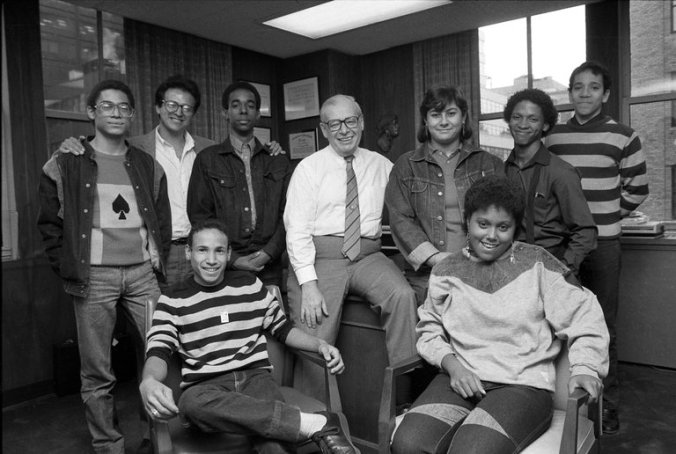
Eugene M. Lang was born poor and became  a successful and wealthy  investor. In 1981, he was invited to deliver a commencement address to 61 New Your City sixth graders at Public School 121, his alma mater.  “I looked out at that audience of almost entirely black and Hispanic students, wondering what to say to them,” he recalled years later. “It dawned on me that the commencement banalities I planned were completely irrelevant…So I began by telling them that one of my most memorable experiences was Martin Luther King’s ‘I Have a Dream’ speech, and that everyone should have a dream.”

Then, in a flash of inspiration, he decided on the spot to tell them that he would give a scholarship to every student in the class who was admitted to a four-year college.

That impulsive promise led to his establishment of the I Have a Dream Foundation, with an office in Manhattan. Lang hired a project coordinator and established a year-round program of academic support including mentoring and tutoring as well as sponsored cultural and recreational outings. In the meantime, he virtually adopted that 6th grade class, taking them on trips and restaurants, and personally counseling them through personal travails as well as school problems, often intervening with school officials on their behalf. By the time Eugene Lang died at age 98,  his dedication had changed the lives of more than 16,000 at-risk children nationwide.

Lang said the he knew, when he made his pledge to those 11 and 12-year olds, that giving poor and  troubled children money for an education would not ensure their success. He knew many would succumb to the cycle of poverty,  drugs, jail and irresponsible parenthood.  “When I made the original promise, the principal told me that maybe one or two students would take advantage of my offer,” he told  one interviewer. That’s why he dedicated himself to doing more.

Continue reading