From Acculturated, A Perfect Rationalization #22

The post by Mike Judge on the pop culture site Acculturated is such a perfect example of The Worst of All Rationalizations, #22 The Comparative Virtue Excuse, that I might add a permanent link to it in the Rationalizations List.

In case you have been out of the Ethics Alarms loop, here is #22:

22. The Comparative Virtue Excuse: “There are worse things.”

If “Everybody does it” is the Golden Rationalization, this is the bottom of the barrel. Yet amazingly, this excuse is popular in high places: witness the “Abu Ghraib was bad, but our soldiers would never cut off Nick Berg’s head” argument that was common during the height of the Iraq prisoner abuse scandal. It is true that for most ethical misconduct, there are indeed “worse things.” Lying to your boss in order to goof off at the golf course isn’t as bad as stealing a ham, and stealing a ham is nothing compared selling military secrets to North Korea. So what? We judge human conduct against ideals of good behavior that we aspire to, not by the bad behavior of others. One’s objective is to be the best human being that we can be, not to just avoid being the worst rotter anyone has ever met.

Behavior has to be assessed on its own terms, not according to some imaginary comparative scale. The fact that someone’s act is more or less ethical than yours has no effect on the ethical nature of your conduct. “There are worse things” is not an argument; it’s the desperate cry of someone who has run out of rationalizations.

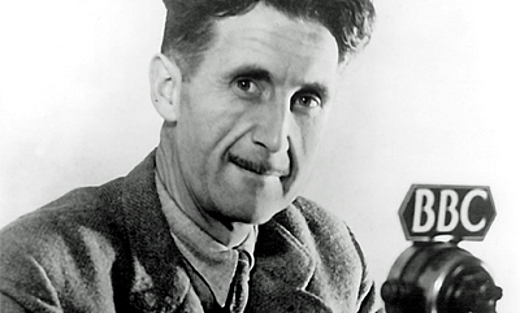
Judge spends his post, titled “Why Are Some Journalists Acting Like Snowflakes?,’ mocking journalists who complain when the President punches down at them, which is unethical conduct on his part, or when the public is openly hostile to reporters, which is wrong, but it is the escalating bias and trustworthiness of the news media that arouses the public’s ire. In contrast, he reminds us that George Orwell (above) was shot in the neck when he was on assignment as a reporter, that young reporter Ernest Hemingway was hit with a mortar in World War I, and that Woodward and Bernstein thought their lives were at risk. Continue reading
A Plague Of Misleading Headlines

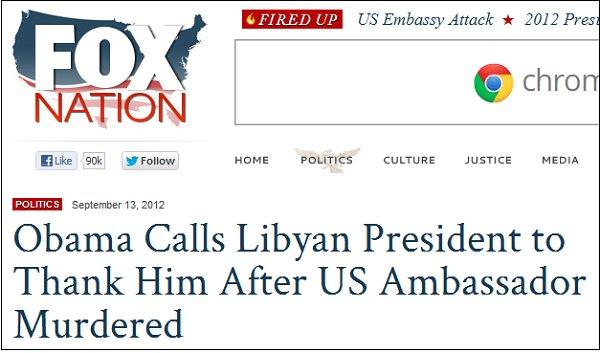
Fake headline

The mad quest for clicks appears to be leading websites that should know better to sink to misleading or outright dishonest headlines on the web. For someone like me, who has to scan these looking for possible ethics issues, it is an increasingly annoying phenomenon. Readers need to speak up. The practice is unethical, and moreover, suggests that the source itself isn’t trustworthy.

Here are three current examples;

1. The Daily Beast: “Idiocracy’ Director Mike Judge: Fox Killed Our Anti-Trump Camacho Ads”

Boy, isn’t it just like that conservative, Trump-promoting Faux News to help The Donald by using its power, influence, lawyers, something to stop the makers of “Idiocracy,” that comic classic, from being used to save the country from American Hitler?

That’s sure how the Daily Beast wanted its largely Democratic readership to react to its headline over the story about a fizzled effort to use the the film’s character  of ex-porn star future U.S. President Dwayne Elizondo Mountain Drew Herbert Camacho, played by Terry Crews, in a series of comic spots ridiculing Trump’s candidacy. The story, however, never quotes Judge as saying Fox—that would be the movie side of Twentieth Century Fox, not Fox News, which had no say in the matter: the company produced the film and owns the right to it and all of its characters—killed the project.  All Judge says is that the idea of doing a series of such ads didn’t come to fruition, for a whole list of reasons which might have included Fox’s distaste for the project.. Of  Fox, he says this..

“I think also Fox… yeah, they… even though they’ve probably forgotten they still own it…”

The writer then suggests that company owner Rupert Murdoch might not like the idea, and thus prompted, Judge replies,

“Yeah. That’s the other thing. I think there was a roadblock there, too…I just heard that [the proposed ads] were put on the shelf, so it looks like they’re not going to happen.”

Based on this, the author, typical Daily Beast hack Marlow Stern, writes, “It looks like Fox refused—and the ads are now dead.” Stern never says that Fox refused; it is the “reporter” who says it. Meanwhile, when the Daily Beast writes about “Fox,” it is referring to Fox News 99.9% of the time, and knows that’s what its readers will think when they read “Fox.”

The headline is intentionally misleading, and a lie.

(Incidentally, the movie is a great concept that under-delivers on its premise and potential, and should be a lot funnier than it is) Continue reading