Paula Broadwell, Dee Dee Myers and The “Spokesperson” Deception

Paula or Dee Dee: Who do you trust?

Paula or Dee Dee: Who do you trust?

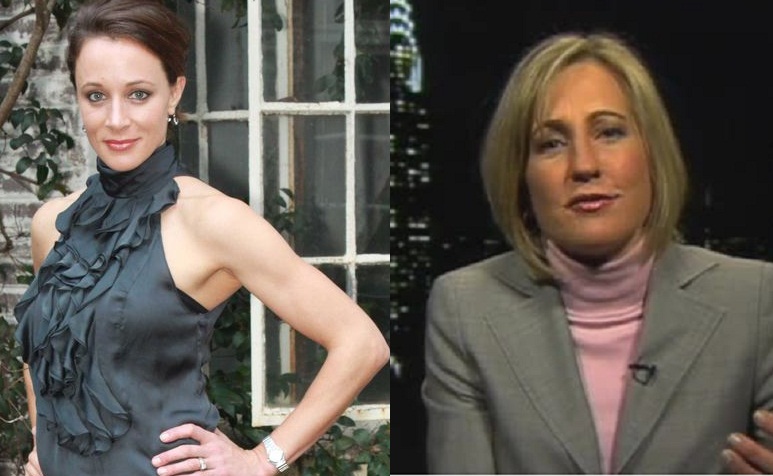
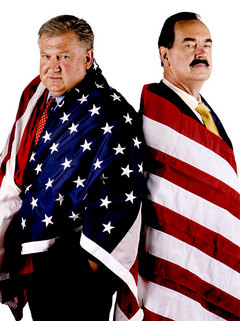
Speaking on behalf of Paula Broadwell, the ambitious siren whose pulchritude and sycophancy combined with David Petraeus’ vanity and mid-life crisis to wreck his career and reputation, Dee Dee Myers told the news media that “the Justice Department thoroughly looked at [allegations that Broadwell had threatened Jill Kelley in the e-mails that exposed Broadwell’s affair with the general] and declined to prosecute,” a decision that “makes a pretty bold statement about the content of the emails…People can make their own judgments based on that.”

Well done, Dee Dee! This is masterful deceit, not that I would expect less from a Clinton Administration veteran. There lies the central ethics rot in Myers’ current career as a reputation doctor and PR consultant with the Glover Park group, and particularly with her role of spokesperson, when the client is innately unbelievable and the spokesperson is not. Continue reading

Author (NOT Lawyer) Elizabeth Wurtzel’s Careless Aspirations

Well, she sure doesn't look like any lawyer I know...

Well, she sure doesn’t look like any lawyer I know…

The acclaimed author of “Prozac Nation” and “Bitch” graduated from Yale Law School while trying to figure out what she was going to do with her now rich and famous life. Elizabeth Wurtzel has yet to pass the NY bar exam successfully, however (she’s taken it at least once), which means she is not admitted to practice there or anywhere. Nonetheless, based on the fact that she was working as a paralegal at a law firm, Wurtzel gave an interview in which she arguably described herself as “a lawyer.”

This may not seem like a big deal, but it is. As discussed in the posts about Elizabeth Warren’s mysterious professional status, the unauthorized practice of law (UPL) is taken very seriously in the legal profession, and representing yourself as a lawyer when you aren’t is often enough to cross into UPL territory. Above the Law contacted two worthy legal ethics scholars who agreed that this did not constitute a professional ethics violation—that is, an inaccurate and sloppy remark in an interview, not designed to deceive, would not cause her trouble with the bar should she ever pass that pesky exam. A professional ethics violation is one that calls into question a lawyer’s integrity, honesty and trustworthiness sufficiently to raise questions about whether that lawyer should be allowed to practice law. The profs (Steven Lubet and Stephen Gillers) are right that Wurtzel’s puffery doesn’t reach that level. Continue reading

Ethics Hero: Stanford Law Prof. Pamela Karlan, Pulling A McLuhan

One of the funniest moments in Woody Allen’s Academy Award-winning comedy “Annie Hall” is the classic scene in which Woody squelches a pompous know-it-all standing in line behind him at a movie theater. The man is holding forth on film criticism and finally begins pontificating on the theories of Marshall McCluhan, a Sixties media scholar most famous for the quote, “The media is the message.”  Woody acts out everyone’s fantasy who has had to listen to strangers blather on about topics they aren’t qualified to discuss by magically producing the real McCluhan to confront the man. “You know nothing of my work!,” McLuhan tells the shocked pedant.

Today Stanford law professor pulled a McCluhan on none other than George Will, who, she pointed out in a letter to the Washington Post, recently used her law review article to bolster his position by substantially misrepresenting—or misunderstanding–what it actually said:

“Mr. Will’s column distorted my Harvard Law Review article in details both large and small. Yes, the Framers of our Constitution intended to limit the federal government’s power to protect liberty. But they also crafted the new Constitution to empower the government to deal with critical problems. For much of our history, the Supreme Court recognized congressional resourcefulness as a source of our nation’s strength. By looking only to James Madison and 1787, Mr. Will ignored the post-Civil War 14th Amendment, which explicitly authorizes Congress to enforce guarantees of liberty and equality.

“As for my discussion of the court’s Citizens United ruling, I did not attack “spending by outside groups,” as Mr. Will wrote. Rather, I pointed out only that there has been a significant increase in such spending (much of it in forms that leave voters in the dark as to who bankrolled the messages they hear) and that reasonable people can disagree about whether this is good for democracy.

“Finally, for someone who prides himself on his linguistic precision, Mr. Will’s attack is particularly tone-deaf. “Disdain” means “scorn” or “contempt.” Nothing in my article expresses scorn or contempt for the court or for judicial review. I — like many other Americans, including some of their colleagues and many of their predecessors — simply disagree strongly with the approach some justices have taken and the conclusions they have reached in some recent cases.”

Take that, George! Continue reading

Professional Discipline For Unethical Law School Deans?

Why not?

What the North Carolina Bar considers a trustworthy lawyer...

What the North Carolina Bar considers a trustworthy lawyer…

Law professor Ben Trachtenberg has caused a stir by suggesting in a law review article for the University of Missouri Law School Journal  that law school administrators responsible for intentional and egregious misrepresentations in advertising for their schools have violated the professional ethics codes and could, and should, face discipline, such as disbarment.

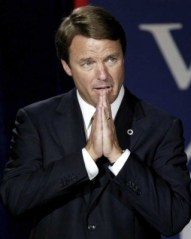
I don’t want to cause Nando a fatal cognitive dissonance attack, really I don’t, but I agree with the professor wholeheartedly. I have long believed that the Model Rules prohibition of dishonesty in Rule 8.4 should be applied to lawyer conduct not related to the practice of law more frequently and stringently than it is. Lawyers, for their own protection, are fond of the fictional Clinton myth that one can be an upright and trustworthy lawyer while displaying deceitful and dishonest conduct in their “personal lives,” as if lawyers are ethically schizophrenic. The proof: John Edwards still has his license.

The law school deans that Trachtenberg targets, however, don’t get the benefit of this pass. They are lawyers who were dishonest in their professional duties that, while not requiring a law license, have a clear impact on the legal profession.  Trachtenberg writes,

“In light of the common application of Rule 8.4(c) to lawyers who engage in dishonesty unconnected with the practice of law, there is little doubt that dishonest law school marketing conducted by members of the bar justifies professional discipline. Paul Pless lied repeatedly, over a period of years, about the quality of incoming students at the University of Illinois College of Law, deceiving the ABA and U.S. News, along with prospective students and others who relied on statistics they compiled.191 Mark Sargent conspired with colleagues to engage in similar conduct at Villanova.192 Can anyone dispute that these men engaged in “conduct involving dishonesty, fraud, deceit or misrepresentation”? Surely serial dishonesty—committed with the purpose of gaming the rankings used by prospective students deciding whether and where to spend tens (if not hundreds) of thousands of dollars—is at least as serious a violation as falsifying a resume and transcript.”

Sure it is. As with Edwards, however, the profession is unlikely to be willing to expand the range of activities by lawyers outside of actual practice that will trigger discipline. Continue reading

Ethics Quote of the Week: Sen. Lindsey Graham

“If you can give nothing but bad information, isn’t it better to give no information?”

—- Sen. Lindsey Graham (R-SC), during a press conference on Nov. 27th, during which he reiterated his position that U.N. Ambassador Susan Rice had knowingly and intentionally misled the American public regarding the fatal attack on the Benghazi compound on 9/11, in her appearances on multiple news shows five days later repeating “talking points” to the effect that the attacks had been spontaneous and sparked by an anti-Muslim video.

Apparently.

Even many liberal commentators are now conceding that Rice was being a “good soldier” on September 16, carrying a technically accurate but intentionally misleading message that seems to have been designed by Obama campaign strategists to make sure the death of an American ambassador in Libya wasn’t seen as a refutation of Obama’s claims to a successful handling of that nation’s struggles or a contradiction of the argument that “his” killing of Bin Laden had Al Qida on life support. After all the attacks on Republicans Senators McCain, Graham and Kelly Ayotte for their condemnation of Rice for her part in the Obama campaign’s spinning, including accusations of racism from Congressional Black Caucus members and the affirmatively weird complaint by President Obama (which seems to be that as long as Rice was repeating what she had been programmed to say by others she shouldn’t be held personally responsible for the content of her own public statements),Graham in particular has refused to back off his criticism, and cheers to him for that. Continue reading

Virginia Campaign Lies: the Unethical Use of the Dishonest “Would”

The next U.S. Senator from Virginia? You could do worse! In fact, Virginia might.

I’m going to vote for Tim Kaine, the ex-Democratic Governor of Virginia running against George Allen, the Republican trying to regain the seat he lost in 2006 to James Webb. After the slimy, dishonest campaign Allen ran against Webb ( full disclosure: I went to law school with the Senator, and know him personally. A more honorable, courageous, principled man doesn’t walk the earth), Allen lost any chance of a vote from me forever, and it wouldn’t matter if his opponent was a toilet brush.

Nonetheless, Kaine’s ads are making me think he’s only a step or two above toilet brush level. Especially outrageous is this line, from a “war on women” ad “approved” by Tim Kaine, intoned by an announcer as the camera shows a woman:

                   “Allen would take away her Constitutional rights by reversing Roe v. Wade.”

Even counting “v.” as a word, this inexcusable statement includes four misrepresentations in just twelve words, an impressive total, though I’m sure Bill Clinton has topped it at one point of another. Let’s see: Continue reading

ARRGH! “The Good Wife” Did It AGAIN!

For God’s sake, Will! A) You just got off one suspension for unethical conduct—what are you DOING? B) They had to have taught you better than this at Georgetown Law!

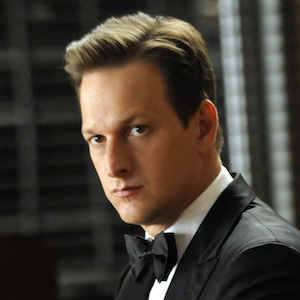
“It” is misleading Americans who may be in litigation requiring settlement and who don’t know that lawyers cannot, must not and largely do not agree to financial settlement terms without getting the approval of their clients. I have dubbed this “The Hollywood Lawyer Fallacy,” and Will (Josh Charles) just did it again.

I know—every lawyer TV drama skips this part, as does virtually every movie about lawyers. Yes, I know it is done for pacing and dramatic purposes, that having a scene where the lawyers asks her client, “They’ve offered this amount, and I think we should take it, OK?” and the client says, “Sounds great!” just slows things down. But here is what repeatedly watching this inaccurate portrayal of  lawyers breaking one of the cardinal rules of the profession does: it sets up clients of incompetent lawyers to be misled, manipulated, and cheated. As I wrote the last time the otherwise ethically astute CBS drama did this while I was watching:  Continue reading

Liars and Lies: Cal Thomas, Bob Beckel and USA Today’s Deceptive Debate Feature

Beckel, Thomas…Liberal, Conservative…Liar, Liar…Disgrace, Disgrace.


Yesterday, after the first Presidential debate had concluded, USA Today columnists Cal Thomas and Bob Beckel’s joint feature was posted on the USA Today website; this morning, the same feature graced the newspaper’s print edition, on its op-ed page. Thomas and Beckel do a regular “point-counterpoint”-style debate which is presented as a conversation, and this one was about sprucing up the presidential debates.

“Cal Thomas is a conservative columnist. Bob Beckel is a liberal Democratic strategist. But as longtime friends, they can often find common ground on issues that lawmakers in Washington cannot” is how USA TODAY always introduces the hackneyed format. The most recent feature began like this:

BOB: Wednesday ‘s debate was déjà vu all over again. It made me wish for a fresher format. The two major party candidates for president looked and sounded presidential, standing behind two lecterns with a nice television-friendly backdrop facing a single moderator. But we’ve seen it many — too many — times before.

CAL: Don’t forget the television-friendly ties both wore after their handlers probably spent hours coming up with the right color.

BOB: And then there was the “spin room” where surrogates for both candidates claimed victory for their guy. It resembled a summer TV rerun: same script, but with different “stars.” The debate was broken into six segments, each with a question chosen by the moderator. Each was given the same amount of time to respond to the question followed by a period of discussion. The moderator, Jim Lehrer, did try to keep the candidates focused on the question at hand, but each response was obviously practiced. Except for those with HD quality sets, debates haven’t changed much since 1960.

Wait—what debate did these guys watch? Obviously, none at all.  Continue reading

Jury Summation: 20 Conclusions Regarding Elizabeth Warren’s Law License Controversy

1. Elizabeth Warren may have engaged in the unauthorized practice of law in Massachusetts at various times.

2. It is not as clear that she has done so as her primary accuser, Prof. Jacobson, appears to believe, nor is it as certain that she has not done so as her reflexive defenders assert.

3. If she did practice Massachusetts law without a license, it is very unlikely that she did so intentionally.

4. It is also likely that at this moment, she herself is unsure whether she did or not.

5. I very much doubt that if she did as Prof. Jacobson asserts,  that would lead to discipline by the Massachusetts Bar. The discussion of the issues surrounding Warren’s situation make it clear that a) the whole area of unauthorized practice when it involves state and Federal law is relatively unresolved and murky, with even  legal ethics experts in disagreement, b) it would be impossible to separate the professional regulation of the matter from its political content, and 3) any time members of the disciplinary committee slap their foreheads and say, “Damned if I know!” when the discussion turns to what the rules require, discipline is unlikely, and properly so.

6. The fact that Warren may have blundered into UPL between the varying requirements of her two bar memberships and her intermittent practice in Massachusetts does not make her unfit to practice law.

7. It may, combined with her unwillingness to candidly and thoroughly reveal all documents that bear on the issue, call into question her fitness to be a U.S. Senator, especially one running on the proposition that regulations on another profession (the financial sector) need to be strictly followed and tightly enforced. It definitely is worth exploring and explaining to voters, which the mainstream media clearly does not intend to do. Continue reading

“And Now We Welcome You To Another Episode of “As The Media Shrugs”! Elizabeth Faces Exposure As a Dishonest and Unlicensed Lawyer…Will She Finally Reveal The Truth? Will Voters Care?”

“Nope, no way to Texas; can’t get to New Jersey…maybe I should just bite the bullet and get a Massachusetts law license? Nawww, who’s going to care?”

No major newspapers or broadcast news outlets seem to care, but what was originally dismissed as a partisan blogger’s over-reaching accusation has been bolstered by more than one smoking gun, proving Elizabeth Warren’s untrustworthiness and lack of fitness for high office.

Robert Eno of Red Mass Group, who joins Prof. William Jacobson as a blogger doing dogged and necessary research on the Massachusetts Senate candidate, has convincingly shown that Warren’s justification of her practice in Massachusetts, sans law license, doesn’t work, because what she says can’t possibly be true.

Earlier this week, Warren tried to rebut Jacobson’s allegations by explaining, “I haven’t practiced any law since 2010 since I went down to do the Consumer Financial Protection Bureau. I’ve been a member of the bar in Texas for all of my career, in the Supreme Court bar, and until a few weeks ago the bar in New Jersey.” Warren and her defenders also argued that Jacobson’s claim that she was operating a regular law office out of her Harvard faculty office, which would make her an unlicensed Massachusetts practitioner, was inaccurate. Warren periodically was involved in cases in Federal court, which did not require a  Massachusetts license, they said. All that was necessary for Warren to appear before various Federal Courts was for her to be duly licensed in a state or territory, and file a statutory request to the court to appear.

Warren’s problem: it is beginning to appear that she may not have been properly authorized to practice law anywhere, or, if she was, she had to be using her Harvard office as a regular law office, meaning that she was practicing Massachusetts law. Without a license.

Here is what Eno discovered:

1.  Warren says she has been a continuous member of the Texas bar,which is technically true but misleading. After following her constantly changing spin while explaining her undocumented status as an affirmative action beneficiary, I believe misleading us is her intent. Yes, she has been a member of the Texas bar during her whole career, but during most of that period she was not allowed to practice Texas law, which was the topic under discussion when Warren cited her membership. Kim Davey the Public Information Officer for the State Bar of Texas told Eno that Warren has been on inactive status in Texas since June 1, 1992. Inactive status means a lawyer is not authorized to practice law. Warren says that she only stopped practicing law (while living and working  in Massachusetts) in 2010, which means that she could not rely on her Texas license while she was at Harvard.

2. Thus it must have been her New Jersey law license that made Warren eligible to appear in Federal Court. But there’s a problem there, too. New Jersey rules hold that a lawyer can only be a licensed attorney in good standing in New Jersey if that lawyer maintains a bona fide office for the practice of law. The office can be in any state, but it must qualify as a law office, or New Jersey’s license to practice law is no longer valid.

This means that Warren is mired in a Catch 22. If, as her defenders and Warren have maintained, she was not engaged in the practice of law because her Harvard office did not constitute  “a systematic and continuous presence in Massachusetts for the practice of law” (because Warren was just a typical Harvard law professor who now and then helped write a few briefs for the U.S. Supreme Court and out-of-state federal courts), then she could not meet New Jersey’s licensing requirements, and was practicing law without any valid law license in any state once she went on inactive status in Texas. If, in the alternative, her Harvard office was a bona fide office for the practice of law, rather than a place where she just “dabbled,” then she was practicing in Massachusetts without a Massachusetts license. Continue reading