The News Media’s Unethical Political Word Games

Reasonable people can disagree about the prudence and fairness of the various get-tough state and local laws targeting illegal immigrants, such as the recent law passed in Alabama (I like it, by the way). They can even disagree—though I personally don’t see how—about the wisdom of state-sanctioned incentives for illegals to smuggle their children into the country, like Maryland’s batty “Dream Act.”

What reasonable people should not accept and must not accept is the increasingly routine practice among many news outlets of dropping “illegal” from the phrase “illegal immigration” and “illegal immigrants” when discussing such measures. The practice is no less than a lie, an effort to misrepresent as bigotry legitimate objections to providing the benefits of American citizenship to those who willfully violate U.S. immigration laws and procedures. The papers, reporters, columnists and bloggers who do this inevitably follow the misrepresentation by denigrating anyone who doesn’t think scofflaws should be celebrated as heroes and handed the keys to the country as “nativists.”

I resent it, because my maternal grandparents were immigrants, the legal kind, and I would no more oppose the progress and success of law-abiding immigrants in the country than I would saw off my arm. I condemn it, because the tactic—and it is a tactic— is unethical journalism, an example of intentionally muddying an issue by imprecision so that the apathetic, the lazy or the none-too-bright—a sizable group, that—are confused about what is the real issue. Continue reading
Ethics and the Case of the “Large-Breasted Woman”


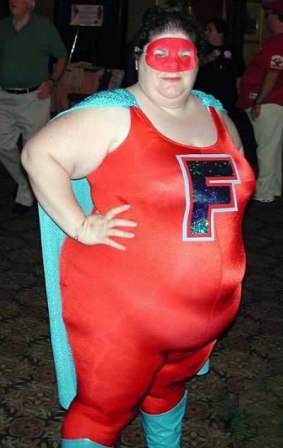
Now SHE'S what you call a distraction...

Illinois attorney Thomas W. Gooch III became the object of great hilarity in legal circles this week when he reacted to what he felt was an unethical courtroom tactic by his opposing counsel in a lawsuit by filing this motion in limine:

 Defendant’s counsel is anecdotally familiar with the tactics and theatrics of Plaintiff’s counsel . . . . Such behavior includes having a large breasted woman sit next to him at counsel’s table during the course of the trial. There is no evidence whatsoever that this woman has any legal training whatsoever, and the sole purpose of her presence at Plaintiff’s Counsel’s table is to draw the attention of the jury away from the relevant proceedings before this court, obviously prejudicing the Defendant’s in this or any other cause. Until it is shown that this woman has any sort of legal background, she should be required to sit in the gallery with the rest of the spectators and be barred from sitting at counsel’s table during the course of this trial.

Not surprisingly, the motion failed, and predictably, Gooch has become the latest villain in the gender wars, reducing a competent legal professional (according to attorney Dmitry Feofanov’s answer to the complaint) to the size of her bra cup and denigrating women generally. Continue reading

What Do you Call A Newspaper That Defends Outrageous Journalistic Practices? How About “Di Tzeitung”?

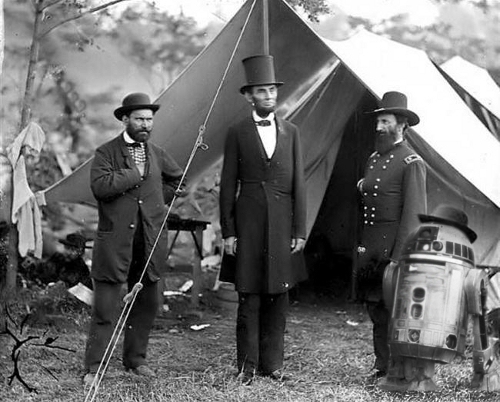
If Di Tzeitung had covered the Civil War

If I could pronounce it, the Brooklyn-based Hasidic newspaper Di Tzeitung would be useful shorthand  for “shamelessly using rationalizations to defend indefensible conduct.”

Last week, the newspaper ran the now-familiar photo of President Obama, Secretary of State Hillary Clinton, and others in the White House Situation Room, except that in Di Tzeitung’s version, Clinton  and the only other woman present, Director for Counter-terrorism Audrey Tomason, had magically vanished. Di Tzeitung had airbrushed them out, Politburo-style.

Of course, publishing the photo of a historic news event and altering it to convey misleading or false information (in this case, “Hillary wasn’t there”) is a substantial and wide-ranging violation of core journalism ethics, a breach of the reader’s trust, unfair, dishonest, misleading, incompetent and disrespectful. The altered photo was alternately condemned and mocked all over the media and blogosphere. Yet Di Tzeitung is largely unapologetic, and made it clear that it would do the same thing again if the opportunity arose. In a prepared statement, the editors explained why they did nothing “wrong”…well, almost nothing…challenging the Olympic record for rationalization by a news organization along the way: Continue reading

Lying to Dogs

Could you lie to this dog?

I am looking at a box of “premium dog treats” that my sister gave Rugby, my Jack Russell Terrier. (All right, she gave the stuff to me to give to Rugby.) The box says that they are “ridiculously delicious.” I have just offered him one of the “natural wellness nuggets” because we are temporarily out of regular dog biscuits and he is clamoring for his afternoon snack, driving me crazy in the process. You don’t want to be in the room when a Jack Russell clamors.

He refuses to touch it. In the past, he has spat them out; occasionally he will throw them around the house like an Olympic discus thrower would do if he had no arms and could only use his mouth. Clearly, Rugby doesn’t believe the damn things are edible. Continue reading

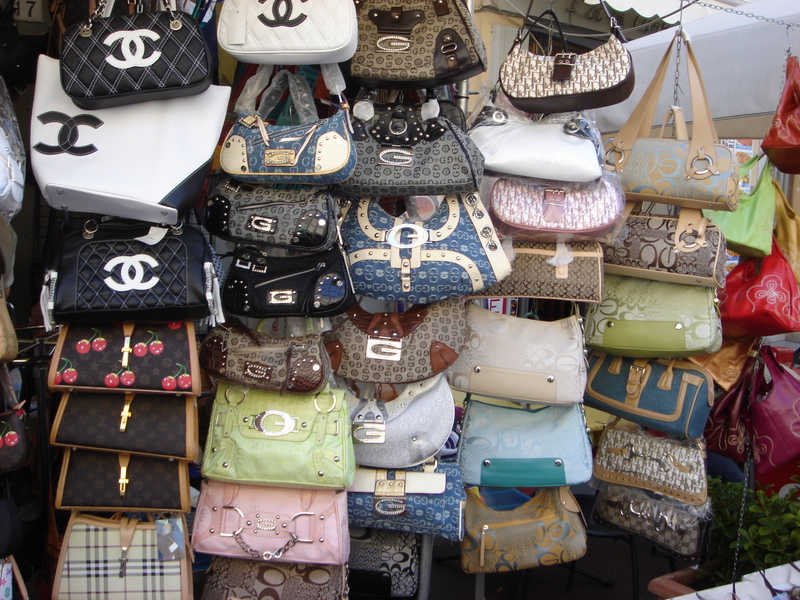
Should It be Illegal to Buy Counterfeit Designer Goods?

The ethics of this issue are clear, I think. The mystery is: Why did it take so long, and why isn’t there a national law?

New York City councilwoman Margaret S. Chin, whose district includes Chinatown, has introduced a bill would make it a misdemeanor  to  buy fake designer merchandise on the street or anywhere else. Violators would face a $1,000 fine, a year in jail, or both.

The New York Times interviewed a tourist who articulated the argument against Chin’s bill.
“I come down here, I will continue coming down here, and I will follow the Chinese people wherever they take me,” the New Jersey resident told the Times reporter “as she stood amid the purse and sunglass vendors on Canal Street.” “I don’t believe in child labor and I don’t believe in supporting terrorists, but if I want to buy a knockoff, that’s my business.” Continue reading

Just So You Know The Legal Profession Is Trying…

The Massachusetts bar has suspended a lawyer for six months for running an advertisement on Craigslist offering to write  papers and essays for students to turn in as their own. The state Board of Bar Overseers of the state Supreme Judicial Court issued a memorandum April 1 announcing that lawyer Damian R. Bonazzoli was suspended from practice.  He also lost his job lost his job with the state Appeals Court.

Good. Continue reading

Ethics Uber-Dunce: Jose Canseco

Jose Canseco...or is it his twin?

Mere Ethics Dunce is an inadequate title for former baseball slugger Jose Canseco, somehow. He has dabbled in extortion and assault, but his real contribution to making the world worse was serving as a one-man steroid epidemic, using the performance-enhancing, testicle shrinking drugs himself to win an American League  Most Valuable Player award, then making sure that as many players as possible on the various teams he played with used them too. Continue reading

Ethics Dunce: Rep. Dennis Kucinich

Muslim women, in ethical garb

During last week’s hearings on the alleged radicalization of Muslim-Americans, Congressman Dennis Kucinich, protesting that the hearings were an example of prosecution and bigotry, said:

“Islam is a religion based upon peace, goodwill and the ethical treatment of all people on this planet.”

Politics involves advocacy, and zealous advocacy sometimes metastasizes into exaggerations, overstatements, and lies. Determined governors are called dictators and criminals; those questioning global warming models are compared to Holocaust deniers. Believing that an attack on an enemy nation is in the best interests of America, leaders who should be saying, “We have good reason to believe that this nation has weapons of mass destruction and is inclined to use them,” say instead, “We know where the weapons are and the threat is imminent.” Other leaders who are trying to get important health care reforms passed say, “Don’t worry—if you like your current plan, you’ll be able to keep it!”, neglecting to add the caveat that that plan you like may be forced out of existence if the bill is passed.

These excesses range from deceitful to outright lying, but they are all unethical, all disrespectful of the truth and the public that has a right to it, all aimed at manipulating public opinion with falsity.

I find Kucinich’s statement especially indefensible, because the degree of his presumably misstatement of the truth was completely unnecessary if his motives were good. Continue reading

The Tears of Keith Ellison

The grand drama at Rep. Peter King’s Congressional hearings investigating the radicalization of American Muslims last week was provided by Rep. Keith Ellison, who broke down crying while telling the story of a Muslim-American hero, Mohammed Salman Hamdani, who rushed to lower Manhattan on the morning of Sept. 11, 2001 to assist in rescue efforts, and died in the collapse of the World Trade Center. Ellison said:

After the tragedy some people tried to smear his character solely because of his Islamic faith. Some people spread false rumors and speculated that he was in league with the attackers only because he was Muslim. It was only when his remains were identified that these lies were fully exposed. Mohammed Salman Hamdani was a fellow American who gave his life for other Americans. His life should not be defined as a member of an ethnic group or a member of a religion, but as an American who gave everything for his fellow citizens.

I found the performance odd and vaguely troubling, and now that I’ve thought about it for a few days, I know why. The statement by Ellison, who converted to Islam, and the tears that accompanied it, raise a few ethical issues, beginning with the Ethics Alarms standard, “What’s going on here?” Continue reading

The Times’ New Ethicist Commits Malpractice

The new Times "Ethicst" shows her dark side.

Randy Cohen’s replacement as “The Ethicist” in the New York Times Magazine, Ariel Kaminer, had a flawless maiden flight last week, but crashes and burns on her first question this week. As was too often true of Cohen, she messes up in the area of honesty and legal ethics.

The inquirer, an applicant for law school, had asked a former professor to write a recommendation.  The professor, an apparent creep, said she was too busy—Honestly: writing recommendations for students applying to graduate students is part of her job, and how long does it take?—but if that if the student would write it, she would gladly “edit as needed” and submit it under her own name. Ariel’s inquirer felt uncomfortable writing her own letter of recommendation, but did not “wish to jeopardize my chances of being accepted into my top-choice school by being overly conscientious.” Ariel’s question to answer: is it ethical to draft the letter? Continue reading