So Soon? The Bill Maher Ethical Condundrum Strikes Again…In Ferguson!

It's baaaack!

It’s baaaack!

No sooner did I announce the Bill Maher Ethical Conundrum than a perfect example of it—not involving Bill Maher—hit the news…and joined the Ferguson Ethics Train Wreck.

In August, the Federal Aviation Administration agreed to a request by the St. Louis County police to restrict about 37 square miles of airspace over Ferguson, Missouri, then engulfed in the most violent of the protests and rioting sparked by the shooting of Michael Brown. The restriction lasted for 12 days, and the reason given for it was safety concerns. Shots had been fired at a helicopter at one point during the violence in the city.

Safety is surely a valid concern, and since there were legitimate reasons to believe that the no-flight restrictions were prudent in the interests of safety, the measure was ethical. Or was it? The Bill Maher Ethical Conundrum, for those who missed the recent post:

Is the ethical nature of an act defined by its intent, or by an objective assessment of the act alone without reference to motive?

The Associated Press obtained tapes of the FAA’s air traffic managers discussing how to redefine the flight ban to allow commercial flights to operate at nearby Lambert-St. Louis International Airport and to permit police helicopters to fly through the area while meeting the goals of the ban. On the ban, they heard an administration manager say, about the St. Louis County Police Department, “They finally admitted it really was to keep the media out. But they were a little concerned of, obviously, anything else that could be going on.” A manager at the administration’s center in Kansas City said the police “did not care if you ran commercial traffic through this T.F.R. all day long. They didn’t want media in there.” Acknowledging that a ban that said “…you know, ‘OK, everybody but the media is OK,’ ”  the FAA managers then developed wording that they felt would keep news helicopters out of the controlled zone but not impede other air traffic.

Bingo! A flight ban in the interest of safety, serving the interests of safety, but motivated primarily by the illegal, unconstitutional, unstated motive of interfering with the public’s right to know through exercise of the Freedom of the Press.

Ethical or unethical?

The Bill Maher Ethical Conundrum strikes again!

___________________

Facts: New York Times

The Bill Maher Ethical Conundrum

Wits

“One of these things is not like the other…”


The Bill Maher Ethics Conundrum is not what you probably think it is.

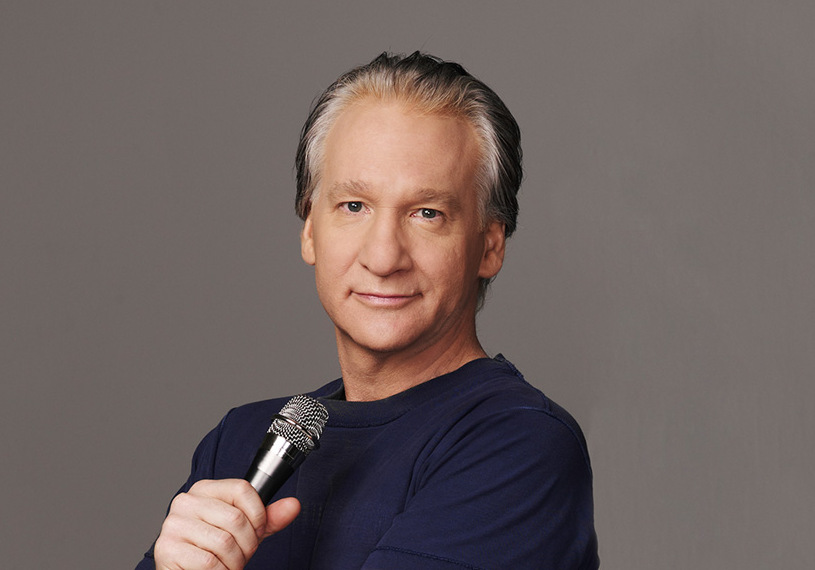
Maher, the alleged comic and anti-conservative scold who hosts an HBO program, was chosen by a student committee to be the  commencement speaker for the University of California-Berkeley’s December graduation. This was a lazy, embarrassingly juvenile and politically-loaded selection, but Maher had also just recently used his show to join fellow atheist and neuroscientist Sam Harris in a condemnation of Islam, calling it  “the only religion that acts like the mafia that will fucking kill you if you say the wrong thing, draw the wrong picture or write the wrong book.” Later on Maher nodded approvingly  as Harris also called Islam”the mother lode of bad ideas.”

This caused Muslim students at Berkeley to prove Maher correct about their religion’s entrenched intolerance of opposition, and they have been joined by other political correctness censors in the student body—there are a lot of them—to demand that the university rescind Maher’s invitation because of his “hate speech.”A  Change.org petition—-now THAT site is the real mother lode of bad ideas—now urges students to boycott the decision and asks the campus to stop him from speaking. It has gathered more than 1,400 signatures. The committee that chose Maher, naturally, backed down, but the University, so far at least, is sticking to its decision to invite him.

Yes, yes, universities ought to be marketplaces of ideas where all views are welcome, and yes, it is hypocritical and offends the traditions of liberal education to stop Maher from stating his views on Islam, or re-telling “The Aristocrats,” or making a fool of himself, or whatever he’s going to do because some students or all students disagree with him, just as it was for Rutgers students to force Condolezza Rice into withdrawing after she was invited to speak at Rutgers. The dilemma illustrated by this flap is a classic ethics problem, which I will henceforth call the Bill Maher Conundrum, which has been long debated and never decisively settled:

Is the ethical nature of an act defined by its intent, or by an objective assessment of the act alone without reference to motive? Continue reading

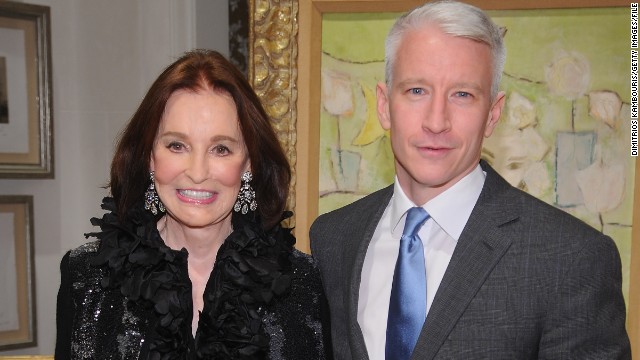
Anderson Cooper’s Reflections on Inheritance: Not Unethical, Perhaps; Just Ignorant, Self-Serving and Presumptuous

I was going to let this go, but it kept gnawing at me, and nobody in the news media called out Anderson Cooper on his outrageous misrepresentation of history and human character. I guess it’s up to me.

gloria-vanderbilt-anderson-cooper

“Thanks for nothing, Mom!”

Cooper is the son of fashion designer Gloria Vanderbilt, and thus an heir to one of the most storied of American family fortunes. Apparently Cooper has known for some time that he’s getting none of his mother’s estimated 200 million dollar estate, and he told Howard Stern recently that he was fine about it, an had no bitterness or regrets.

“I don’t believe in inheriting money, ” he told Stern. “That’s a total fantasy … I think it’s an initiative-sucker, I think it’s a curse. Who’s inherited a lot of money who’s gone on to do things in their own life? If I felt that there was some pot of gold waiting for me, I don’t know that I would have been so motivated.”

As for his mother, who inherited many millions and who still made a name for herself by launching a  line of designer jeans, Cooper told Stern, “I think that’s an anomaly.”

Cooper is free to adopt whatever myths and rationalizations that help him get over the fact that his mother is cutting him off. He is not free to misinform the historically ignorant that a tendency exists which may describe his own mental state but which is far from the presumptive norm with others throughout the centuries. “Who’s inherited a lot of money who’s gone on to do things in their own life?” The answer to that question is “Too many to mention, Anderson. Are you kidding? Do you know anything about history?”

Just counting U.S. Presidents, which I think even in this period of reduced stature among White House occupants, would still qualify as “doing something with your life,” we have Washington, Madison and Monroe, all of whom inherited substantial property and assets from their families, as did William Henry Harrison and his grandson, Benjamin Harrison. Both Roosevelts inherited substantial wealth; so did William Howard Taft, whose family was (and is) one of the richest in the U.S. Both Bush’s managed not to let the curse of inherited wealth undermine their wills to succeed. Continue reading

“Would You Rather”: An Ethics-Horror-Health Care-Dinner Party In Hell Movie You May Have Missed

“Would You Rather” is an odd 2012 film that sets up a film-long set of unlikely ethical dilemmas for its characters to solve. Desperate to save her dying brother with expensive medical treatment she can’t afford, the heroine (played by Brittany Snow) finds herself at a dinner party with seven other desperate strangers, hosted by a wacko family of millionaires who will help one of them after the others have been “eliminated” during the course of the evening. As what is described as a game progresses, each contestant is put through escalating rounds of risk, pain and torture in which they must make various Sophie’s Choices, such as…

  • Would you rather administer a painful shock to yourself with high-voltage electricity, or the person next to you? What if that person has been weakened by a previous shock? What if she is in a wheelchair?